

















Programme Leadership
-
Learn about RAP governance
- Explore the iRAP website to learn more about the methodology, tools, training & support
- Attend the free Introduction to iRAP webinar
- Attend the free Establishing a RAP in your Country webinar
- View the Developing a Locally Owned and Led National or State iRAP Programme brochure
- See an overview of the structure of existing RAPs
- See how iRAP, regional, national and jurisdictional-level RAPs fit together
-
Build your RAP Community
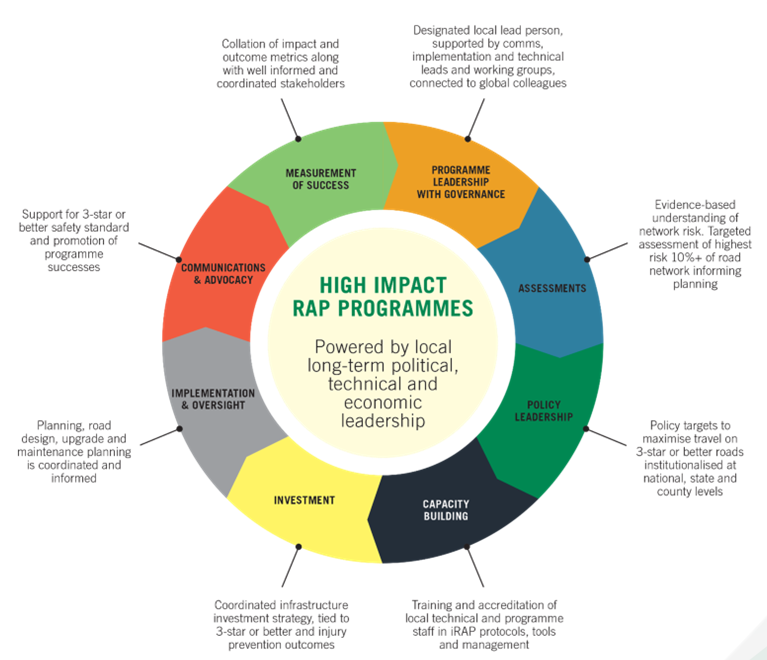
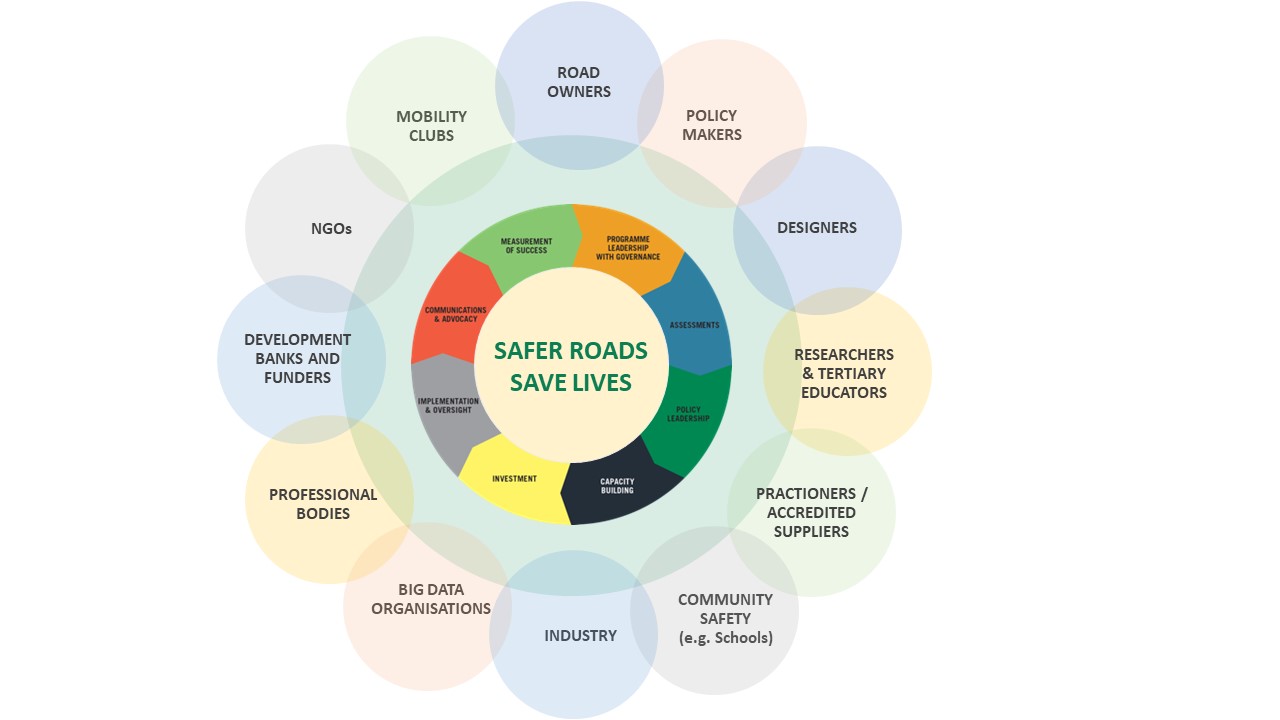
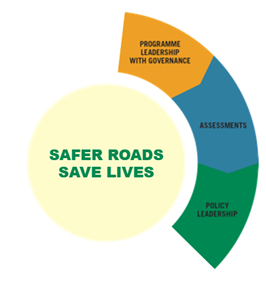
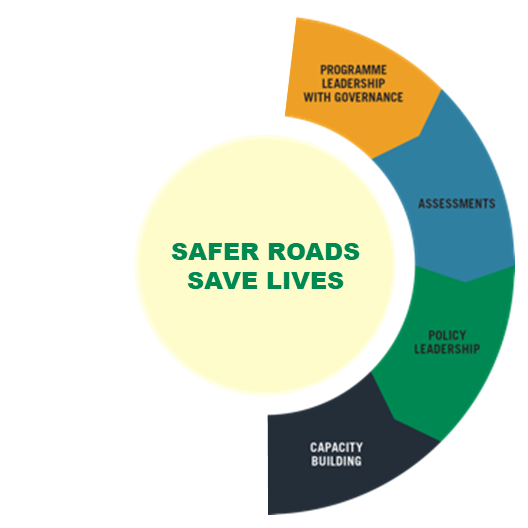
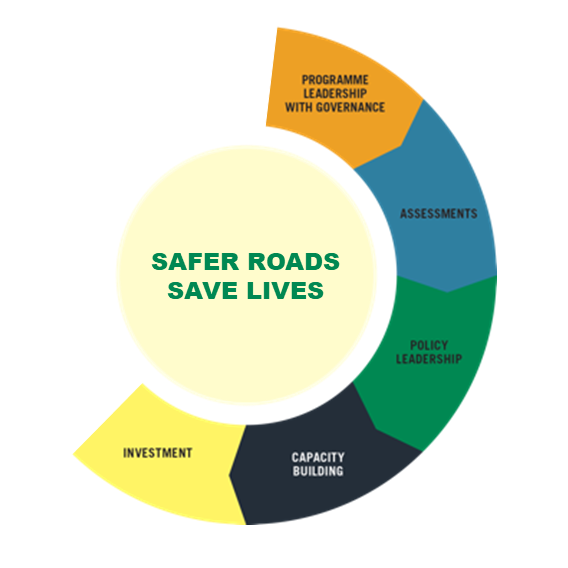
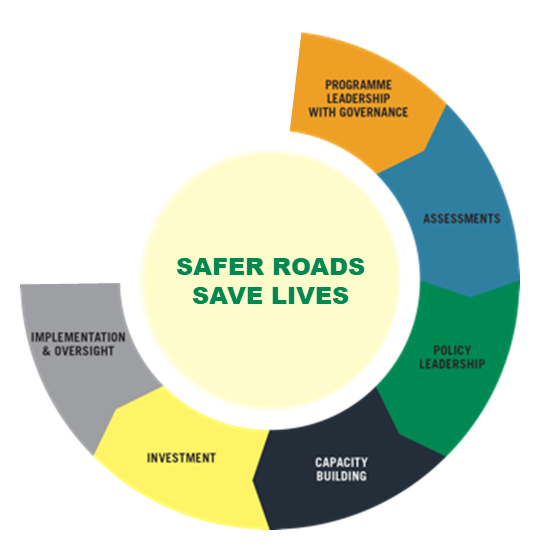
- Who should be in your RAP Community: The RAP Programme Elements Wheel and partners for success
- Build your RAP Community Database
- Nominate a Programme Lead or Contact Point (can be defined in consultation with iRAP)
- Share your RAP Community contact database with iRAP
- Invite members to sign up for iRAP Communications
-
Start the conversation with Stakeholders
- Create a conversation channel. This could be a simple WhatsApp or email group for shared posting of news
- Suggest next steps for stakeholders
- Encourage stakeholders to share news on their activities to help you stay abreast of work and for local and global promotion.
- Encourage stakeholders to sign up for RAP News to learn about, and feel a part of, the RAP community.
- Assign a RAP Communications Lead to share local and global news with your RAP Community
- Create a social media profile to communicate your activities, increase your community and stimulate the road safety conversation - E.g. ThaiRAP Facebook
- Develop a newsletter. Sample: IndiaRAP News.
- Engage! Good Practice Guide for Meaningful NGO Participation in the Field of Road Safety.
-
Host a stakeholder meeting. This could be a small group progress meeting or national workshop that invites all relevant parties to join.
-
Develop and formalise your RAP
- Initiate the Ten Step Plan for Safer Road Infrastructure
- Explore other RAPs for best practice ideas Case study: IndiaRAP
- Consult with iRAP to decide the right structure for you
- Host a Lead Agencies/Steering Group meeting to progress your RAP strategy, action and governance plans.
- Host a Stakeholder Workshop to share your strategy and engage them in future programme activities.
- Develop a Business Plan: Sample AusRAP Strategy & Business Plan
- Develop a Business Plan: Sample IndiaRAP Annual Business Plan
- Check progress against the RAP Set Up Checklist
- Sign and celebrate a Memorandum of Understanding (MOU) or National Licence Agreement to establish your RAP - Contact iRAP to discuss these opportunities.
Assessments
Policy Leadership
- Review effective National and State Road Safety Strategy samples and share them with your policy makers as recommended examples to follow.
- Institute iRAP KPIs in your projects, design standards and policy
- Present to Government – Sample AusRAP Government Hearing Submission
-
Consider Position Papers as an effective tool for clarifying and influencing policy setting. Case studies:
- EuroRAP Position Paper on RISM (Road Infrastructure Safety Management) Directive 2019/1936, Amendment of Directive 2008/96/EC
- EuroRAP Position Paper advocating for investment funds on road safety infrastructure in the framework of the Next Generation EU Package
- EuroRAP Position Paper on Policy Recommendations for Implementation of National Road Safety Action Plans
- iRAP Position Paper: Vehicle Speeds and the iRAP Protocols
Capacity Building
- Undertake iRAP Training
- Promote iRAP Training opportunities to local partners
- Work with iRAP to prepare a dedicated training programme for local partners
- Host a National Workshop e.g. BrazilRAP Annual Workshop.
- Encourage a national Accredited Supplier network
- Join Coffee and Connect to learn programme-specific skills and meet with other RAP leads
- Connect with another RAP Lead mentor (iRAP can assist with guidance and introductions)
- Attend and present your activities at Road Safety Events
- Explore iRAP's Safety Insights Explorer to understand the Human Impact of Injury in your country, how safe the roads are, the road attributes that matter, and the Business Case for Safer Roads
- Explore the Road Safety Toolkit: A free online resource on the causes and prevention of road crashes that result in death and injury
- Check out your country profile in the WHO Global Status Report for Road Safety
- Familiarise yourself with the Global Plan for the Decade of Action for Road Safety 2021-2030
- Apply to access the iRAP Partner Portal (for RAP Leads and key partners)
- Submit training records for national capacity tracking
Investment
Implementation & Oversight
- Case study: IndiaRAP Case Study of Implementation
- Case study: Belize City to Belmopan
- Case study: Bruce Highway, Cooroy to Curra
- Case study: School Zone Upgrade in Bogota, Colombia (SR4S)
- - Contact your local RAP lead to discuss the current progress and implementation plan for road upgrades
- See the FIA School Assessment Toolkit to learn about the Star Rating for Schools Programme and steps to identify and improve high-risk locations on school journeys
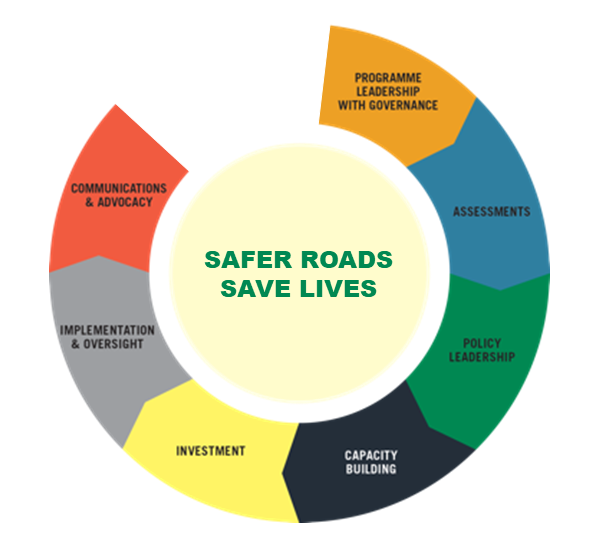
Communications & Advocacy
- Present results: Interactive reports and digital dashboards
- UNRSF Project Communications Strategy Best Practice
-
Create an identity
- Logo and Vision – Every RAP shares the common vision “To eliminate high-risk roads in (country)”. RAP logos are developed and assigned by iRAP in consultation with local programme partners.
- Sample RAP flyer: IndiaRAP
- Sample RAP powerpoint template: IndiaRAP
- Sample RAP Pull-up banner: IndiaRAP
- Sample RAP website: IndiaRAP
- Undertake presentations at Road Safety Events
- See iRAP’s presentation templates for core content slides to add to your presentations
- Contribute to the iRAP Partner Portal to build your national knowledge base
-
Advocate for change
-
Validate and celebrate results
-
Launch your RAP
- Sample IndiaRAP Launch media release
- Sample IndiaRAP Launch brochure
- Sample RAP Pull-up banner: IndiaRAP
- Sample IndiaRAP Launch photo backdrop
- Sample IndiaRAP Launch media invitation
- Sample IndiaRAP Launch media kit contents list
- Sample IndiaRAP Launch media questions preparatory brief
- Sample IndiaRAP Launch slides
-
Share content globally
- Submit news for iRAP Global Communications
- Submit case studies for iRAP Global Communications
- Submit knowledge (reports, journal articles, videos, maps etc) for iRAP Partner Portal
- Submit training records for national capacity tracking
- Submit project details for iRAP Partner Portal
- Submit road upgrade details and investment for iRAP Partner Portal
-
Present results - Digital reports and news
-
Present results - Videos
- Sample Star Rating for Schools Lea Primary School Nigeria Video (KRSD Trust)
- Sample Star Rating for Schools Justin Kabwe Primary School Zambia Video (Amend)
- Sample Star Rating for Schools Annual Results
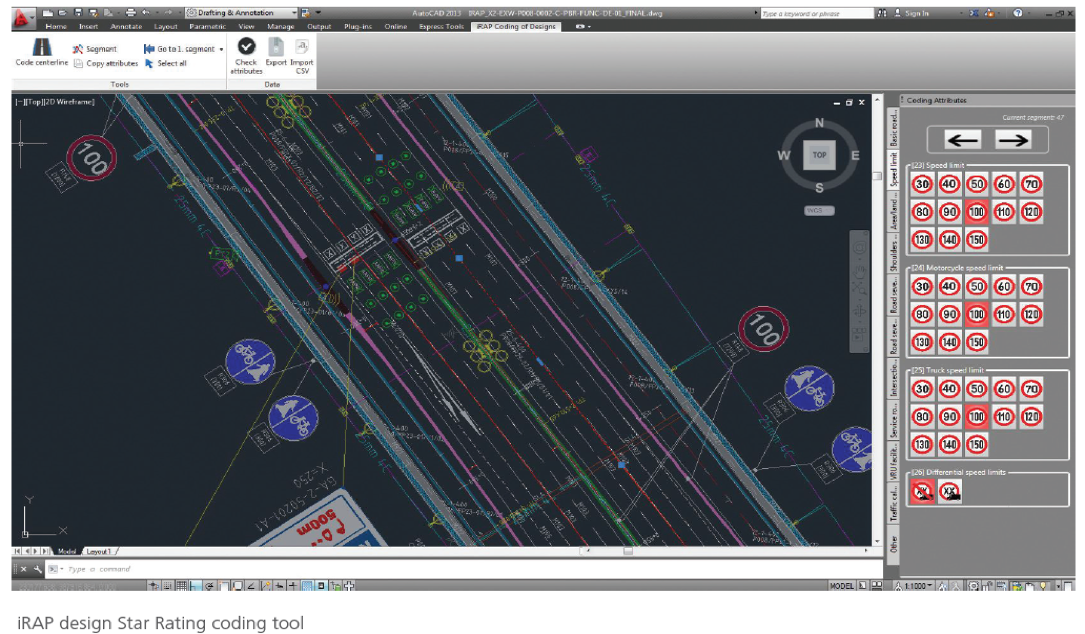
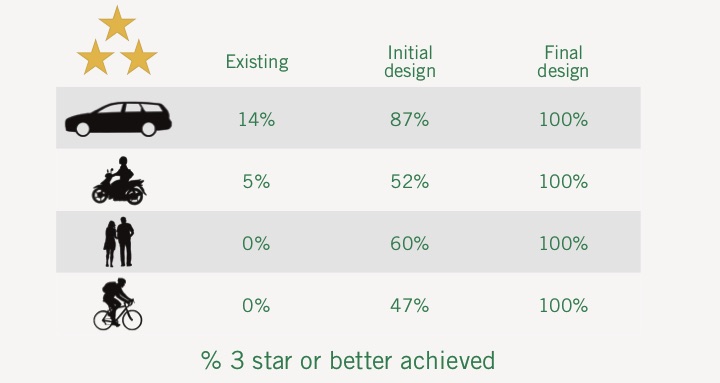
- Sample Arup Star Rating for Designs Results
- Sample iRAP Annual Highlights
- Google Creation Stories: Sample Take the iRAP Journey
-
Present results - Annual Performance Tracking
- Sample - 2021 British EuroRAP Results: Building Back Safer, Making Roads Fit for 2030
- Sample - 2020 British EuroRAP Results: Looking Back, Moving Forward
- Sample - 2019 British EuroRAP Results: How Safe Are You on Britain's Main Road Networks?
- Sample - 2018 British EuroRAP Results: Getting Back on Track
- Sample -2017 British EuroRAP Results: Cutting the Cost of Dangerous Roads
-
Present results - Mapping risk
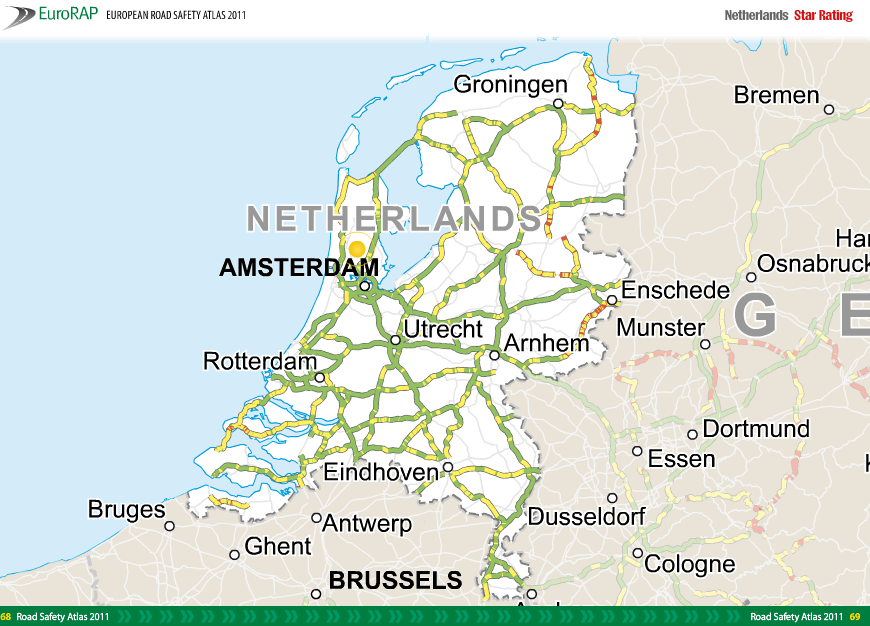
- Sample risk map: EuroRAP Great Britain Crash Risk Map 2021
- Sample star rating map: EuroRAP Great Britain Star Rating Map 2020
- Case study: RoadSafetyRisk – New Zealand’s online urban risk mapping
- Case study: Safe System Solutions star rating global icons of the world
- Case study: Road Safety Foundation and Ageas UK Interactive Road Crash Index - includes mechanism to tweet or email relevant MPs to ask them to support road safety investment.
-
Present results - Project results, Case studies & Digital presence
- Package project results: Case study: Results of the EuroRAP Project SLAIN
- Sample case studies: iRAP
- Sample case studies: EuroRAP Project Slain
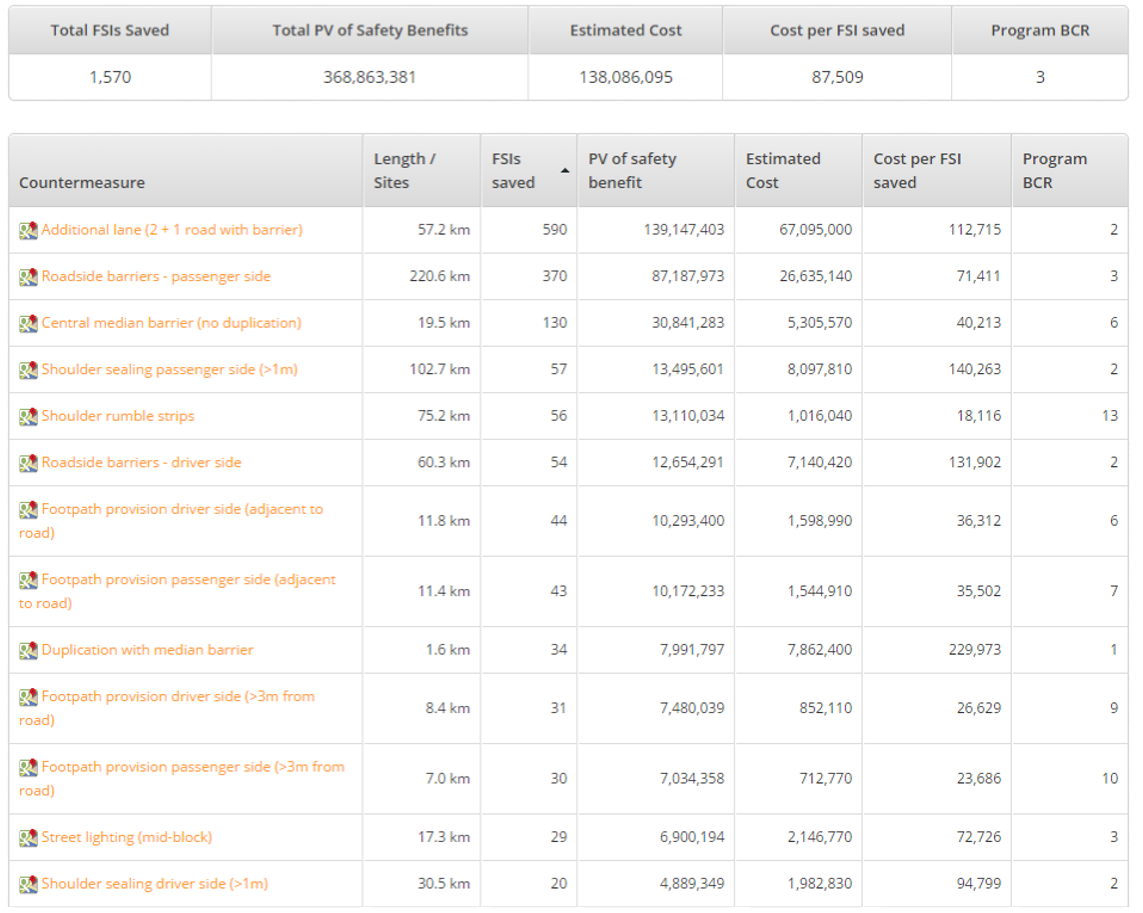
- Present national statistics: Screenshot your country’s iRAP Safety Insights Explorer data: iRAP Big Data Tool Graphics - The Human Impact of Injury, How Safe are your Roads, the Road Attributes that Matter, the Business Case for Safer Roads (note, full data not available for all countries)
- Present national statistics: Sample BrazilRAP metrics infographic
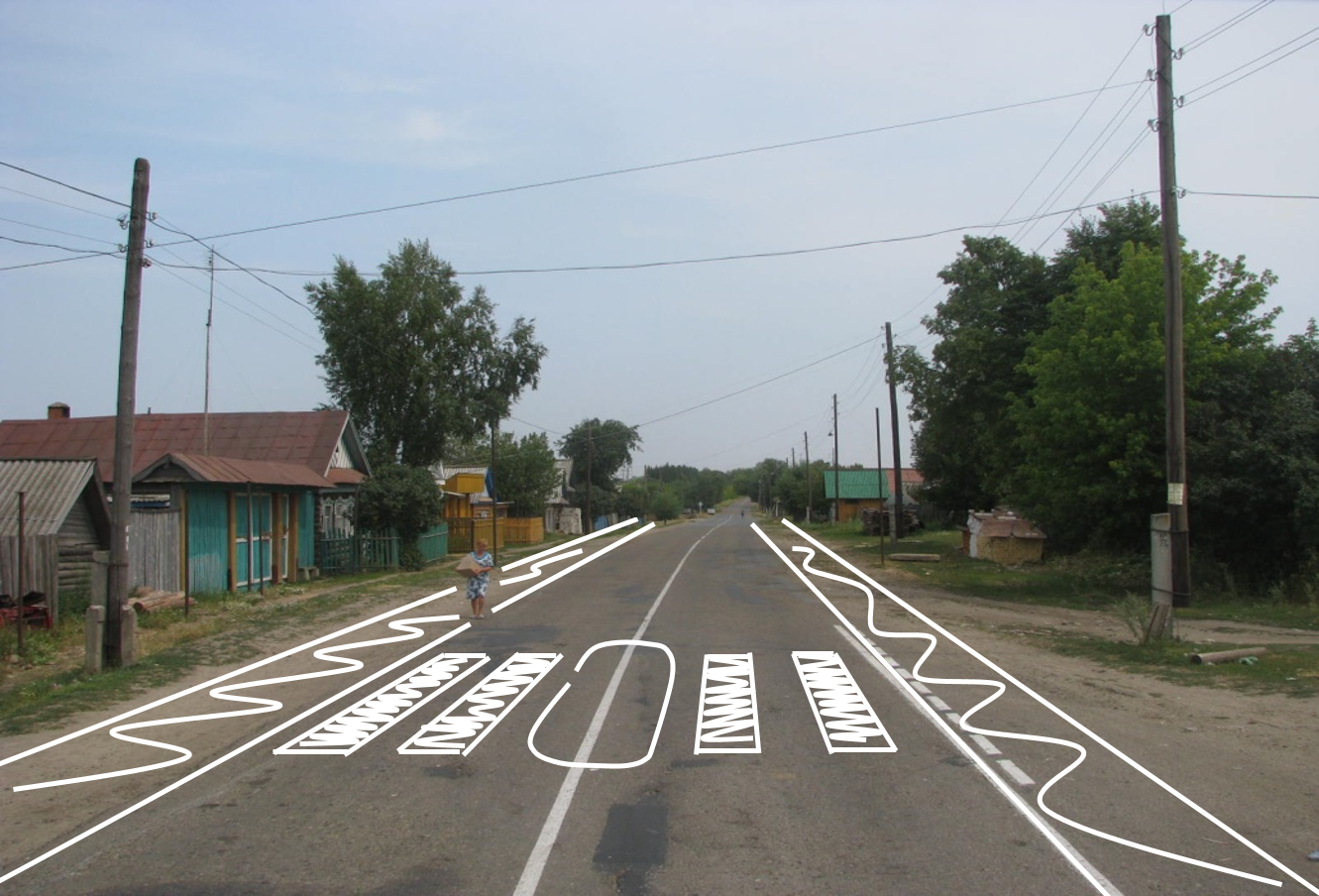
- Before and after images: Sample before and after images
- Donor/partner progress reporting: Sample IndiaRAP Progress Report 2017-2020
- Presentations: Sample IndiaRAP Programme presentation
- Presentations: See iRAP’s presentation templates for core content slides to add to your presentations
- Present results: Interactive reports and digital dashboards
-
Present results - Useful infographics and animations
- RADAR: Infrastructure for road safety
- NACTO-GDCI iRAP animations: Speed and design for safer streets
- RADAR: Safer Streets Around Schools
- RADAR: Streets Vulnerable Road User
- RADAR: ITS to improve safety
- Screenshot your national results from iRAP's Safety Insights Explorer: iRAP Big Data Tool as infographics to portray the Human Impact of Injury in your country, how safe the roads are, the road attributes that matter, and the Business Case for Safer Roads
-
Present results - Media Releases and Web Blogs
- Sample road upgrade investment: AIIB First Project in Lao
- Sample agreement signing: IDB & iRAP
- Sample award win: Thailand’s DRR IRF Award
- Sample event summary: 2021 iRAP Innovation Workshop
- Sample Road Safety Advocacy: UN Global Road Safety Week
- Sample recognition of capacity building: NHAI Workshops across India
- Sample safer road design: Ahmedabad Airport corridor design
- Sample project completion: 1,500km assessment of high-risk network complete in Nepal
- Sample project start: Child-friendly streets for Coimbatore City
- Sample RAP Launch: New IndiaRAP to Save Lives
-
Present results - Testimonials
-
Present results – National Star Rating Results
- Articles coming soon
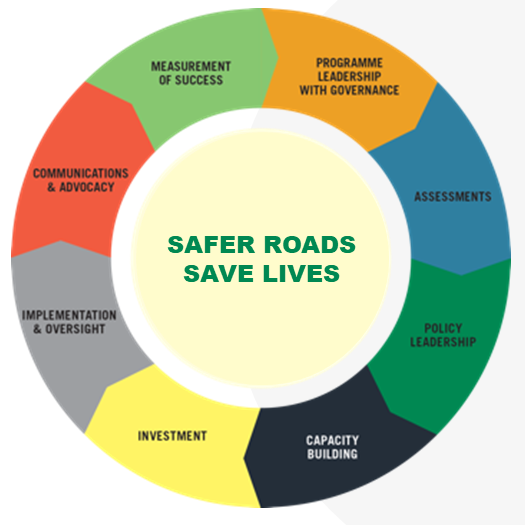
Measurement of Success
- Consider iRAP Certification to validate and celebrate your Star Rating results
- Consider the Programme Elements for Success and evaluate your progress in each area
- iRAP KPIs for your projects, design standards and policy
- Sample analytics to track communications success
- Evaluate your RAPScore (coming soon)
-
Celebrate your national RAP metrics
Popular Articles
- Explore the iRAP website to learn more about the methodology, tools, training & support
- Attend the free Introduction to iRAP webinar
- Attend the free Establishing a RAP in your Country webinar
- View the Developing a Locally Owned and Led National or State iRAP Programme brochure
- See an overview of the structure of existing RAPs
Newest Articles
- UNRSF Project Communications Strategy Best Practice
- Develop a Business Plan: Sample AusRAP Strategy & Business Plan
- Present results: Interactive reports and digital dashboards
- Screenshot your national results from iRAP's Safety Insights Explorer: iRAP Big Data Tool as infographics to portray the Human Impact of Injury in your country, how safe the roads are, the road attributes that matter, and the Business Case for Safer Roads
- Learn how to engage meaningful participation in road safety
Recently Updated Articles
- UNRSF Project Communications Strategy Best Practice
- Develop a Business Plan: Sample AusRAP Strategy & Business Plan
- Present results: Interactive reports and digital dashboards
- Explore iRAP's Safety Insights Explorer to understand the Human Impact of Injury in your country, how safe the roads are, the road attributes that matter, and the Business Case for Safer Roads
- Present national statistics: Screenshot your country’s iRAP Safety Insights Explorer data: iRAP Big Data Tool Graphics - The Human Impact of Injury, How Safe are your Roads, the Road Attributes that Matter, the Business Case for Safer Roads (note, full data not available for all countries)


 English
  Português do Brasil
  Français
  Tiếng Việt
  Русский
  Español de Colombia
  Nederlands