A national-first iRAP assessment in Kyrgyzstan has highlighted safety deficiencies of the EM-11 Highway and an evidence-based investment plan to lift its safety Star Rating and reduce fatal and serious injuries (FSIs) by up to 78 per cent.
The EM-11 corridor is of national and international significance, connecting Bishkek to the Torugart Pass on the border with China. The 525km highway forms part of the European route E125 and the Asian Highway AH61, serving as a vital link for regional trade, transportation, and access to the popular Issyk-Kul region.
The International Road Assessment Programme (iRAP) partnered with MC Mobility Consultants GmbH and the Ministry of Transport and Communications of Kyrgyzstan to Star Rate a 100km demonstration section of EM-11 from Bishkek to Kara-Bulak. The assessment, funded by the Asian Development Bank, is part of a broader CAREC Corridors 1 and 3 Connector Road Project.
The results showed:
- Low levels of road safety for the existing road: Only 22 per cent of the road length rated 3-star or better for vehicle occupants, 12 per cent for motorcyclists, 2 per cent for cyclists and 0 per cent for pedestrians. This falls short of the international 3-star safety standard required by United Nations’ Global Road Safety Performance Target 4.
- High road trauma with 45.2 fatalities estimated annually.
A Safer Roads Investment Plan (SRIP) offered a tailored set of affordable and effective road safety treatments to achieve:
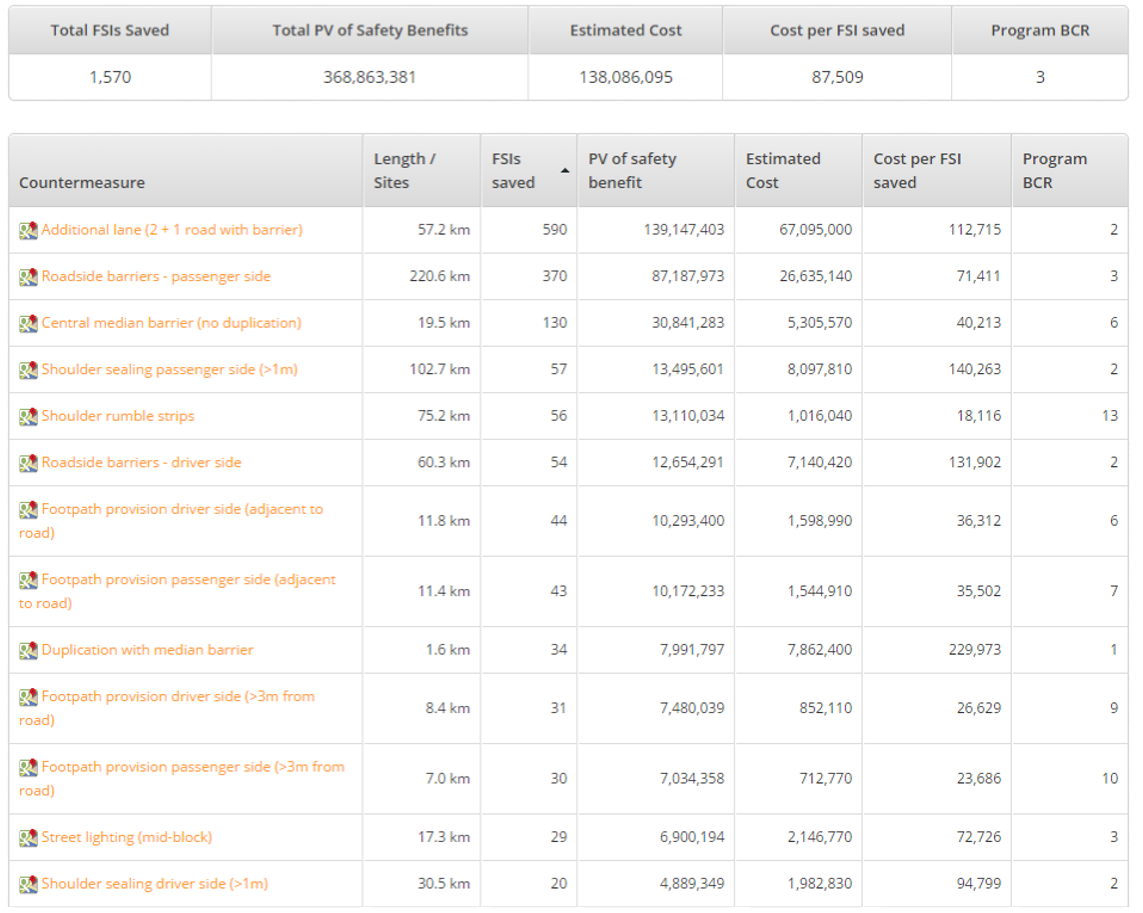
- Increased safety by duplicating single carriageway sections, upgrading intersections, and installing roadside safety barriers, shoulder rumble strips, wider paved shoulders, street lighting, improved road markings, pedestrian footpaths and additional crossing facilities.
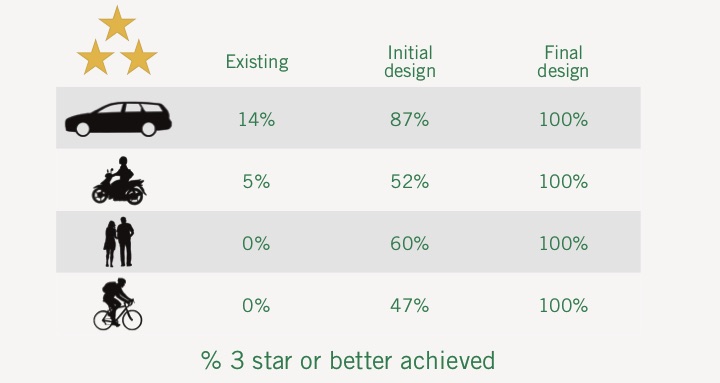
- A significant improvement in the safety Star Rating of the route for all road users with 100 per cent of the road length projected to achieve a 3-star or better rating for vehicle occupants, 99 per cent for motorcyclists, 58 per cent for pedestrians (where expected to be present), and 52 per cent for bicyclists.
- A reduction of up to 78 per cent in fatalities and serious injuries (FSI), saving an estimated 7,640 FSI.
- An economic benefit projected at US$177.2 million, providing a Benefit to Cost Ratio of 3.7.
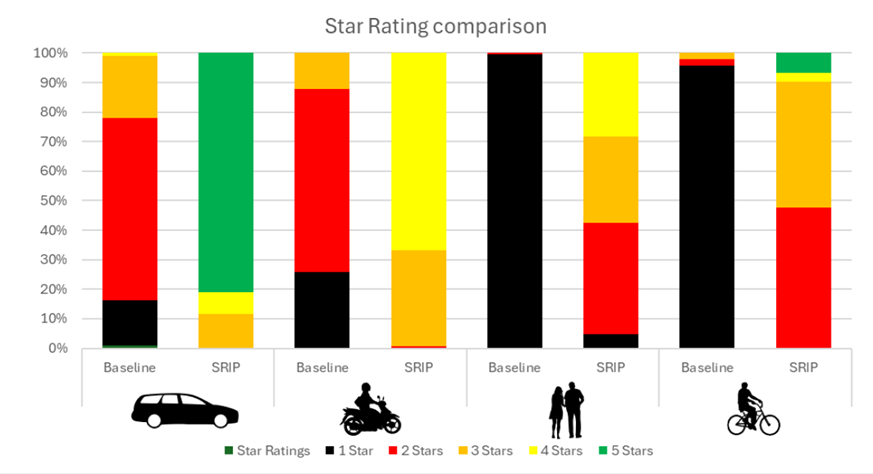
Baseline Star Ratings versus projected Star Ratings after Safer Roads Investment Plan (smoothed) is implemented
iRAP Global Operations Manager Luke Rogers said, “This project represents a critical step in improving road safety in Kyrgyzstan. By improving safety on the EM-11 corridor, the project will deliver long-term benefits to local communities, businesses, and travellers, fostering safer, more reliable access to key regions.
“Furthermore, it serves as a demonstration for broader adoption of iRAP’s methodology across the country, to facilitate capacity building within the Ministry of Transport and Communications, and paving the way for improved road safety nation-wide,” he said.
Kyrgyzstan was one of three pilot countries, along with Tajikistan and Uzbekistan, in a transformative project to improve road design standards across the Central Asia Regional Economic Cooperation (CAREC) countries completed last year. The United Nations Economic and Social Commission for Asia and the Pacific (ESCAP) project implemented by iRAP, the Eastern Alliance for Safe and Sustainable Transport (EASST) and the International Road Federation (IRF) significantly lifted capacity for safer road design and produced a new guidance on safe and inclusive road design for road engineers and infrastructure designers.
In February 2026, the Ministry of Transport and Communications of Kyrgyzstan formally approved the use of the new Road Design Guidance through Ministerial Order No. 43.
“With the insights of the EM-11 demonstration project and adoption of the Design Guidance as official policy, the future for safer roads in Kyrgyzstan is bright, supported by technical expertise, partnerships and political commitment that will ultimately save lives,” Mr Rogers added.
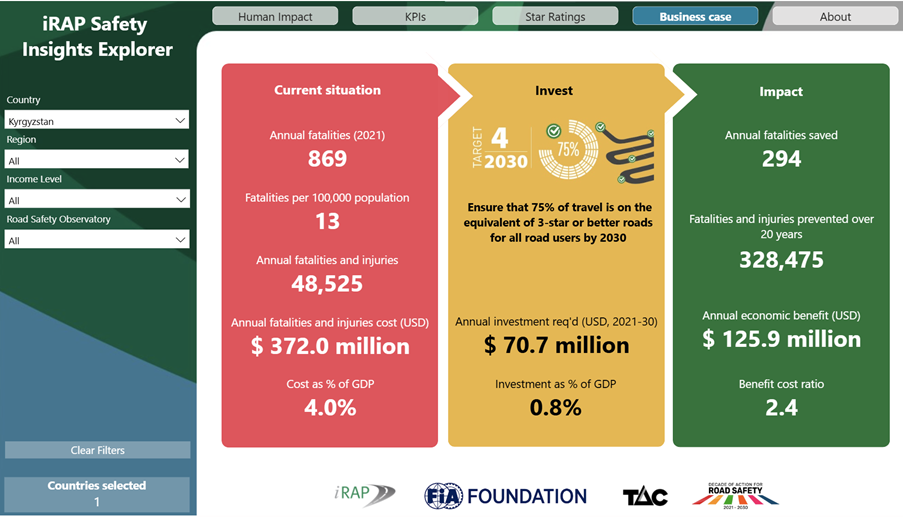
According to iRAP’s Safety Insights Explorer, achieving UN Target 4 for greater than 75% of travel on 3-star or better roads for all road users in Kyrgyzstan by 2030 stands to save an estimated 294 lives each year, and 328,475 lives and injuries over the 20-year life of road treatments, with an economic benefit of USD$125.9 million – $2.4 for every $1 spent. Explore more data insights on the country here.
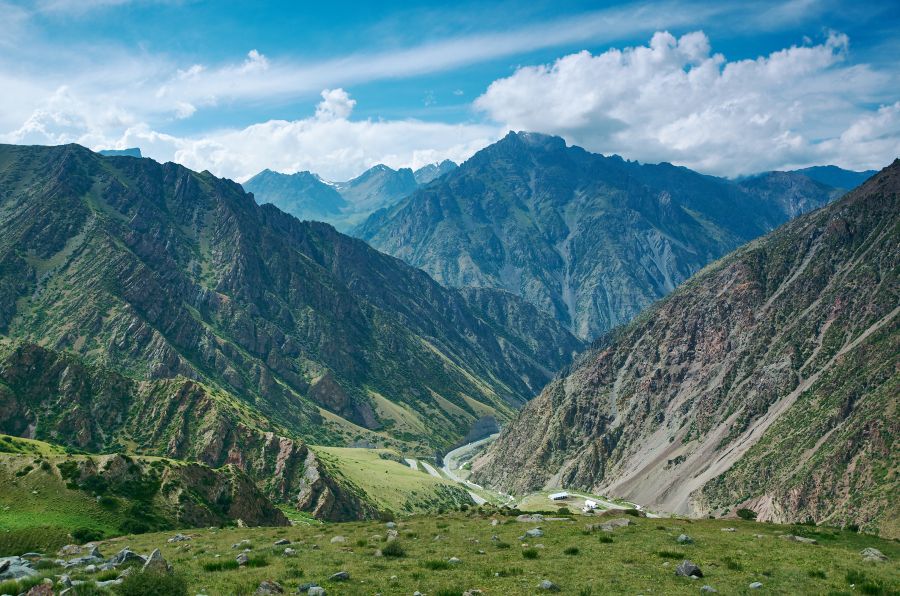
Lead image: Road from Bishkek, Kyrgyzstan (not EM-11), Image credit: Dreamstime, Alexander Mychko

 English
  Português do Brasil
  Français
  Tiếng Việt
  Русский
  Español de Colombia
  Nederlands