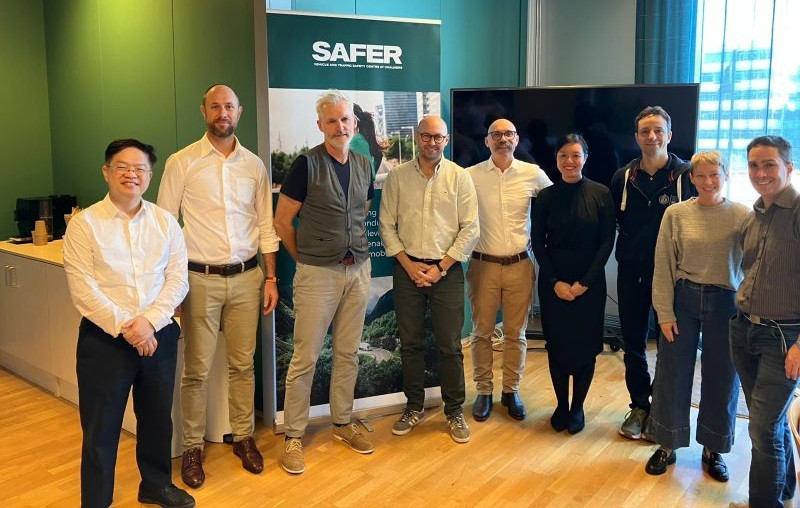
iRAP CEO Greg Smith joined international partners in Gothenburg, Sweden this month for a critical look at how we create a Safe System for motorcyclists, the focus of a globally significant project funded by Trafikverket (Swedish Transport Administration).
The international ‘Safe System Principles for Motorcycles’ Project recognises that the global goal to halve the number of traffic fatalities and serious injuries by 2030 cannot be achieved without a significant reduction in powered two-wheeler road crashes.
The project workshop held at the SAFER Vehicle and Traffic Safety Centre at Chalmers University brought together global expertise from Sweden, Australia, Malaysia, Italy and beyond, with contributions from Autoliv, iRAP, Trafikverket, University of Florence, Malaysian Institute of Road Safety Research (MIROS), Lösningar, Safe System Solutions, Strandroth Inc., and University of Florence.
With a global perspective, the 12-month project is identifying the necessary requirements for vehicle safety, road infrastructure, protective equipment, and speed limits to ensure a safer environment for powered two-wheelers. For example, by:
- Developing Safe System boundary conditions for common motorcycle crash scenarios;
- Translating these into infrastructure design principles for commuting, leisure, and mixed-use contexts; and
- Validating these principles against real-world crash data.
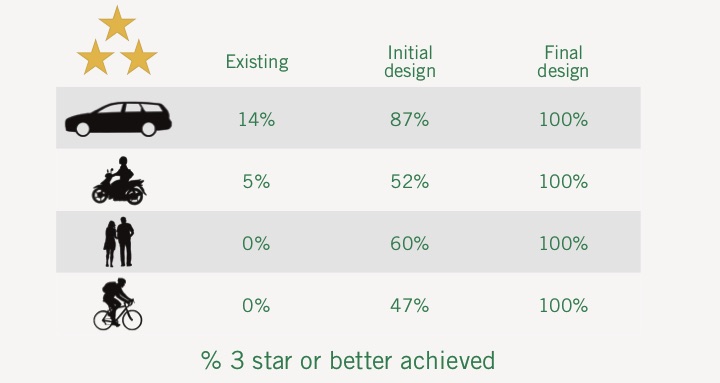
iRAP CEO Greg Smith said, “We’re delighted to be a part of this important initiative. We know that globally, less than 30% of roads meet the target 3-star or better safety standard for motorcyclists.
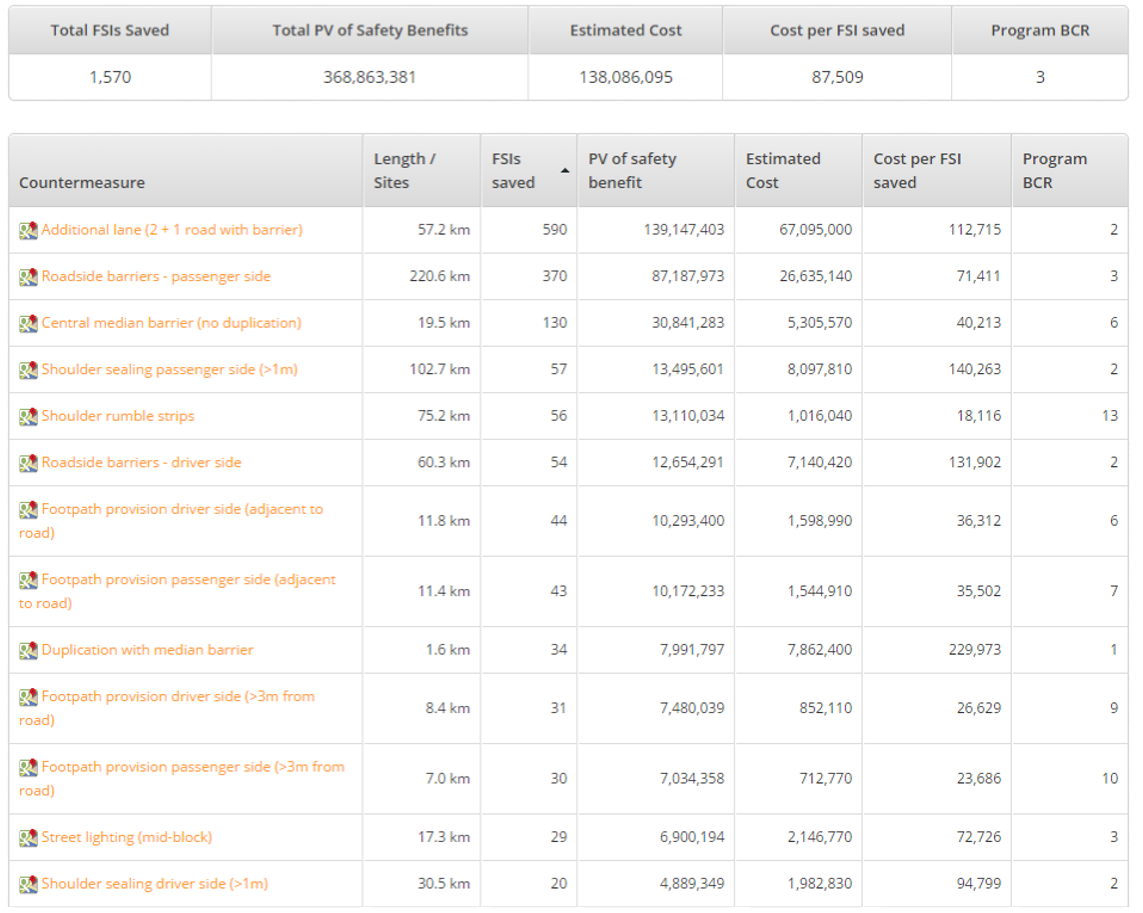
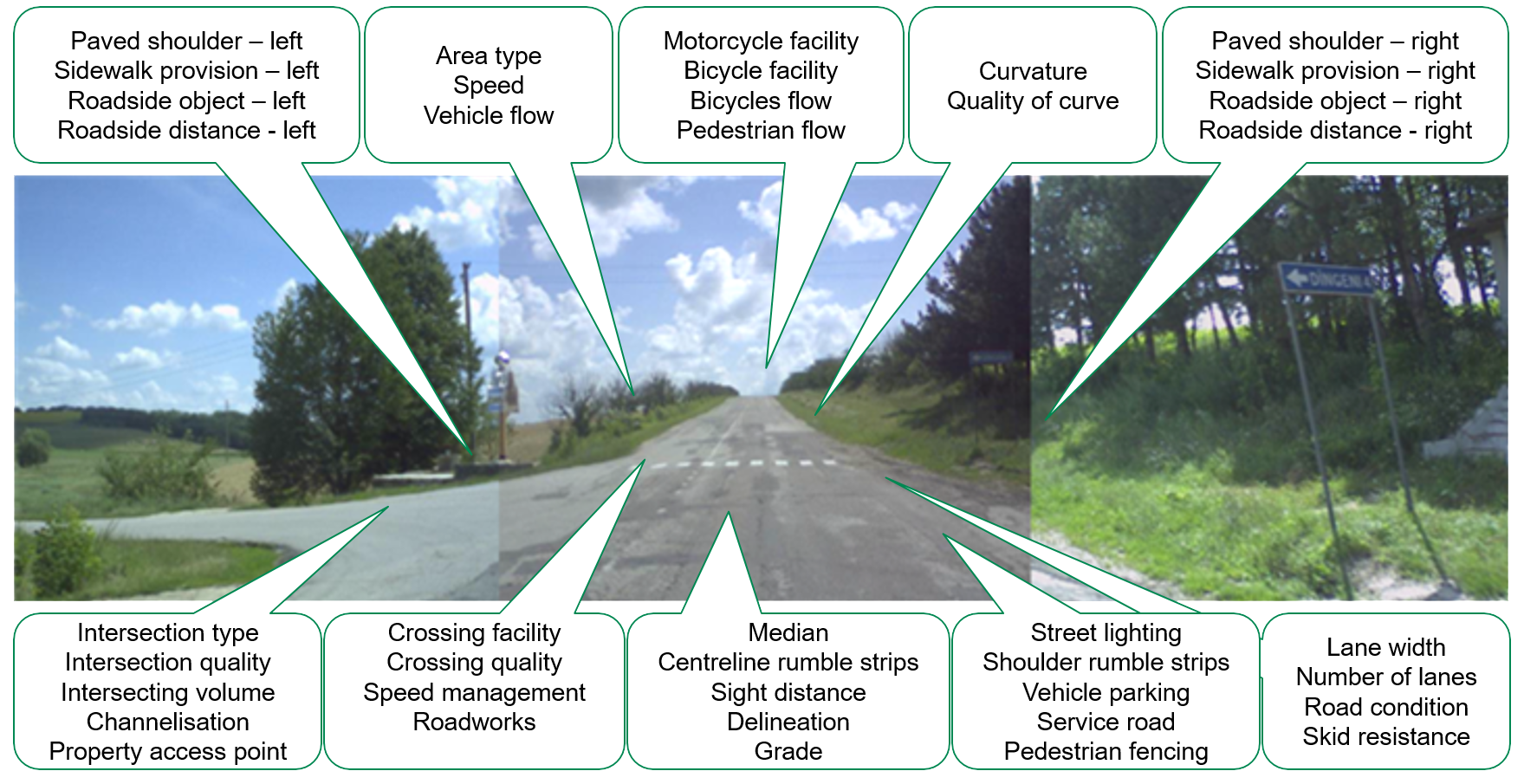
“iRAP Star Ratings providing an objective measure of the level of safety ‘built in’ to the road infrastructure for motorcyclists. Safer Road Investment Plans identify and prioritise evidence-based infrastructure improvements to save motorcyclists’ lives and reduce injuries.
“Dedicated motorcycle lanes, road alignment, skid resistance, surface and roadside hazards, and overtaking provision are all examples of infrastructure elements which can impact safety,” he said.
One of the key outcomes of the project will be guidance on appropriate speed limits, taking into account the diverse transport needs of motorcyclists – from daily commuting to recreational riding. The project has the potential to influence both national and international road safety strategies.
Reflecting on the workshop on LinkedIn, project partner Losningnar said, “This is just the beginning. By combining biomechanical science, infrastructure design, vehicle and protective equipment research, and global collaboration, we can save hundreds of thousands of lives each year and ensure that motorcycles have a safe place in the transport system.”
To learn more about improving motorcyclist safety:
- See iRAP’s interactive Powered Two Wheelers and Road Infrastructure Safety Report which includes data for almost 500,000km of roads that have flows of Powered Two-wheelers (PTWs) in more than 80 countries here. The report enables users to filter the data by country, region, area type, flow and speed.
- Explore how safe your country’s roads are for motorcyclists using iRAP’s Safety Insights Explorer here.
- Compare the cost rating and effectiveness of different infrastructure countermeasures for motorcyclists in the iRAP Toolkit here.
- Explore the iRAP-supported International Transport Forum (ITF)’s Safe System Tool, which provides an innovative framework designed to guide countries, municipalities, companies, and other road safety stakeholders in implementing the Safe System Approach to road safety here.

 English
  Português do Brasil
  Français
  Tiếng Việt
  Русский
  Español de Colombia
  Nederlands