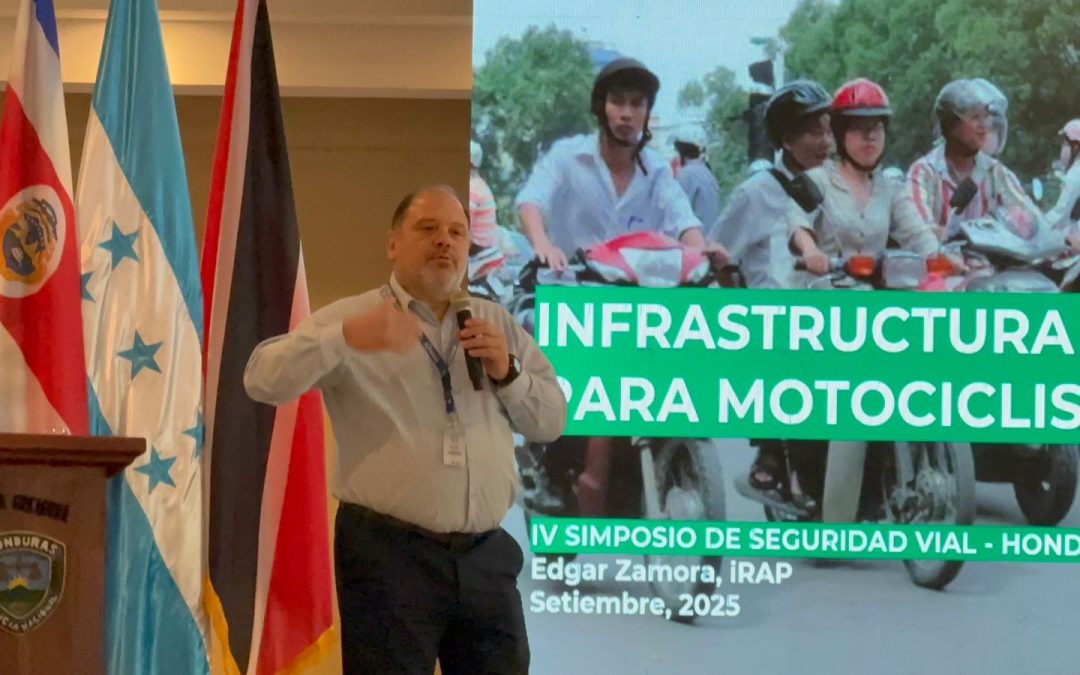
Last week, iRAP’s Safer Journeys Lead Edgar Zamora presented on improving the safety of road infrastructure for motorcyclists at the Policia Nacional Honduras Agenda IV Symposium, held in San Pedro Sula.
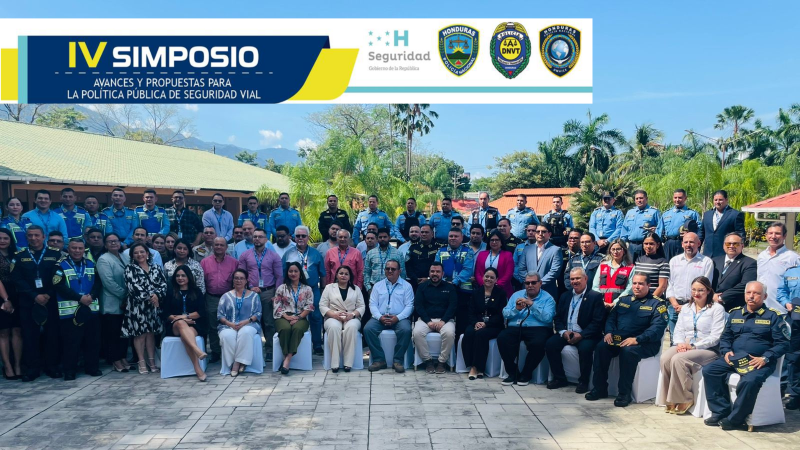
Held from 3-5 September, the Symposium marked the final step before the country develops its National Road Safety Strategy and highlighted stakeholders’ commitment to protecting all road users, particularly the most vulnerable.
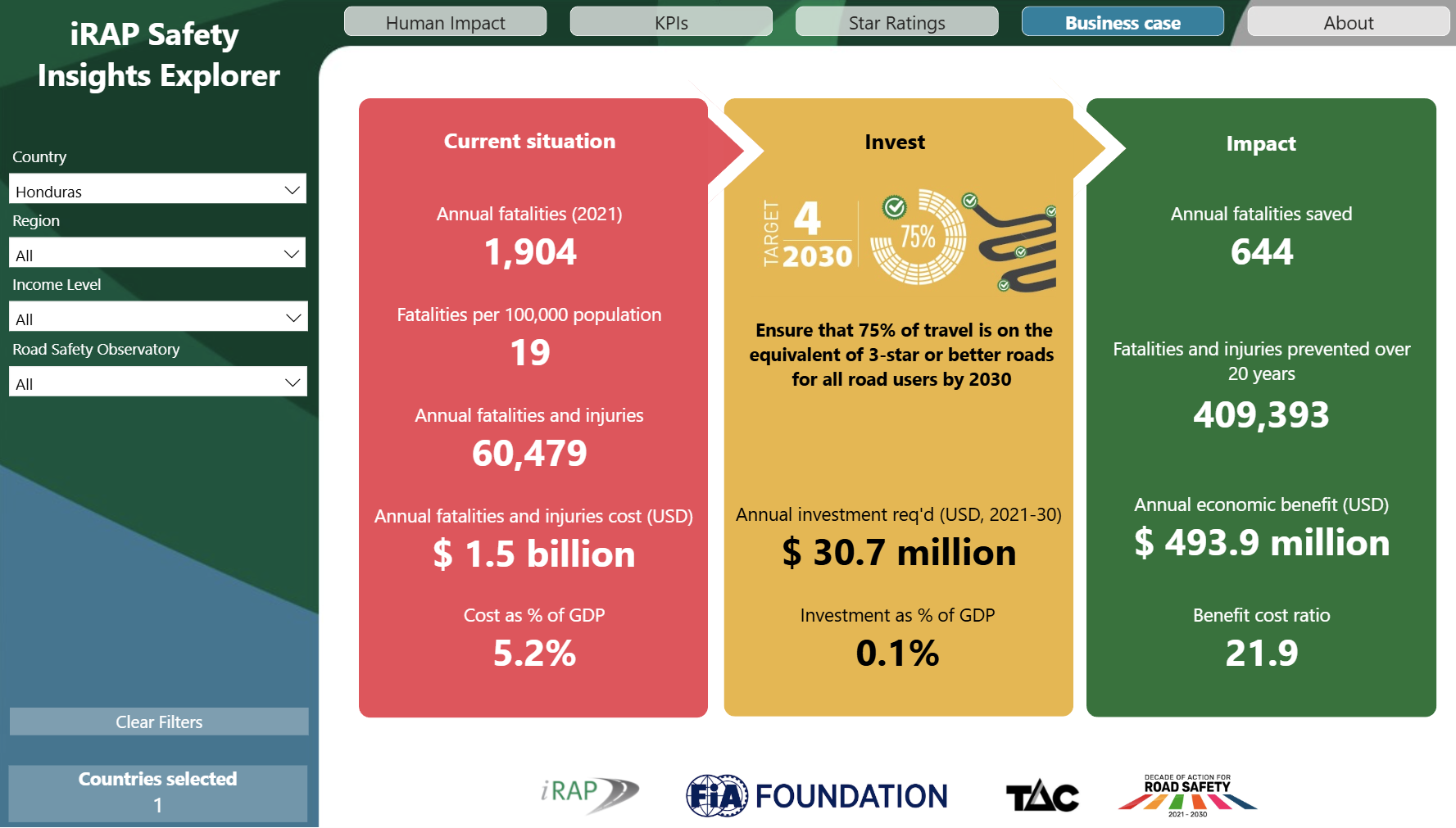
According to iRAP Safety Insights Explorer, road crashes claim over 1,900 lives each year in Honduras, with only nine per cent (9%) of roads rating the 3-star or better global safety standard for motorcyclists.
The Symposium was opened by keynote speaker Commissioner General José Adonay Hernández Vasquez, and included presentations from national and international specialists sharing the reality of road trauma in the country, contributing factors, legal and policy frameworks, motorcyclist insights, and best practice learnings to inform policy and practice.
The event brought together high-level road safety experts, decision-makers and stakeholders from the National Police, Secretariat of Infrastructure and Transport, Secretariat for National Health (SESAL), the Road Safety Council of Costa Rica (COSEVI), Association of Victims of Accidents, Honduran Tourism Institute, National Autonomous University of Honduras (UNPH), Fund for the Care of Accident Victims (FONAT), Honduran Council of Private Enterprise (COHEP), CAHDO, Strategic Communications, Pan American Health Organization (PAHO), Federation Internationale de l’Automobile (FIA), iRAP, the insurance sector and road safety NGOs.
Edgar presented on the Global Plan for the Decade of Action for Road Safety 2021-2030 and the benefit of achieving UN Targets 3 and 4 which include ensuring all new roads are built to a 3-star or better standard for all road users (Target 3), and more than 75% of travel is on the equivalent of 3-star or better roads for all road users by 2030 (Target 4).
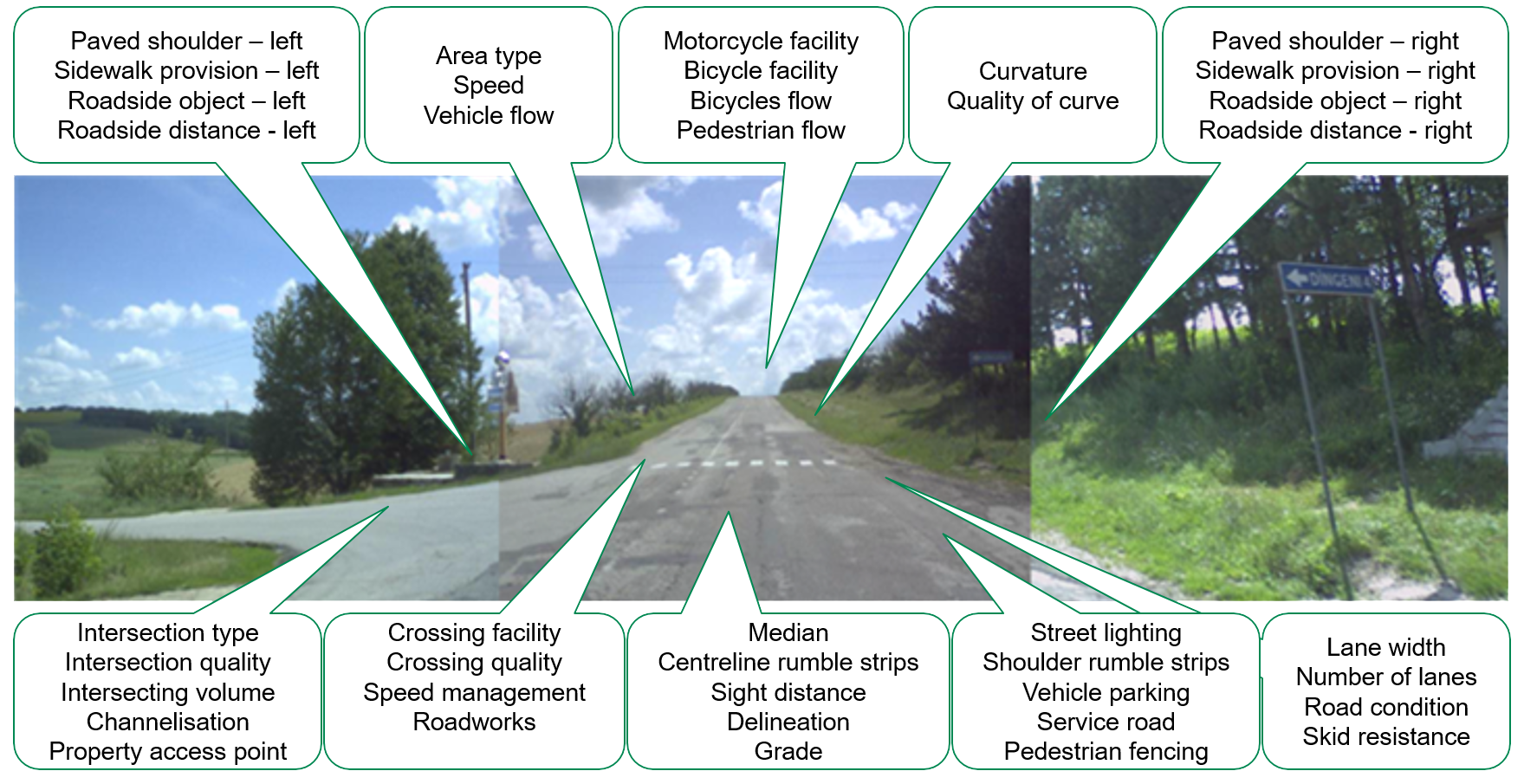
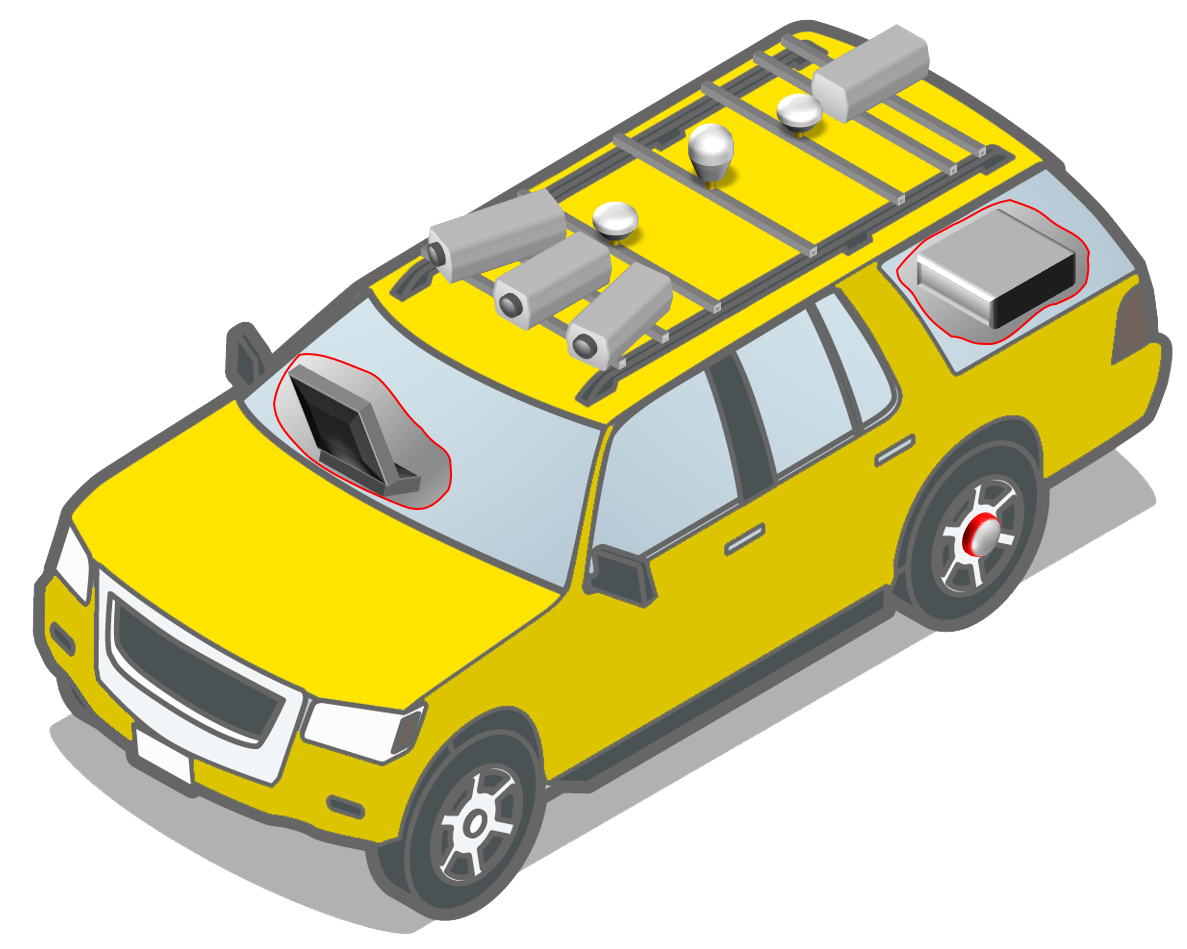
He also shared how iRAP can support Honduras with the methodology, tools, policy guidance and training to build local capacity and eliminate high-risk roads in the country.
The event culminated with workshop discussions at multi-sectoral tables on the road safety challenge, potential evidence-based solutions, and a future workplan proposal.
It’s great to be working with partners in Honduras to help shape their National Strategy, and inform future projects and programs to make their roads safer for motorcyclists, and all road users.
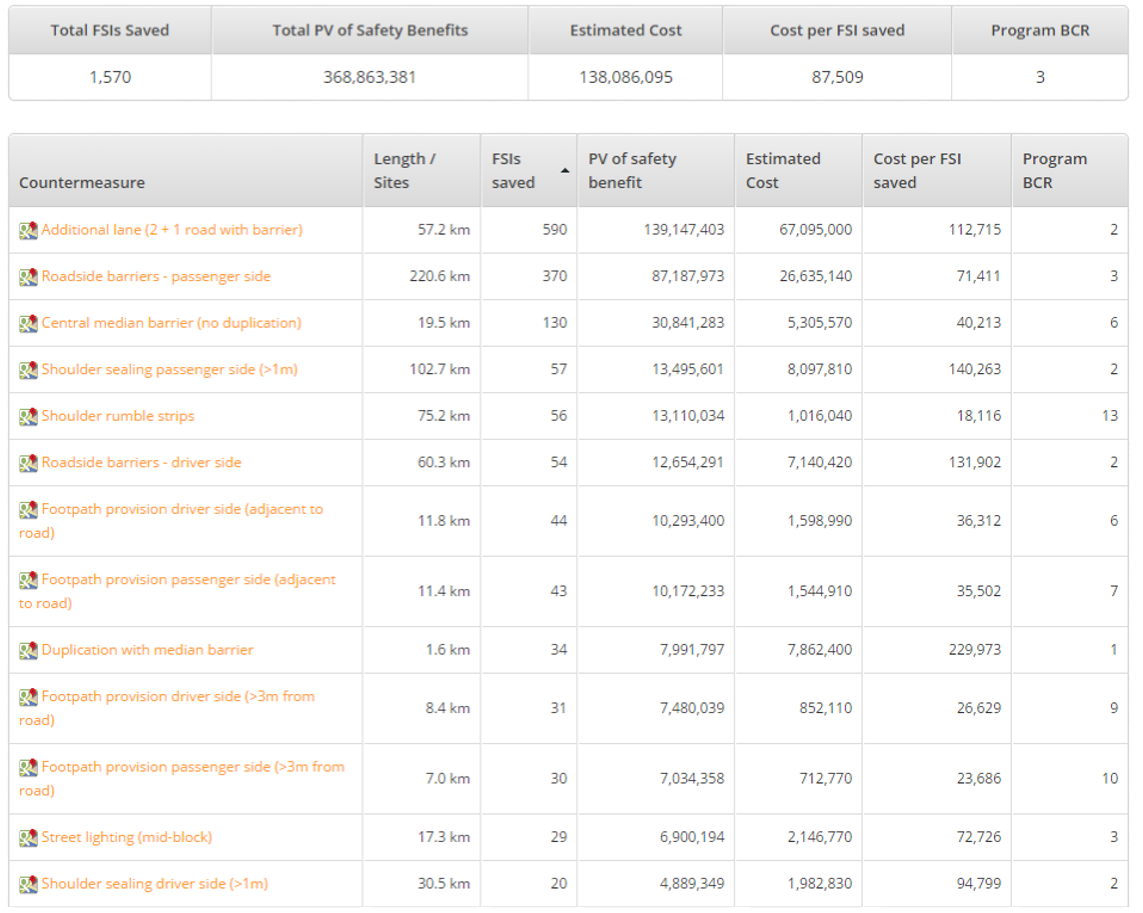
Achieving UN Target 4 stands to save 644 lives each year in Honduras, and an estimated 409,393 fatalities and injuries over the 20 year life of road treatments, with an economic benefit to the country of US$493.9 million – a benefit of $21.90 for every $1 spent.
For more information:
- Download the Symposium Agenda here.
- For more data insights into the human and economic impact of road trauma in Honduras; how safe its roads are for motorcyclists, pedestrians, bicyclists and vehicle occupants; the road attributes the matter; and the Business Case for Safer Roads, visit irap.org/safety-insights-explorer/
- Listen to Edgar’s presentation (in Spanish) below:

 English
  Português do Brasil
  Français
  Tiếng Việt
  Русский
  Español de Colombia
  Nederlands