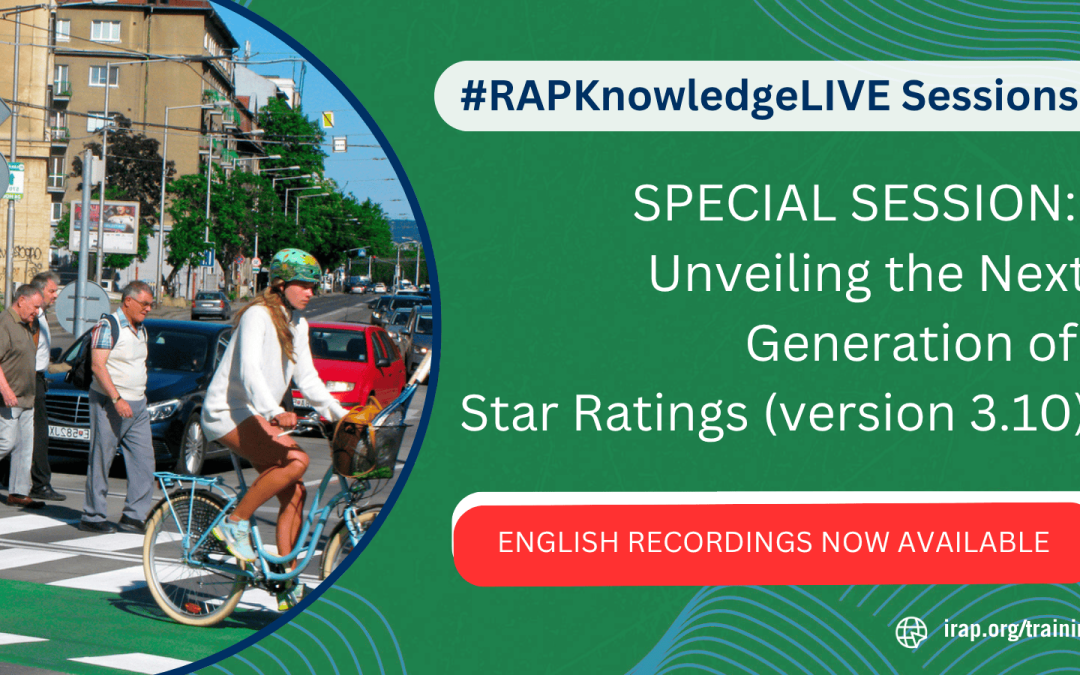
Road safety champions from across the globe gathered last week for two #RAPKnowledgeLive special sessions. These webinars marked a pivotal moment in the journey toward the UN Decade of Action for Road Safety, offering an exclusive first look at the new improved iRAP Star Rating Model: Version 3.10.
Following a comprehensive five-year review by the iRAP Global Technical Committee, Version 3.10 is set to launch in May 2026. These sessions provided essential insights for road authorities, engineers, and partners on how the model is evolving to better protect all road users.
Catch Up: Watch the Recordings
If you missed the live English sessions or want to revisit the technical details, the recordings and presentation materials are now available (we also have Spanish, Portuguese and French sessions coming up!)
-
Watch Session 1 Recording (North America, Europe, Africa, Middle East)
- Watch Session 2 Recording (Asia, Australia-Pacific)
-
Download the iRAP Star Rating Model Update Explainer Note: Details the changes made to the crash risk models, risk factors and coding guidance.
-
Download the iRAP Methodology Reference Guide: This consolidated reference guide fully describes the iRAP models and risk factors, as well as the evidence which underpins these.
Key Insights: Q&A from the Live Sessions
To give you a head start on the transition, we’ve highlighted the most pressing questions raised by the global community during last week’s webinars:
How does the new “Zero Star” rating impact our current data?
The introduction of the Zero Star band is designed to identify and prioritize extremely high-risk road sections that were previously grouped into the 1-Star category. This allows for better-targeted investment decisions by highlighting where the risk is most acute.
What improvements have been made for Vulnerable Road Users (VRUs)?
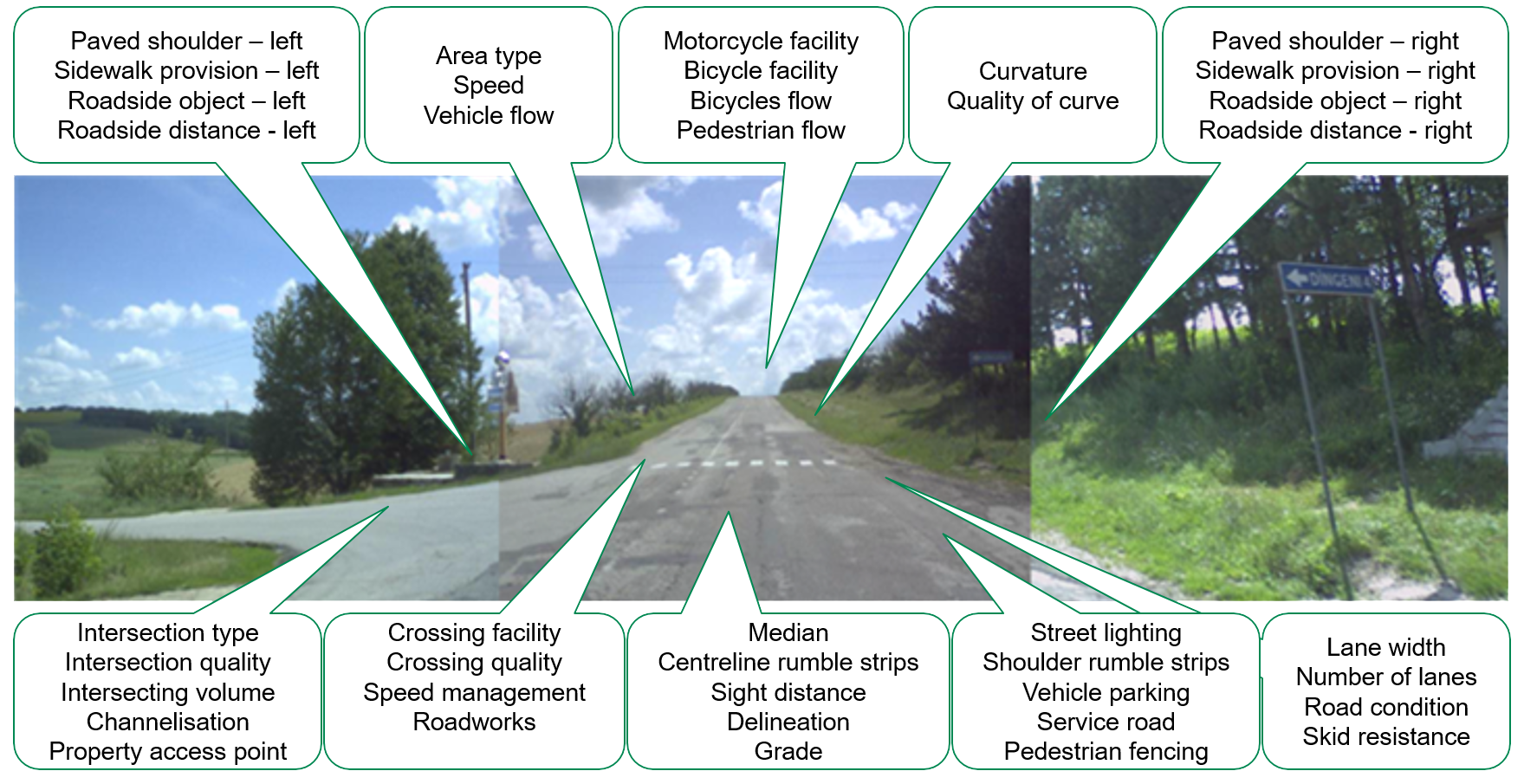
Version 3.10 features major enhancements to pedestrian and bicyclist models. This includes a brand-new Bicyclist Crossing crash type and more granular coding categories—such as the specific distance of sidewalks from the curb – to improve model precision.
Can we measure small safety improvements that don’t shift a full Star Rating?
Yes. With the new Decimal Star Ratings, authorities can now measure and communicate gradual improvements more clearly. This captures the impact of targeted safety upgrades that reduce risk even if the road remains within its current Star band.
How will this affect our existing projects in ViDA?
Projects currently using Version 3.02 will remain as they are to ensure consistency. However, Version 3.10 will be the new standard for all future assessments in ViDA starting May 2026. Transition guidance is available to help partners understand why results may change between versions.
You can download more Q&A’s from the session here
We also have a Frequently Asked Questions (FAQ) document: That answers to common technical and data management queries.
Upcoming Sessions: Join Us in Your Language
We are continuing this global rollout with three dedicated sessions in Spanish, Portuguese, and French. These webinars will cover the same technical depth as the English sessions, tailored for regional contexts.
| What region? | What language? | Date | Time | Speakers | Zoom Registration link |
| West/Central Africa + Europe | French | Monday 6 April |
1100 UTC 1300 CEST (Paris) 1200 WAT |
Nathalie Chiavassa, Safer Journeys Lead (Africa) – iRAP | Register here |
| LATAM + Spain | Spanish | Monday 6 April |
1500 UTC 0900 CST (Mexico) 1000 COT 1700 CEST (Spain) |
Morgan Fletcher, LAC Operations Team Lead – iRAP | Register here |
| Brazil + Portugal | Portuguese | Tuesday 7 April |
1300 UTC 1000 BRT 1400 WEST (Portugal) / WAT (Angola) |
Morgan Fletcher, LAC Operations Team Lead – iRAP and Gabriel Oliveira, Road Safety Project Intern – iRAP | Register here |
Don’t wait until the May launch! Secure your spot today to ensure your and/or your team is fully prepared for the transition to model 3.10!

 English
  Português do Brasil
  Français
  Tiếng Việt
  Русский
  Español de Colombia
  Nederlands