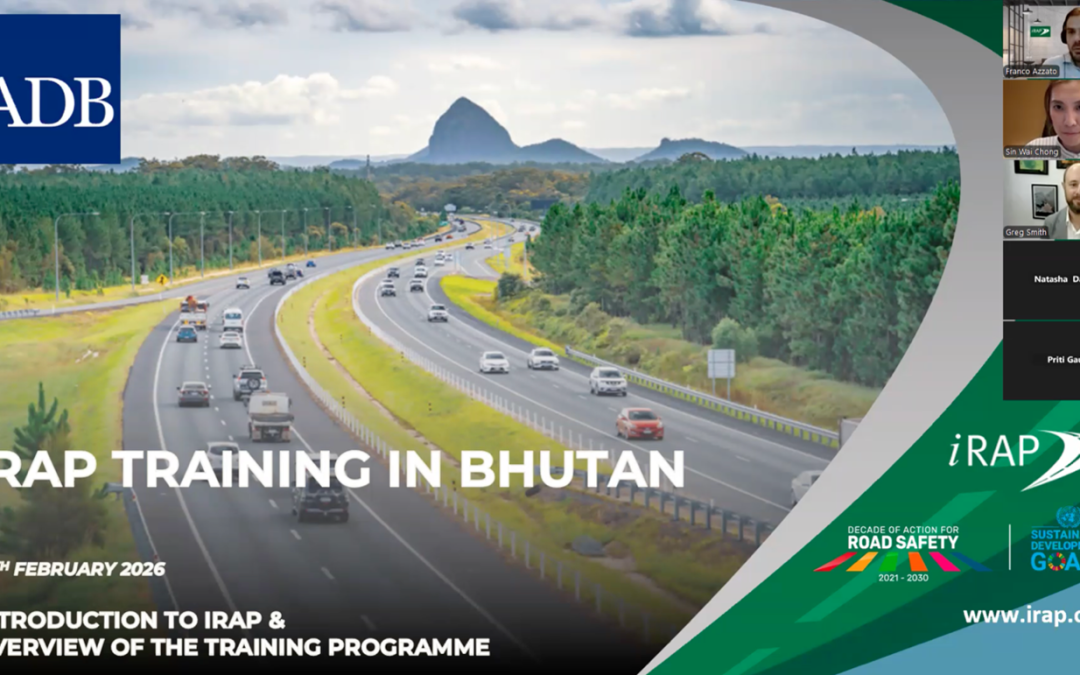
On 26 February 2026, iRAP Star Rating Essentials training commenced for government officials from the Bhutan Construction and Transport Authority (BCTA), the Department of Surface Transport, and Thimphu Thromde, marking a continued step forward in strengthening road safety capacity in Bhutan.
Supported by the Asian Development Bank (ADB) and the Asia Pacific Road Safety Observatory (APRSO), the virtual workshop was opened by Sin Wai (Angel) Chong, Transport Specialist at the ADB. She noted that the training is delivered based on priorities identified during the Safe System Workshop held in Bhutan in December 2025.
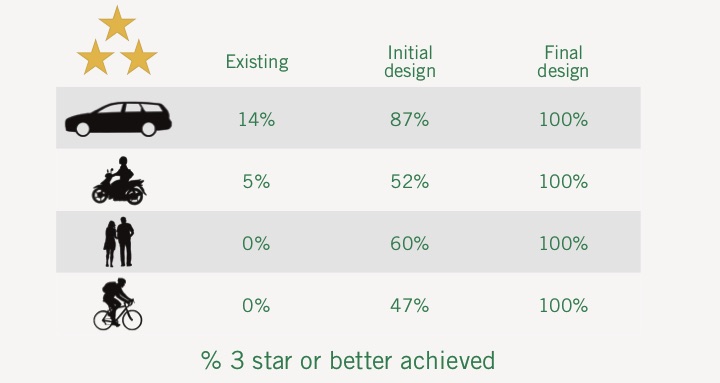
iRAP CEO Greg Smith introduced participants to the iRAP methodology and its role in improving road infrastructure safety. He highlighted the alignment of Star Ratings with the global Sustainable Development Goal targets. Targets 3 and 4 include ensuring all new roads are built to a 3-star or better standard for all road users (Target 3), and more than 75% of travel is on the equivalent of 3-star or better roads for all road users by 2030 (Target 4).
Participants were also guided by iRAP’s Training and Accreditation Coordinator, Franco Azzato, who outlined what to expect from the learning journey and accreditation pathway.
Following a blended learning programme culminating in a face-to-face workshop scheduled in April, participants will be eligible to undertake accreditation examinations. Successful accreditation will enable them to apply the iRAP methodology to support safer roads across Bhutan.
The training forms part of broader efforts to embed Safe System principles into government planning, and to build national expertise for safer road infrastructure.
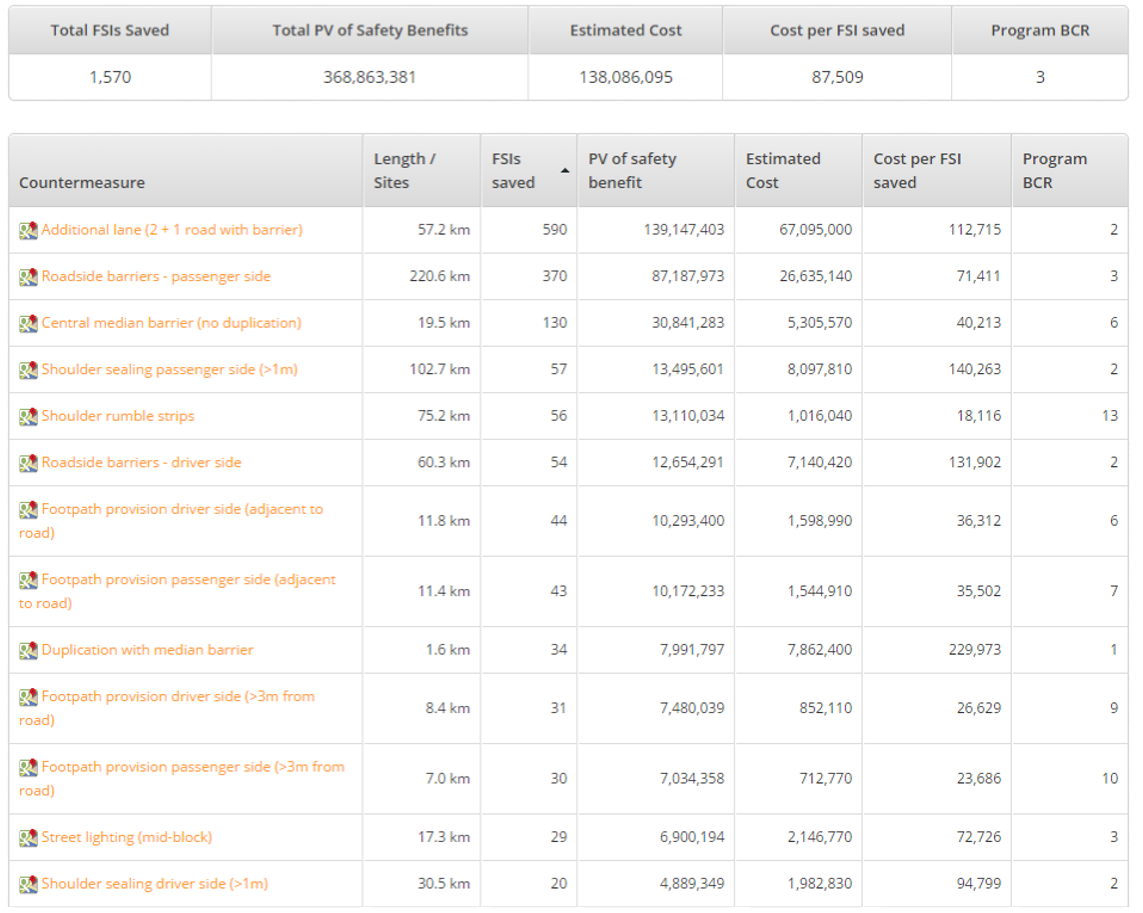
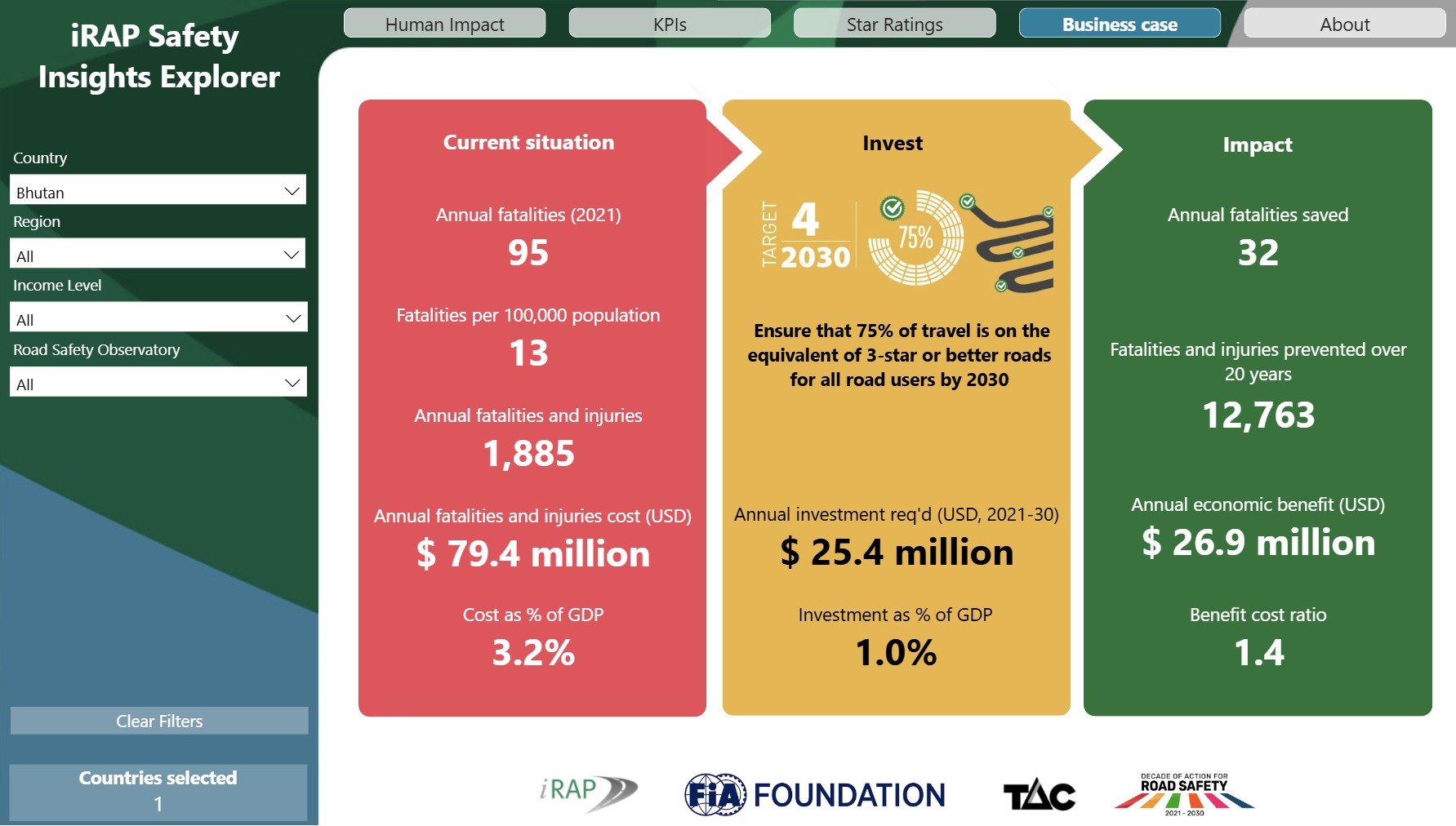
According to iRAP’s Safety Insights Explorer, achieving UN Target 4 for greater than 75% of travel on 3-star or better roads for all road users in Bhutan by 2030 stands to save an estimated 32 lives each year and 12,763 lives and injuries over the 20-year life of road treatments with an economic benefit of USD$26.9 million.

 English
  Português do Brasil
  Français
  Tiếng Việt
  Русский
  Español de Colombia
  Nederlands