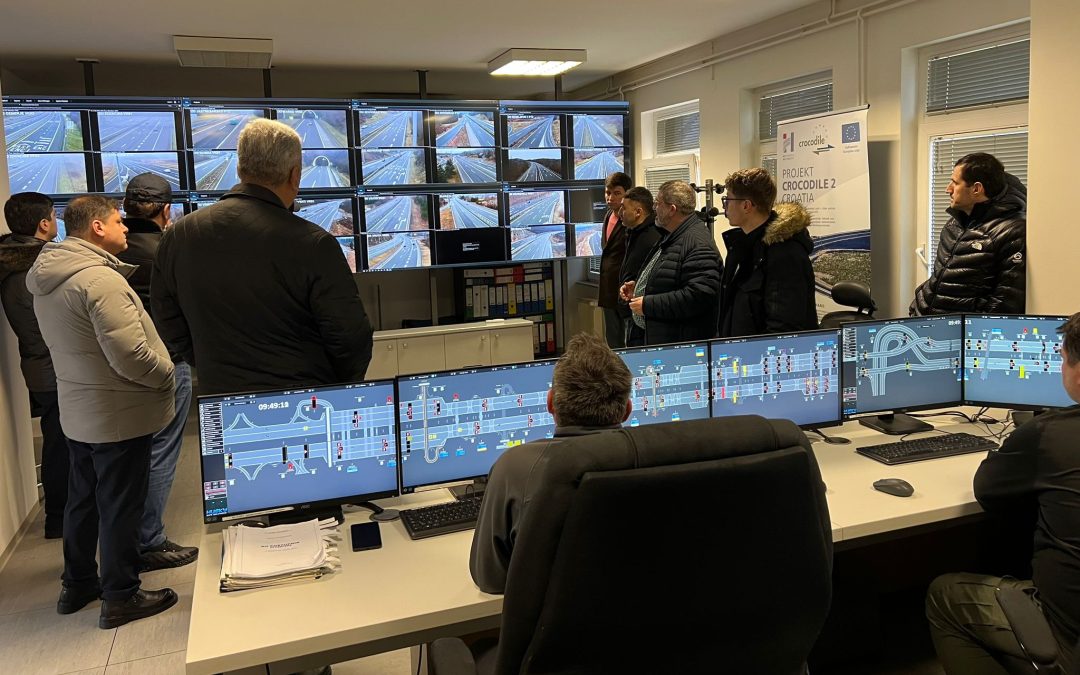
Senior MoT officials visit Croatian Motorways
Senior officials from the Ministry of Transport of the Republic of Tajikistan recently undertook a 12-day European road safety study tour, and practitioners attended in-country field training, as part of a Road Safety Advisory Project delivered by iRAP and linked to a US$150 million Green Corridor Demonstration Project in the country.
The tour and field trainings are supporting institutional capacity building and practical knowledge exchange to strengthen road infrastructure safety management in Tajikistan.
Tajikistan’s Journey to Safer Roads and Designs
The Government of Tajikistan, as part of its commitment to the CAREC Regional Road Safety Strategy 2017–2030, is aiming to halve road fatalities by 2030.
From 2023-2025, Tajikistan was one of three pilot countries, alongside Kygyzstan and Uzbekistan, in the UN Road Safety Fund-supported Safe and Inclusive Road Designs in Central Asia Project. The innovative project was a collaboration between UNESCAP, iRAP, EASST and the International Road Federation (IRF) to review local road geometrical design standards, build road safety capacity and publish a new Road Safety Design Guidance informed by international best practice.
Building on the project’s success and lessons learned from a 2022 review of five major ADB-funded road projects, iRAP’s Road Safety Advisory Project aims to address infrastructure safety deficiencies in Tajikistan through better planning and design. A key mechanism is the introduction of a Design Exception Procedure, enabling the legal use of non-standard but safer treatments typically implemented by the world’s leading road agencies.
To support this, the Ministry of Transport aims to strengthen institutional capacity, starting with local training and the European study tour delivered this month.
In-country Training for Practitioners
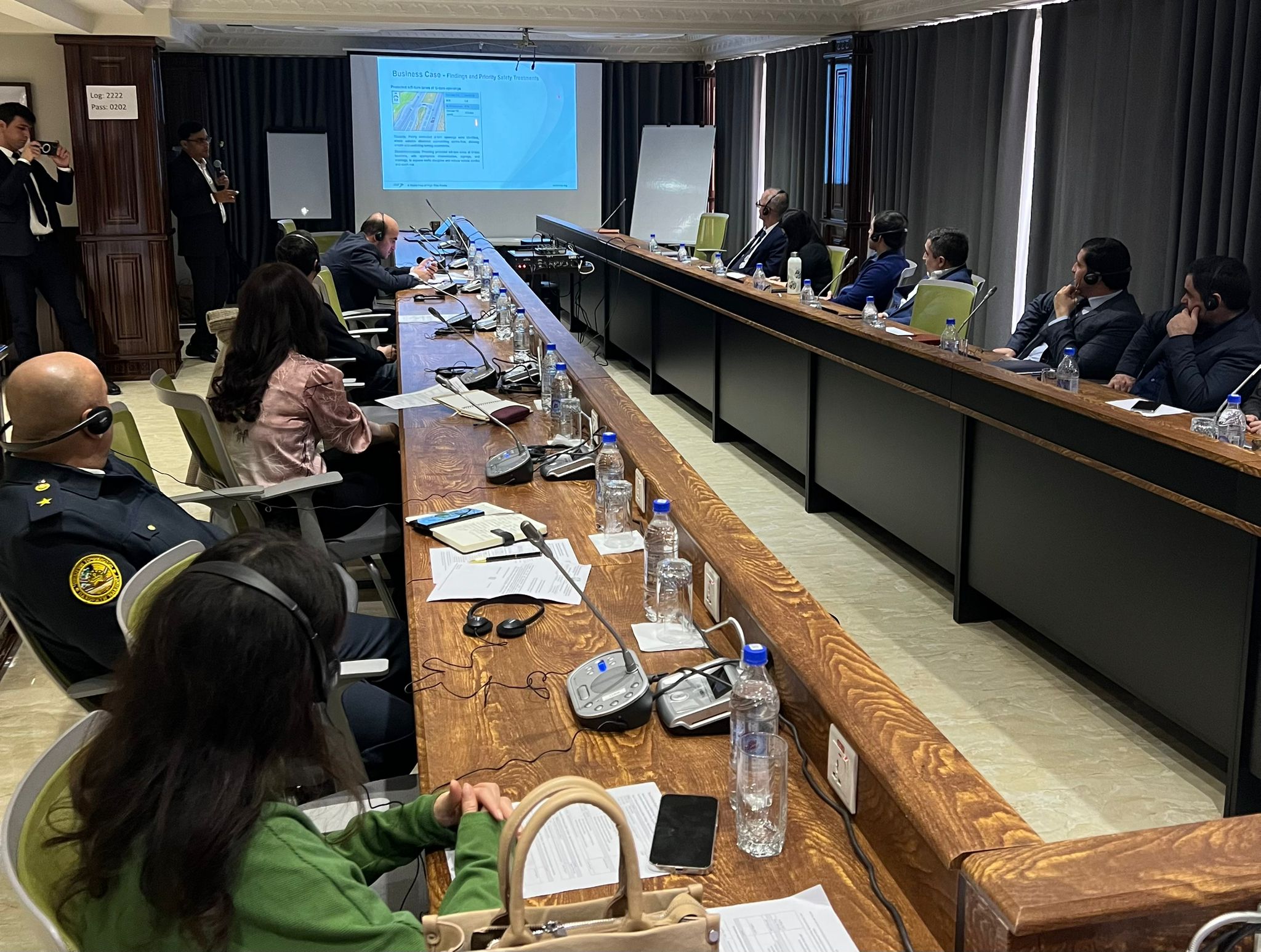
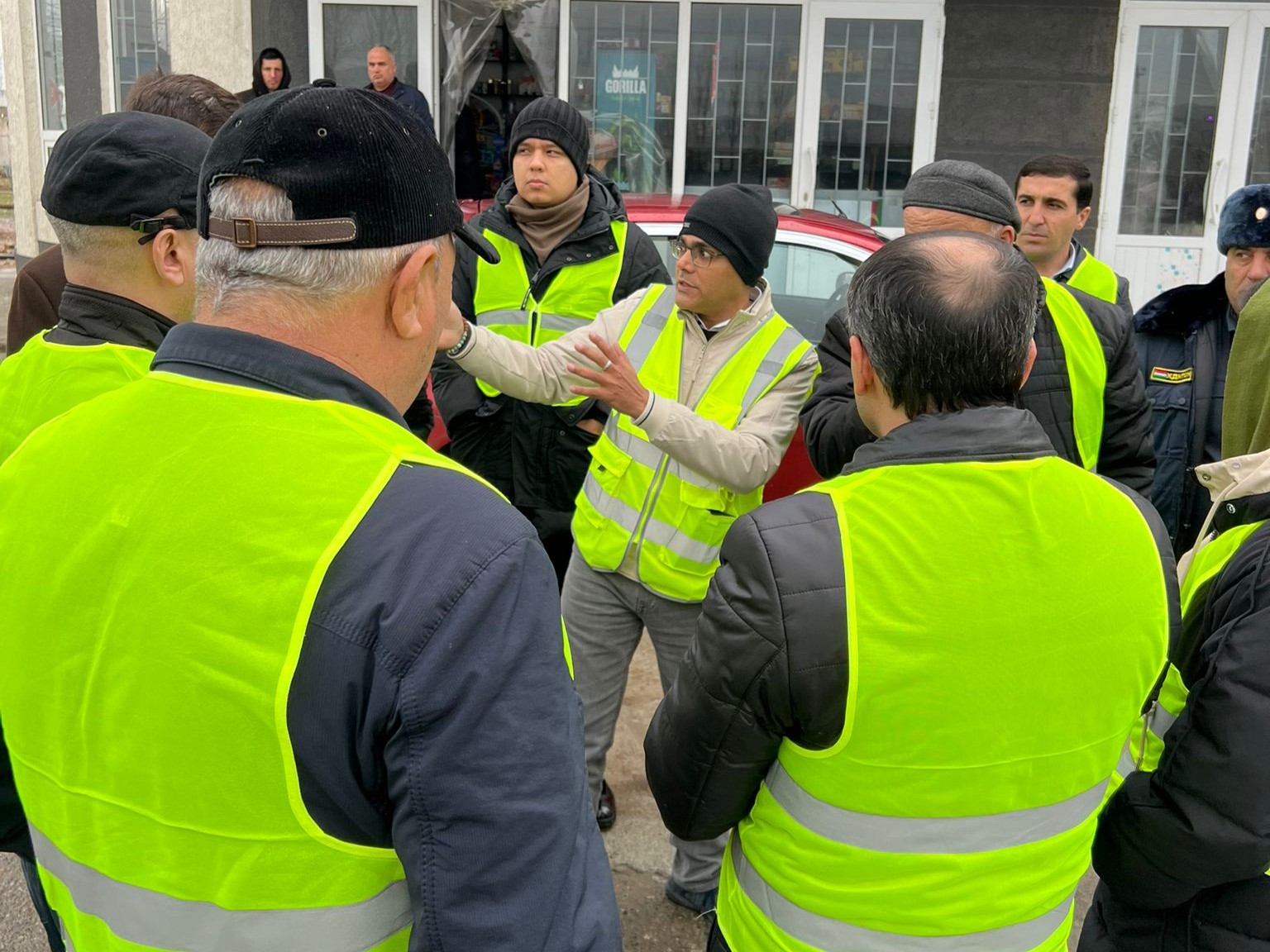
From 2-4 February in Dushanbe, iRAP’s Global Operations Manager Luke Rogers and Senior Road Safety Engineer Jigesh Bhavsar trained 22 road safety engineers, practitioners and Ministry staff in the iRAP methodology and tools, road safety audits, Safe System approach and engineering solutions to achieve a 3-star or better infrastructure safety rating.
The training included both classroom and in-field site visits providing participants with opportunities to identify and assess road safety issues and potential solutions in local environments utilising audit and iRAP assessment methodologies.
Ministry Officials’ European Study Tour
Following this, Mr Rogers and iRAP Senior Engineer Morgan Fletcher, supported by iRAP partners in Europe, hosted 10 Ministry officials on a European Study Tour.
The delegation visited Zagreb, Utrecht, The Hague, and Athens, engaging with world-leading road authorities, toll road companies, research institutes, universities, NGOs and practitioners to explore international best practice in Safe System implementation, urban road safety, cycling and pedestrian infrastructure, corridor risk management, and investment prioritisation.
Through technical briefings, site visits and facilitated workshops, participants examined the practical application of iRAP methodologies and risk-based approaches to reducing fatalities and serious injuries.
The programme was designed to help translate international experience into context-appropriate solutions for Tajikistan, particularly in support of the Green Corridor Demonstration Project and ongoing road rehabilitation initiatives.
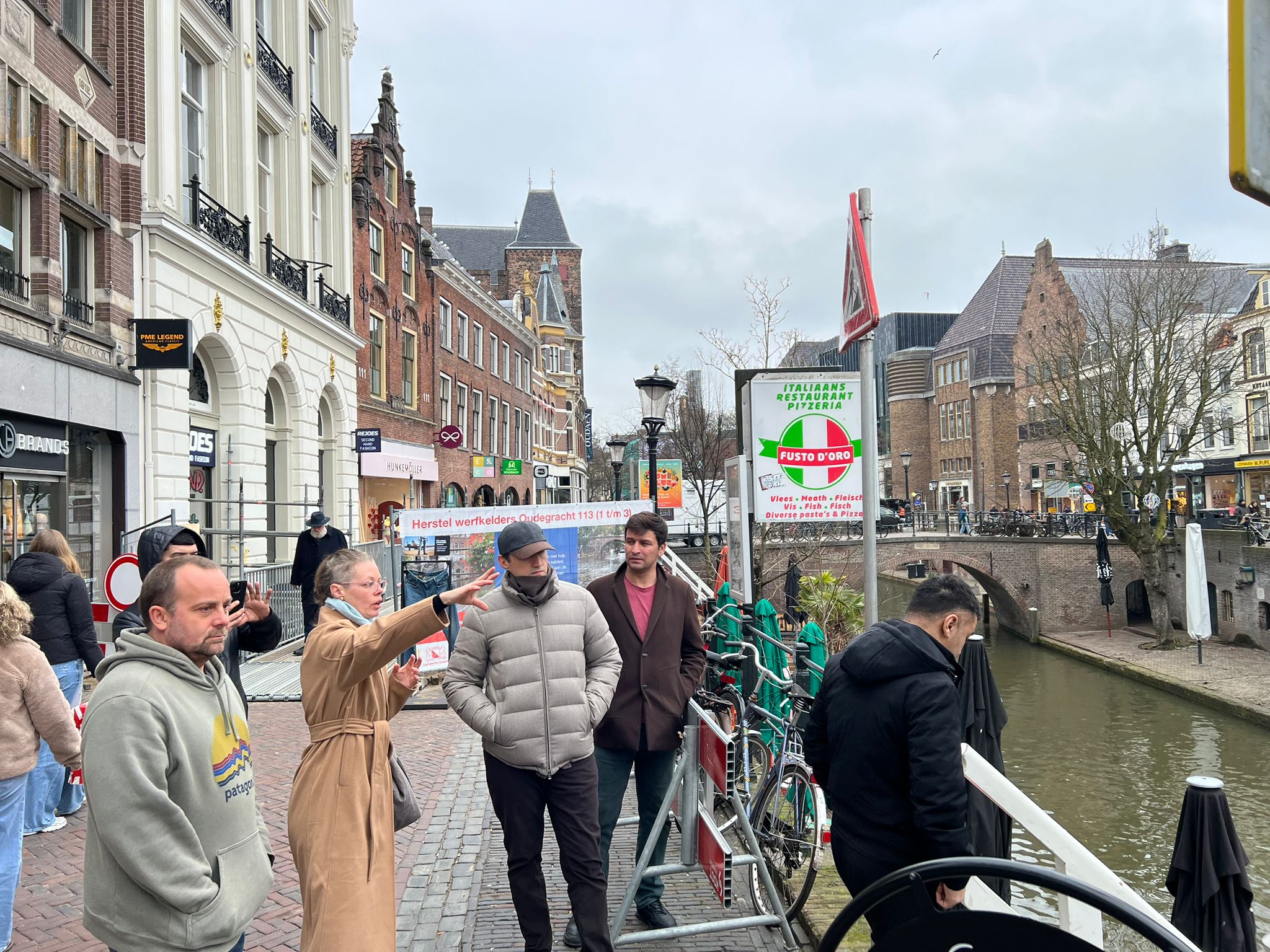
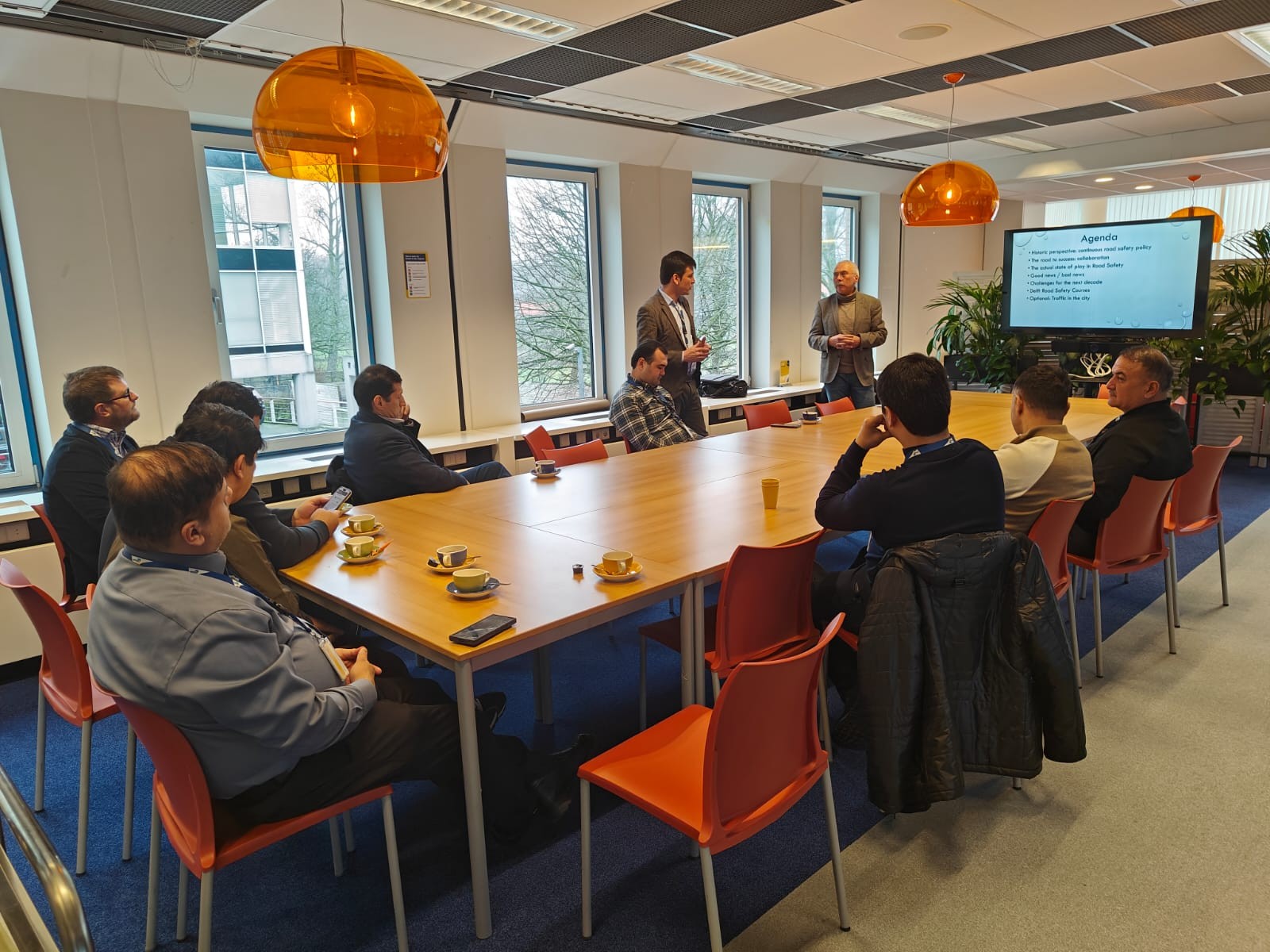
Ferry Smith, iRAP Board Member and Member of the Advisory Group for the UN Special Envoy for Road Safety, shared insights from iRAP experience and activity in Europe.
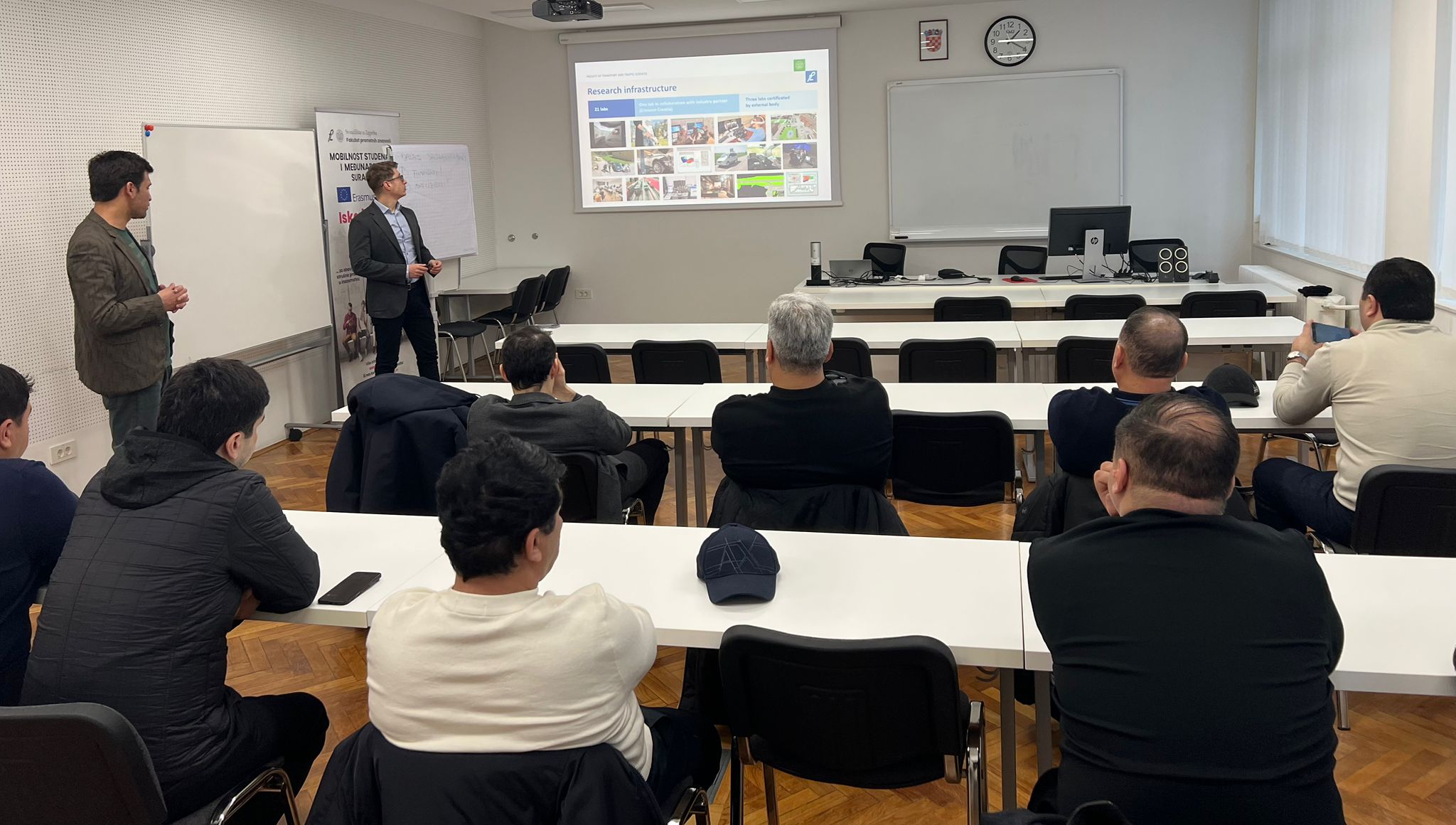
The team from University of Zagreb’s Faculty of Transport and Traffic Sciences (FPZ) shared their research and practice in transport and traffic engineering
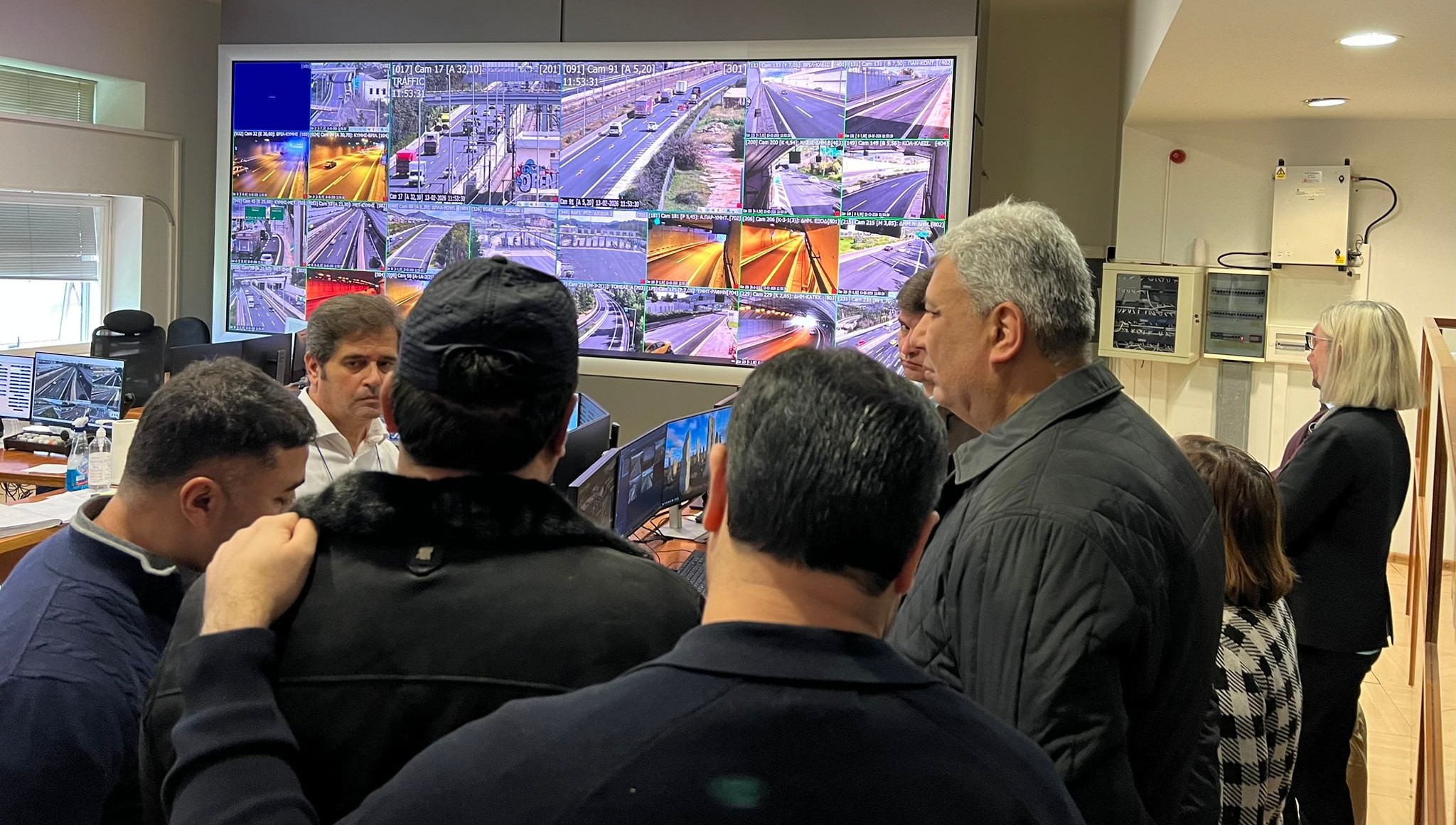
Participants enjoyed a visit to Attica Tollway Operations Centre in Athens
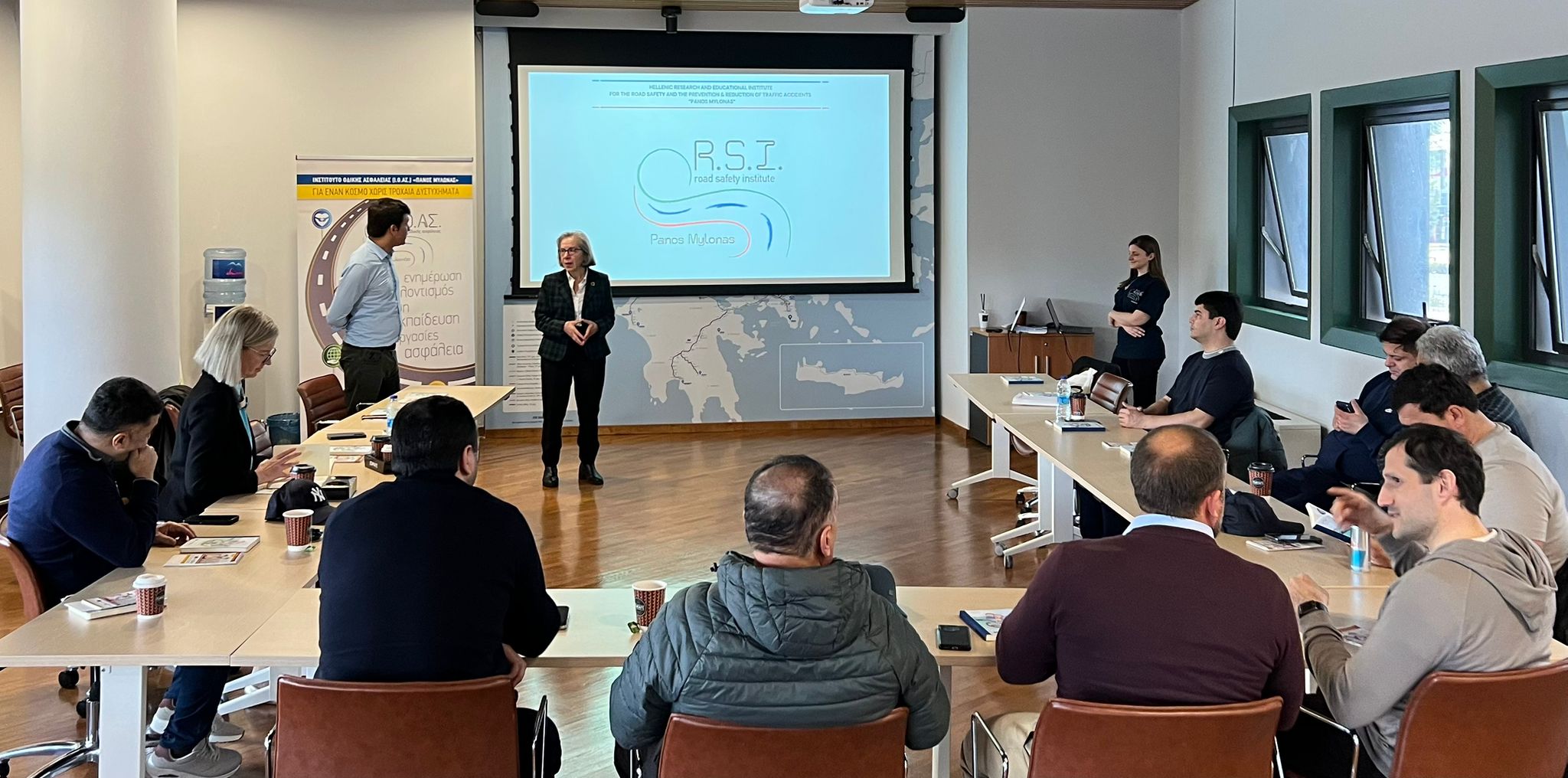
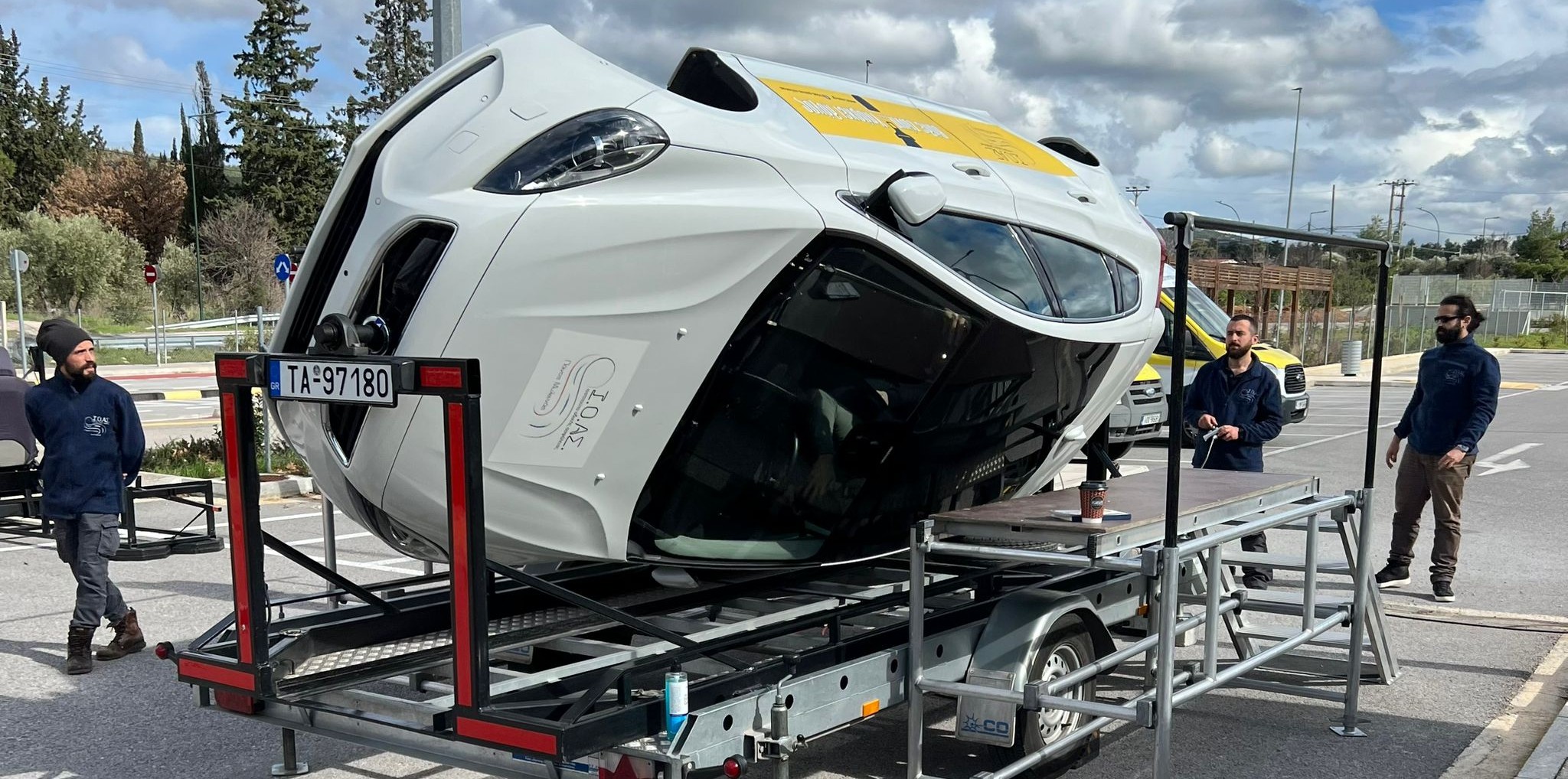
Road Safety Institute Panos Mylonas hosted the group in Athens sharing their activities to advance road safety in Greece
Participants came away from the Study Tour better equipped to embed Safe System principles into national planning and project delivery processes, strengthen institutional capacity and support policy and action for safer roads across Tajikistan.
Reflecting on the tour, Mr Yusuf Majidi, First Deputy Minister of Finance, Republic of Tajikistan said, “Thank you for all your efforts in making this trip not only useful but also joyful and overall unforgettable. It is indeed just the beginning of the great start in road safety in our country. The desire and dreams, and this starting point will bring us to a great, great destination in road safety.”
Mr Jahongir Pirov, National Expert in Road Safety added: “Please accept my sincere gratitude for the excellent organization of the study trip. Every detail was arranged at the highest level and everything was perfectly coordinated. I truly learned a great deal from you and gained valuable experience. I sincerely hope that we will have many more joint projects and successful collaborations in the future. Once again, thank you very much!”
We extend a big thank you to all the staff at the Faculty of Transport and Traffic Sciences, University of Zagreb (FPZ), Croatian Motorways (Regional Traffic Management and Control Centre), Croatian Roads in Karlovac, Martin Damen at SWOV, Ferry Smith, Chris Bruntlett at the Dutch Cycling Embassy, the staff at the Attica Tollway Operations Centre, and all the team at Road Safety Institute Panos Mylonas for hosting the group and generously sharing their insights. We also thank Monica Olyslagers, Olivera Rozi and Judy Williams for supporting the tour arrangements.
Supporting the Green Roads Corridor Project and Future Road Safety
The European Road Safety Study Tour and Dushanbe Training are part of the CS-03 Road Safety Advisory Project (Grant 0977-TAJ) being delivered by iRAP.
The Advisory Project is an important component of the $149.67 million Green Road Corridor Demonstration Project, supported by the Asian Development Bank (ADB), European Bank for Reconstruction and Development (EBRD) and Government of Tajikistan.
The Green Road Corridor Project is helping to improve national road connectivity and incorporate climate adaptation and specific design elements that account for women and girls.
The project will upgrade the existing degraded two lane 49km Dangara–Guliston road, widening it to four lanes with dedicated cycleways and sidewalks, improved lighting, and safe and well-marked crossings determined through a community co-design process.
The Road Safety Advisory component of the project designates for use of iRAP tools for the development of business cases for safer road investment on priority roads, and for the provision of training and knowledge transfer in road safety engineering, Safe System Principles, road safety audit, iRAP tools, and the new Design Exception Procedure.
iRAP’s Global Operations Manager Luke Rogers said, “Learnings from the training and study tour will not only support the Green Corridor Project, but also safer future road designs in the country aligned to international best practice and the global 3-star or better infrastructure safety standard.
“These capacity building activities are building on the momentum of the recently completed “Safe and Inclusive Road Design in Central Asia” Project. With improved knowledge and skills and the new Design Exception Procedure, Ministry staff and local engineers will be able to draw on international best practice and innovative engineering solutions in their road design and upgrade projects – solutions that might otherwise have been overlooked or discounted due to the limitations of Tajikistan’s existing road design standards.
“We look forward to further supporting the Ministry and all partners working to advance road infrastructure safety in Tajikistan,” Mr Rogers said.
The Business Case for Safer Roads in Tajikistan
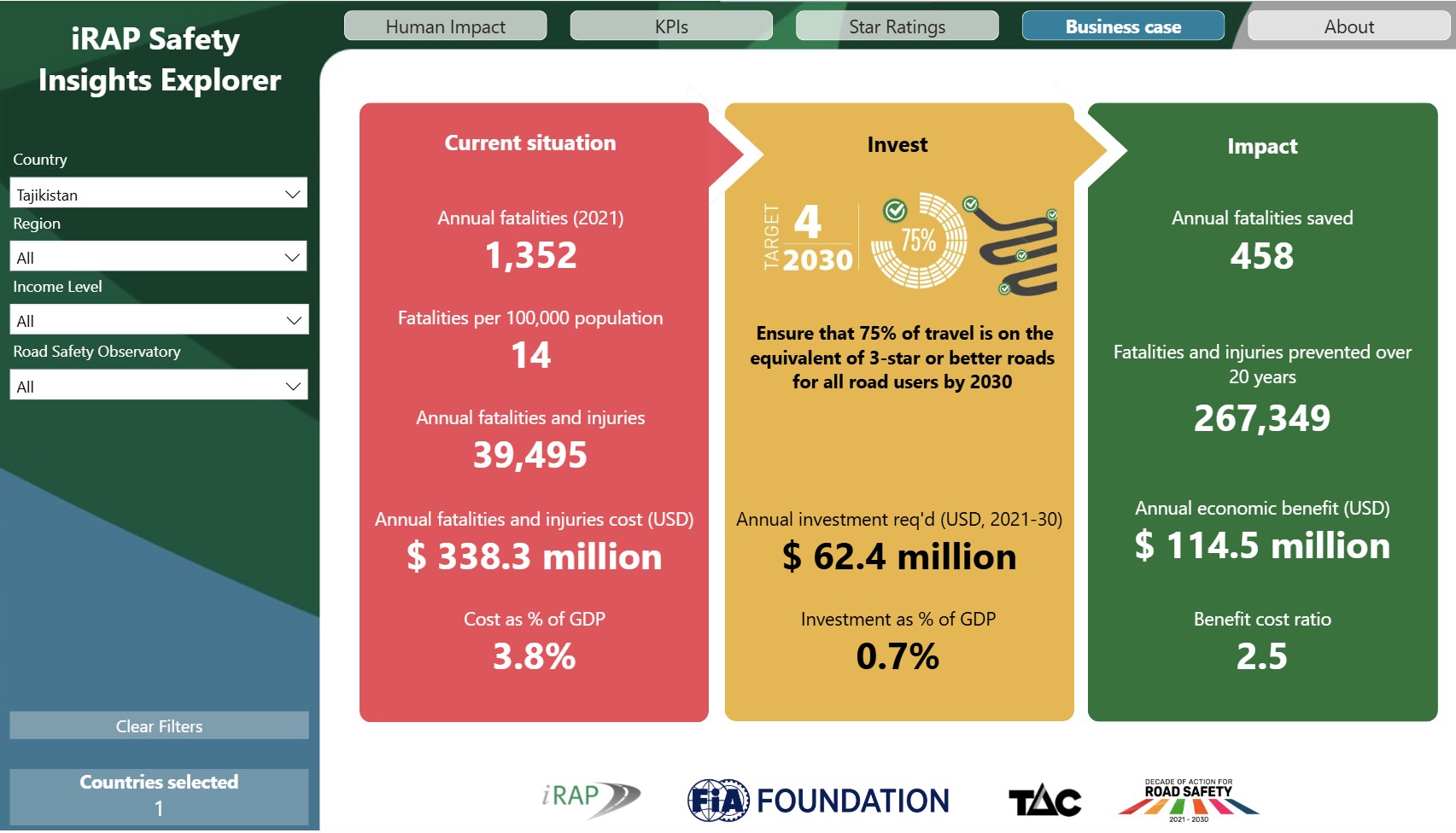
According to iRAP’s Safety Insights Explorer, achieving UN Target 4 for greater than 75% of travel on 3-star or better roads for all road users in Tajikistan by 2030 stands to save an estimated 458 lives each year and 267,349 lives and injuries over the 20-year life of road treatments with an economic benefit of USD$114.5 million – $2.50 for every $1 spent.

 English
  Português do Brasil
  Français
  Tiếng Việt
  Русский
  Español de Colombia
  Nederlands