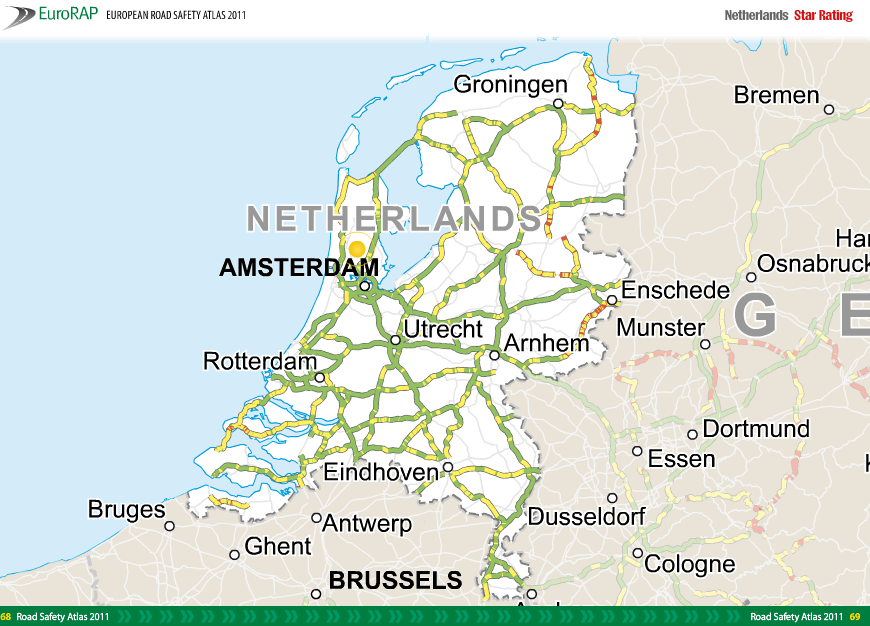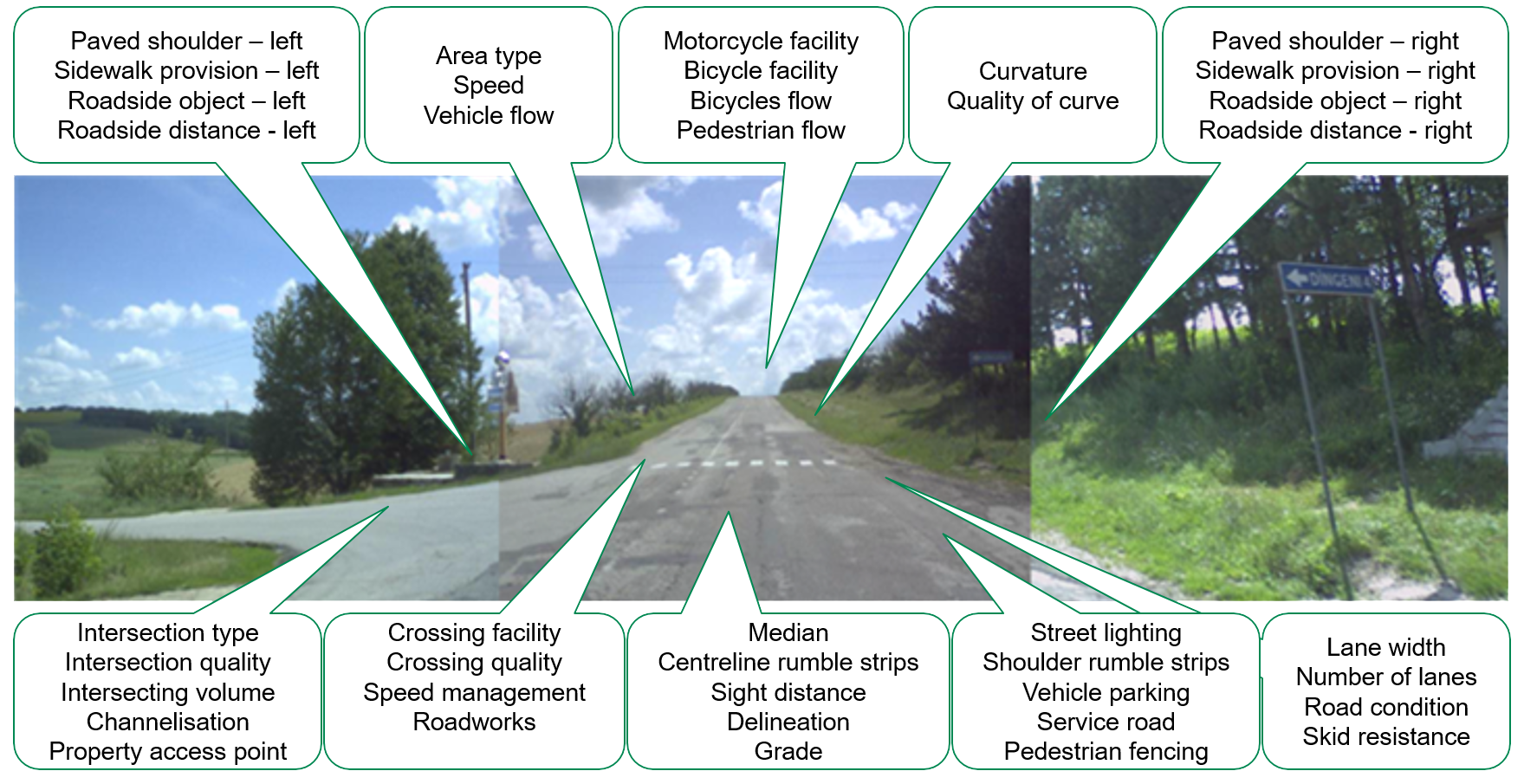
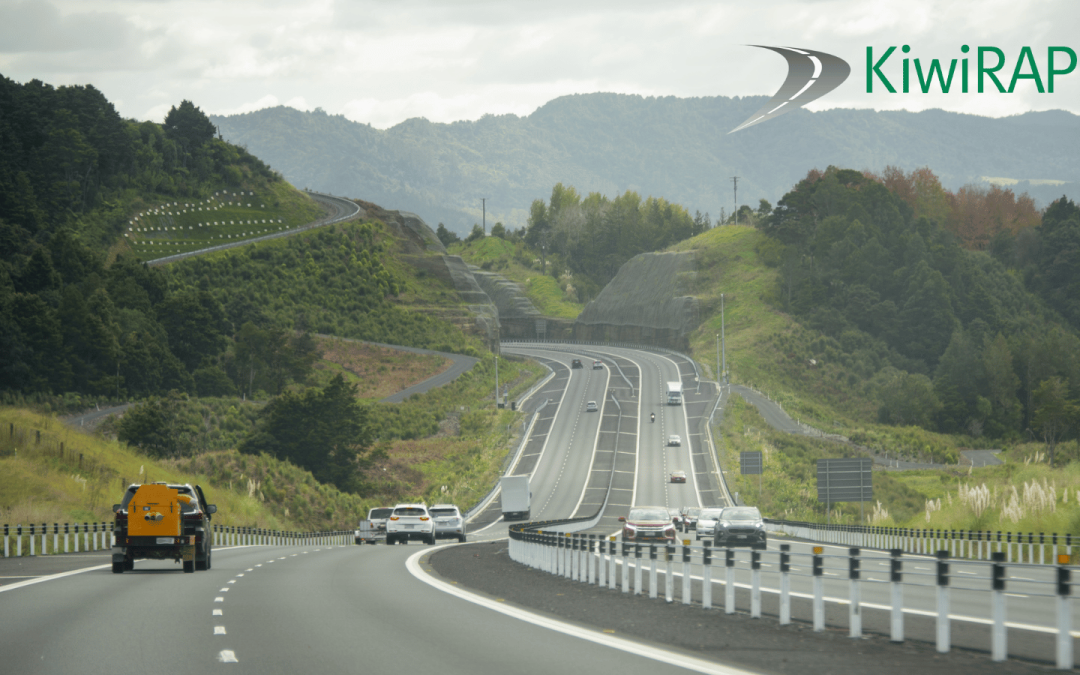
The AA Research Foundation has evaluated safety outcomes, with impressive results, for 32 of New Zealand’s highest risk highways, comparing to 20 years ago when KiwiRAP assessments were first completed.
The analysis, prepared by WSP, compared crash data for the period 2017 – 2023 (excluding 2020-2021) with pre-assessments crash data for 2002-2006.
The results show improved safety on the highest risk highways:
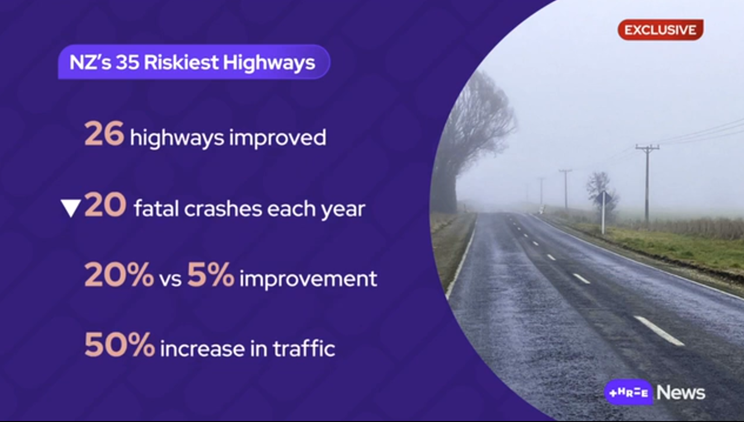
- 20 fewer fatal crashes per year across the highways despite traffic increasing about 50% on the routes.
- A reduction in fatal and serious crashes on average by more than 20% on the high collective risk roads, compared to a reduction of less than 5% on other rural roads.
- Nine highways saw crash reductions of more than 50%, while six highways saw an increase in crashes.
The KiwiRAP (New Zealand Road Assessment Programme) initiative was introduced in 2008 as a partnership between the NZ Automobile Association, the Ministry of Transport, the NZ Transport Agency, ACC and NZ Police. It aimed to assess the safety of, and crash rates on, the country’s highways to help focus safety efforts and investments to reduce road trauma.
New Zealand’s 35 highest risk highways were identified, 26 of which have undergone significant safety improvements over time.
Dylan Thomsen, Manager of Communications, Safety and Research at AA Transport said, “The good news is that yes safety has improved on New Zealand’s highways dramatically from 20 years ago. We are having a lot more driving taking place, and a lot less crashes on our highest risk highways.”
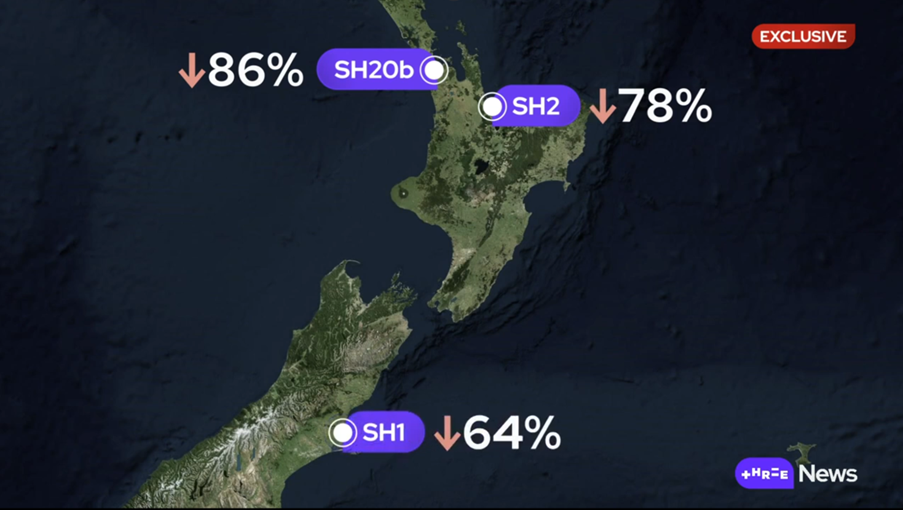
Between 2009 and 2023, the biggest safety gains in terms of fatal and serious crashes were seen on:
- State Highway 20b to Auckland Airport – 86% reduction in fatal and serious crashes
- State Highway 2 from Bethlehem to Mount Maunganui – 78% reduction
- State Highway 1 in Christchurch – 64% reduction
The research shows that KiwiRAP has been effective at:
- Identifying high-risk road sections where investment in infrastructure can significantly reduce risk.
- Focusing improvement strategies on high-risk locations to reduce deaths and serious injuries by around 30% on the targeted sections.
- Identifying links where no investment (or minimal investment) has resulted in a consistently high collective risk.
With New Zealand’s road toll per capita basis heading to its lowest point in a century, AA Research Foundation highlights that the KiwiRAP strategy identified in the 2000’s could be the key to lowering it further.
“We need to keep investing in wherever those highest risks on our highway network are now. We need to be looking at replacement highways in some places or just significant upgrades of what’s there,” Dylan said.
Over 20 years, alongside safer roads in the country, there are also safer vehicles, speed management and improved police enforcement of unsafe behaviours.
However, the vital contribution of safe road infrastructure cannot be underestimated Mr Thomsen said: “The quality of the road just on its own makes a big difference in how many people end up getting hurt or even losing their lives in crashes.”
The study findings will support ongoing advocacy to governments for strategic infrastructure investment to reduce the burden of road trauma in New Zealand.
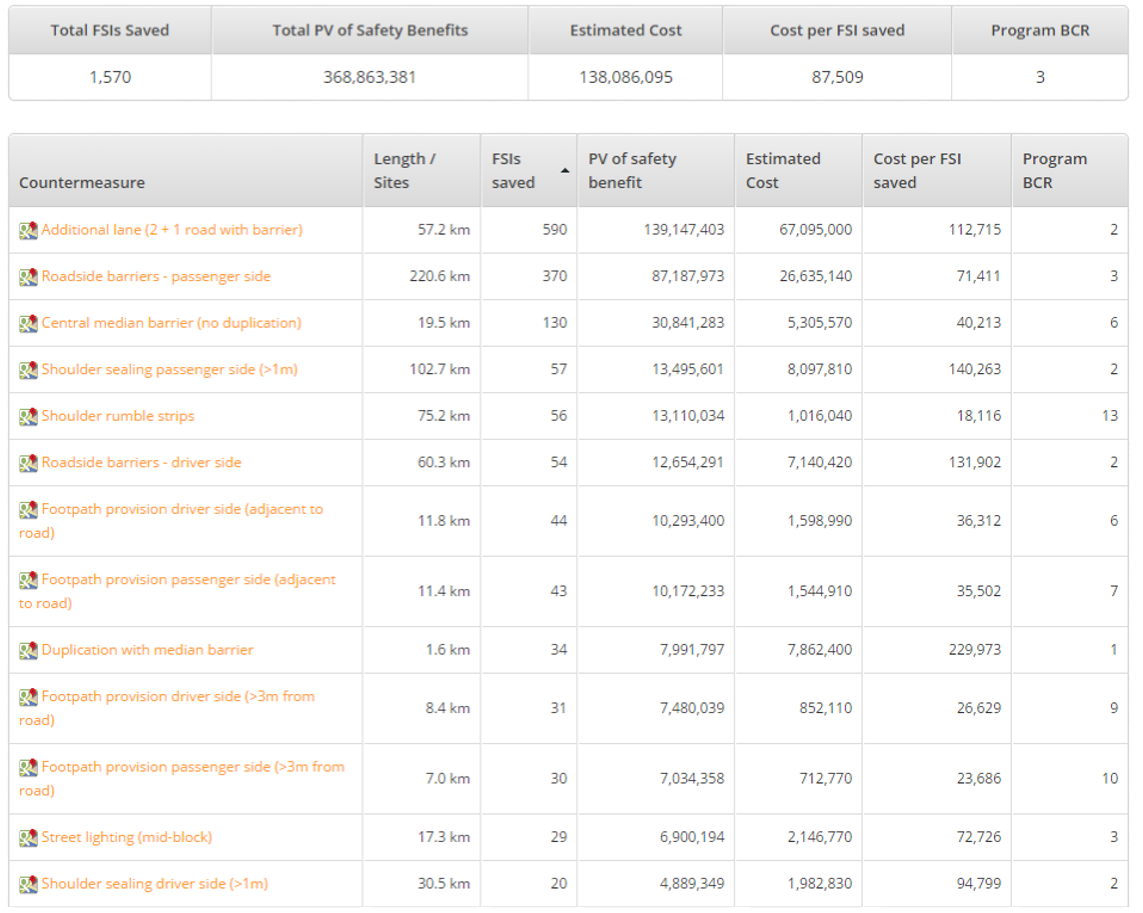
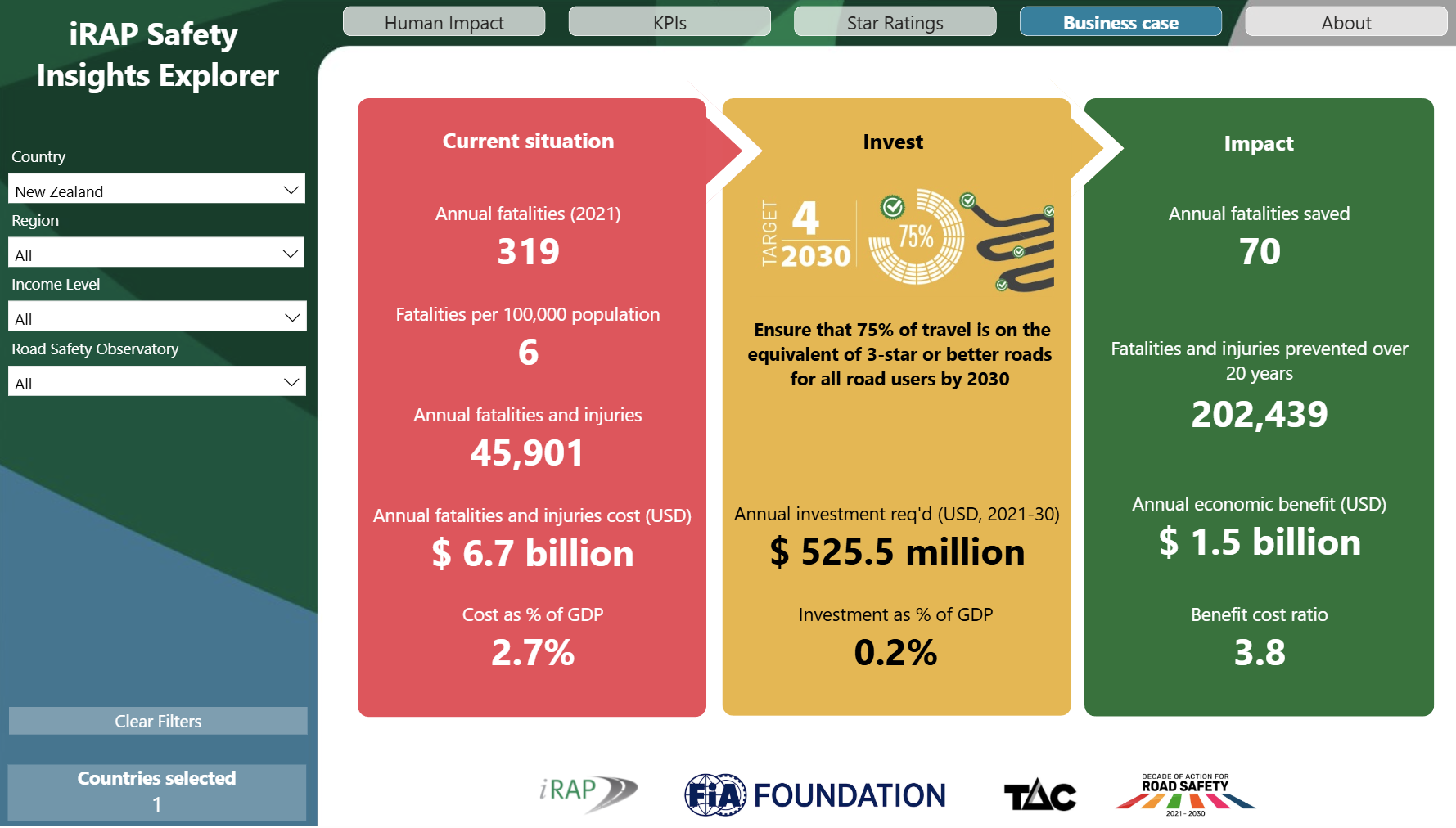
According to iRAP’s Safety Insights Explorer, achieving UN Target 4 stands to save 70 lives each year in New Zealand, and an estimated 202,439 fatalities and injuries over the 20 year life of road treatments, with an economic benefit of US$1.5 billion to the country – a benefit of $3.80 for every $1 spent.
Images and content source: Dreamstime | Adwo and ThreeTV

 English
  Português do Brasil
  Français
  Tiếng Việt
  Русский
  Español de Colombia
  Nederlands