iRAP joined global partners in New York today to welcome in the UN Decade of Sustainable Transport 2026-2035 and Implementation Plan, announcing supporting commitments, and sharing the opportunity for governments to ensure that the safety of road infrastructure is a priority.
The United Nations (UN) Decade of Sustainable Transport is a 10-year initiative declared by the UN General Assembly to promote safe, inclusive, green and efficient transportation systems globally. It aims to raise awareness of transport’s crucial role in advancing the Sustainable Development Goals and to gather and rally new solutions, resources and partnerships to advance sustainable transport globally.
Why safe roads are a must
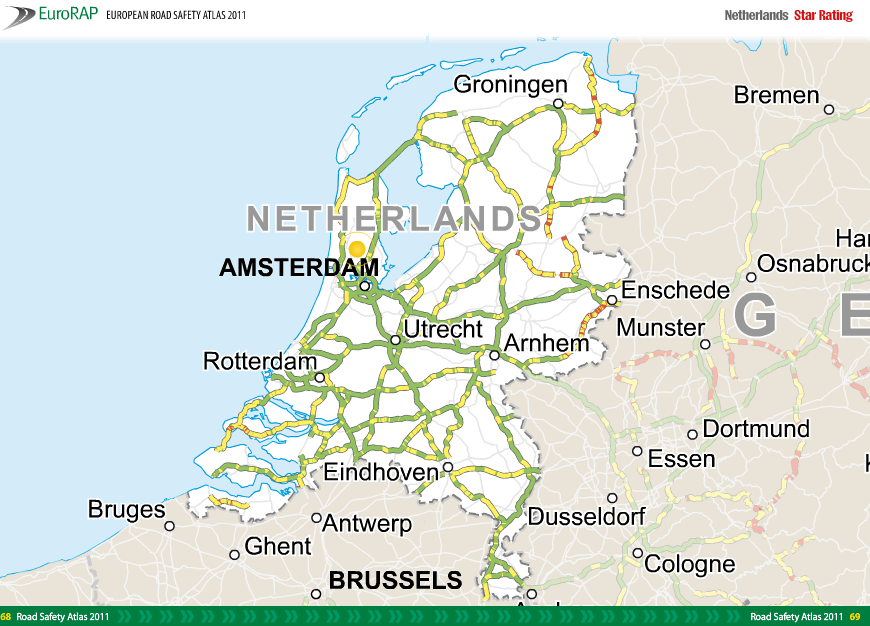
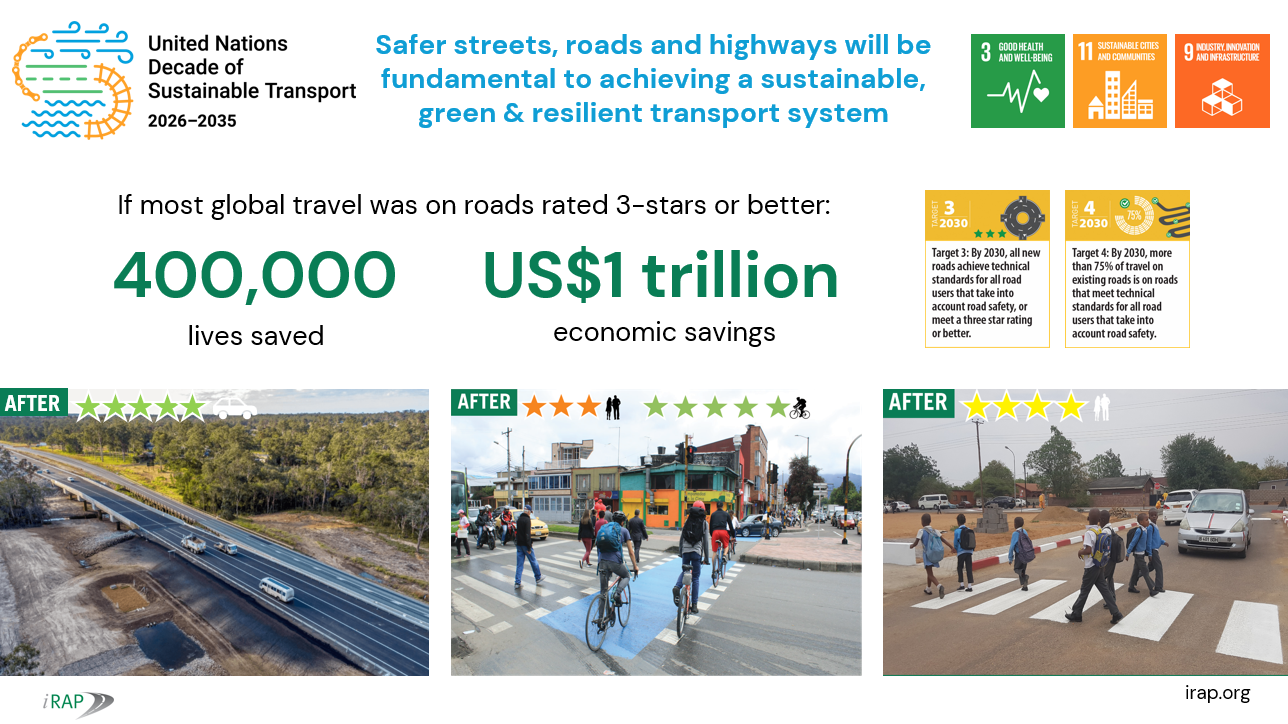
A genuinely sustainable transport system protects everyone that uses it. Ensuring that streets, roads and highways are rated at least 3-stars (out of a total of 5 stars) and are fundamentally safe for all expected modes of travel, abilities, and journeys is essential in achieving this.
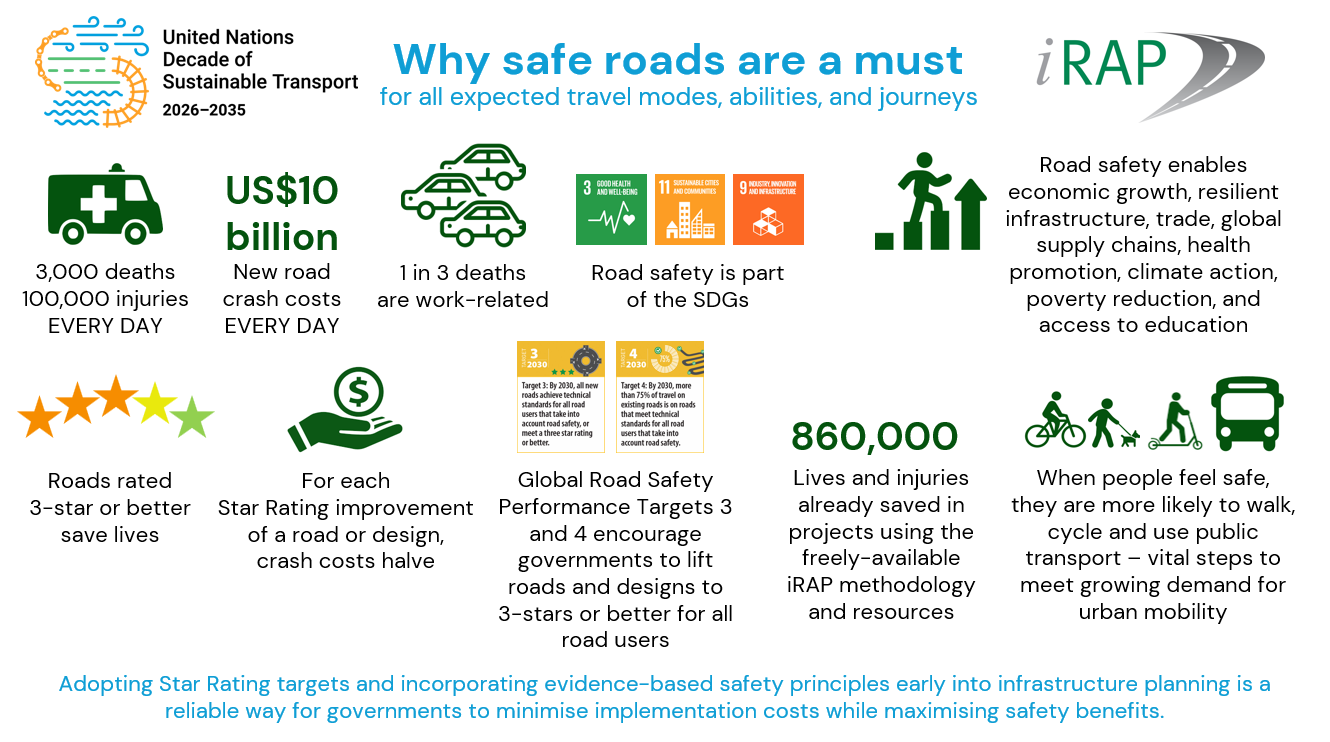
Road safety is part of the SDGs (see 3.6 and 11.2) and is a key enabler for a wide range of priorities including economic growth, resilient infrastructure, trade, global supply chains, health promotion, climate action, poverty reduction, and access to education.
More than 3,000 road crash deaths and 100,000 or more injuries occur every day worldwide, at an estimated cost of US$10 billion per day. About one-third of deaths are work-related, emphasizing the importance of safety to human capital, the economy and productivity.
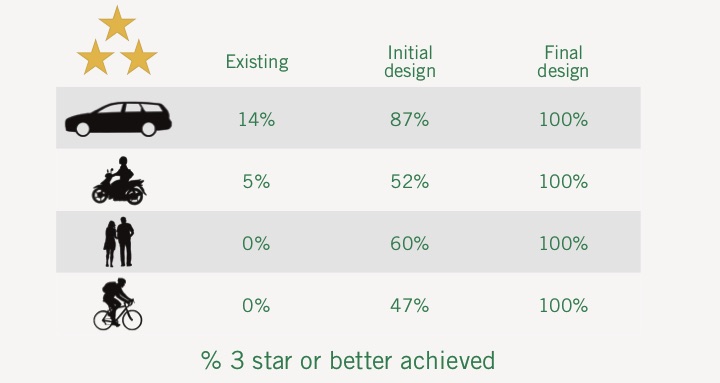
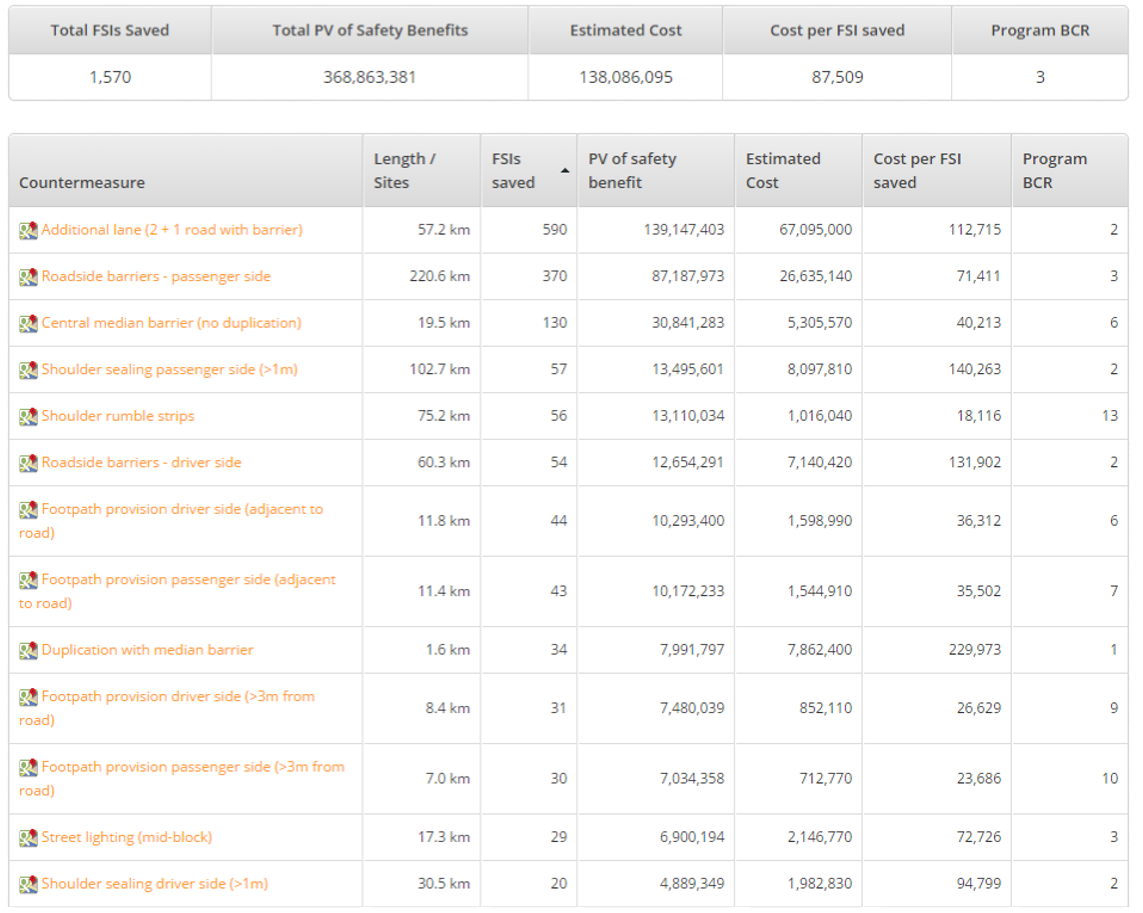
Global Road Safety Performance Targets 3 and 4 encourage governments to lift roads and designs to 3-stars or better for all road users. For each Star Rating improvement of a road or design, crash costs roughly halve. Investment projects that have made use of the freely-available iRAP methodology and resources have already prevented hundreds of thousands of deaths and serious injuries.
Adopting Star Rating targets and incorporating evidence-based safety principles and interventions early into planning for streets, roads, highways, public transport systems, and any development that influences the movement of people or vehicles on roads, is a reliable way for governments to minimise implementation costs while maximising safety benefits.
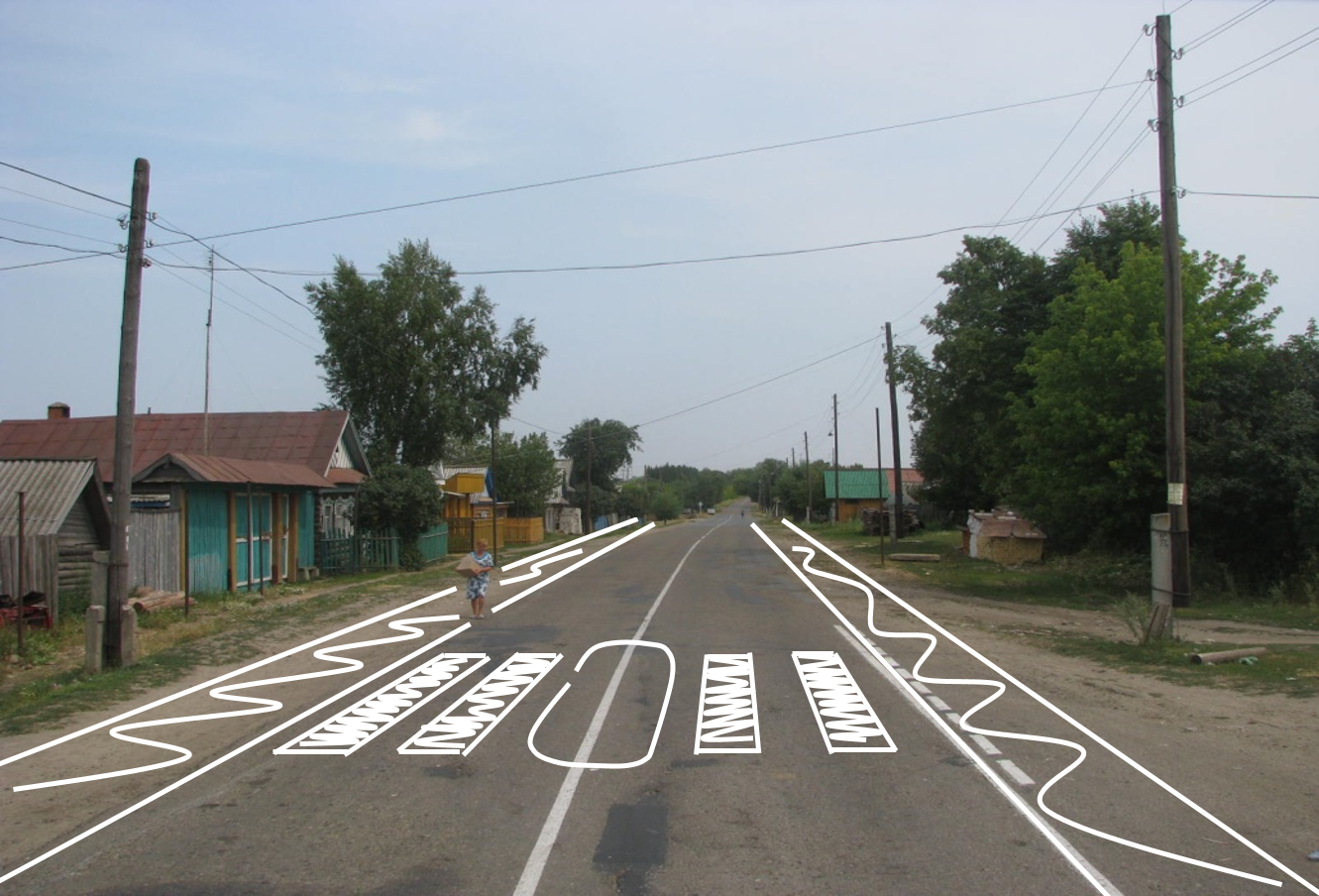
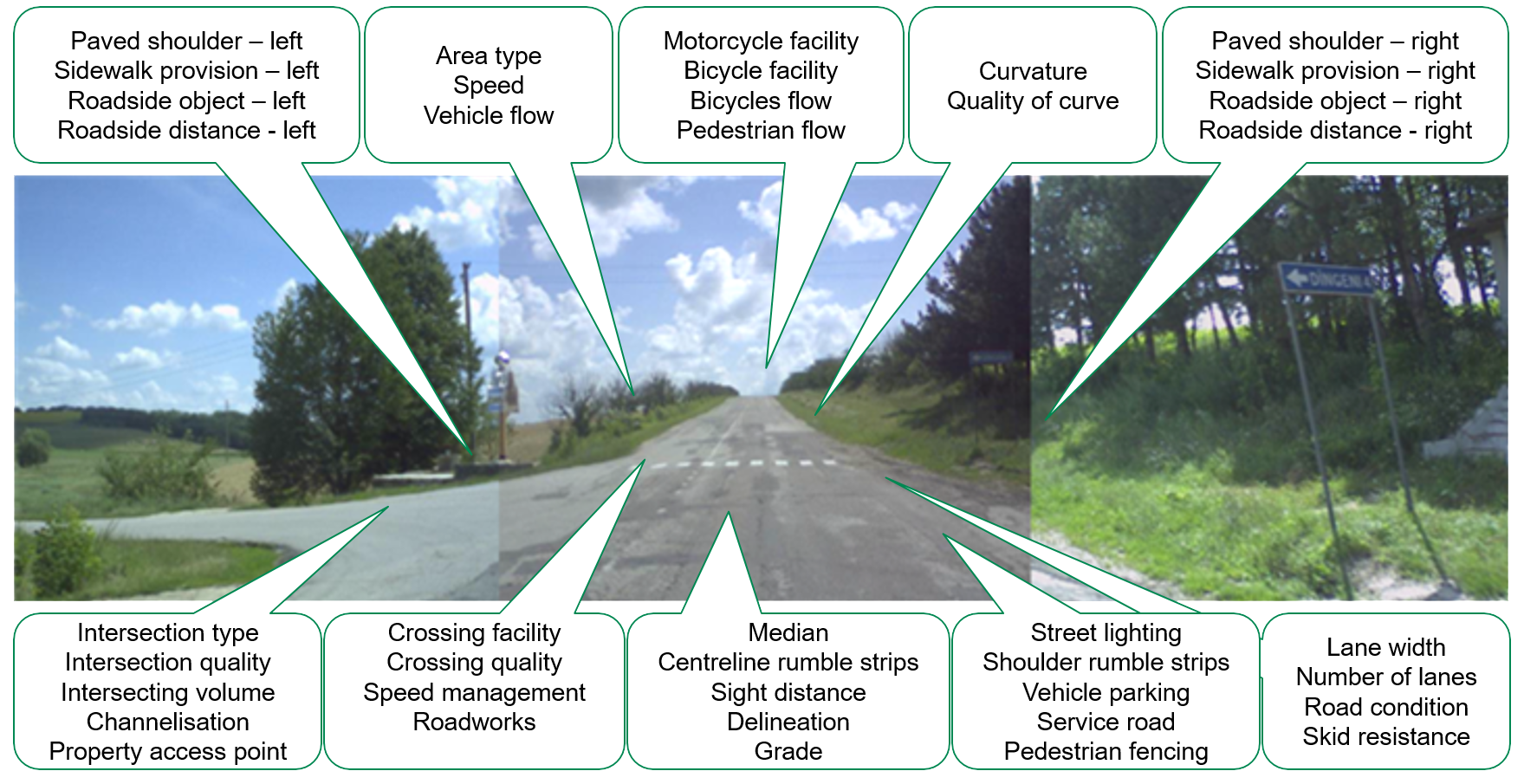
Measures like safety barriers, traffic calming, safety barriers, bicycle paths, pedestrian sidewalks and crossings, street lighting and intersection improvements can have a profound effect on the safety of a road environment.
Safe road environments also support choice; when people feel that an environment is safe, they are more likely to feel comfortable walking and cycling and using the public transport systems that will be needed to safely meet greater demand for urban mobility.
Voluntary commitments for advancing sustainable transport in the Decade
Over 80 Voluntary Sustainable Transport Action Commitments from Member States and stakeholders were shared at today’s Launch Event. They aim to deliver concrete progress towards sustainable transport in the Decade.
iRAP’s voluntary commitments
iRAP’s commitment
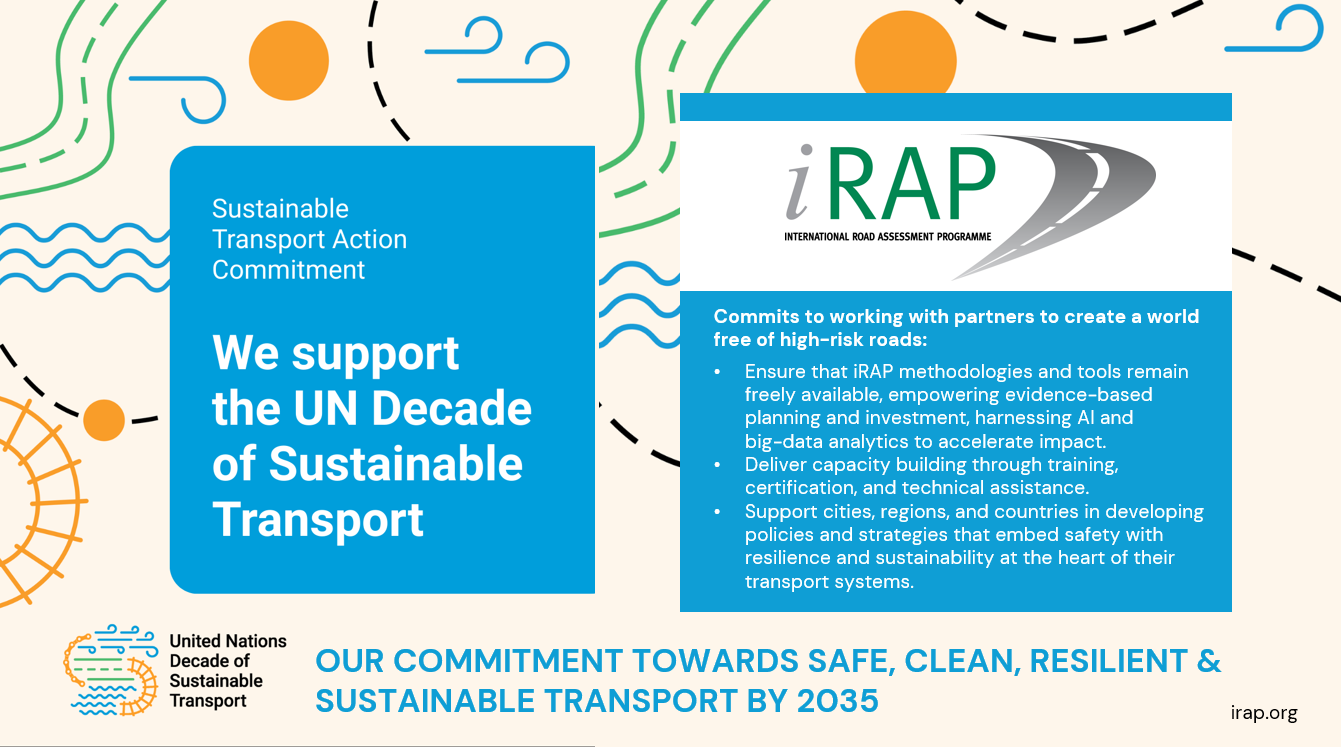
iRAP commits to working with partners around the globe to create a world free of high-risk roads, advancing the objectives of both the Decade of Action on Road Safety 2021-2030 and Decade of Sustainable Transport 2026-2035.
In particular, iRAP commits to:
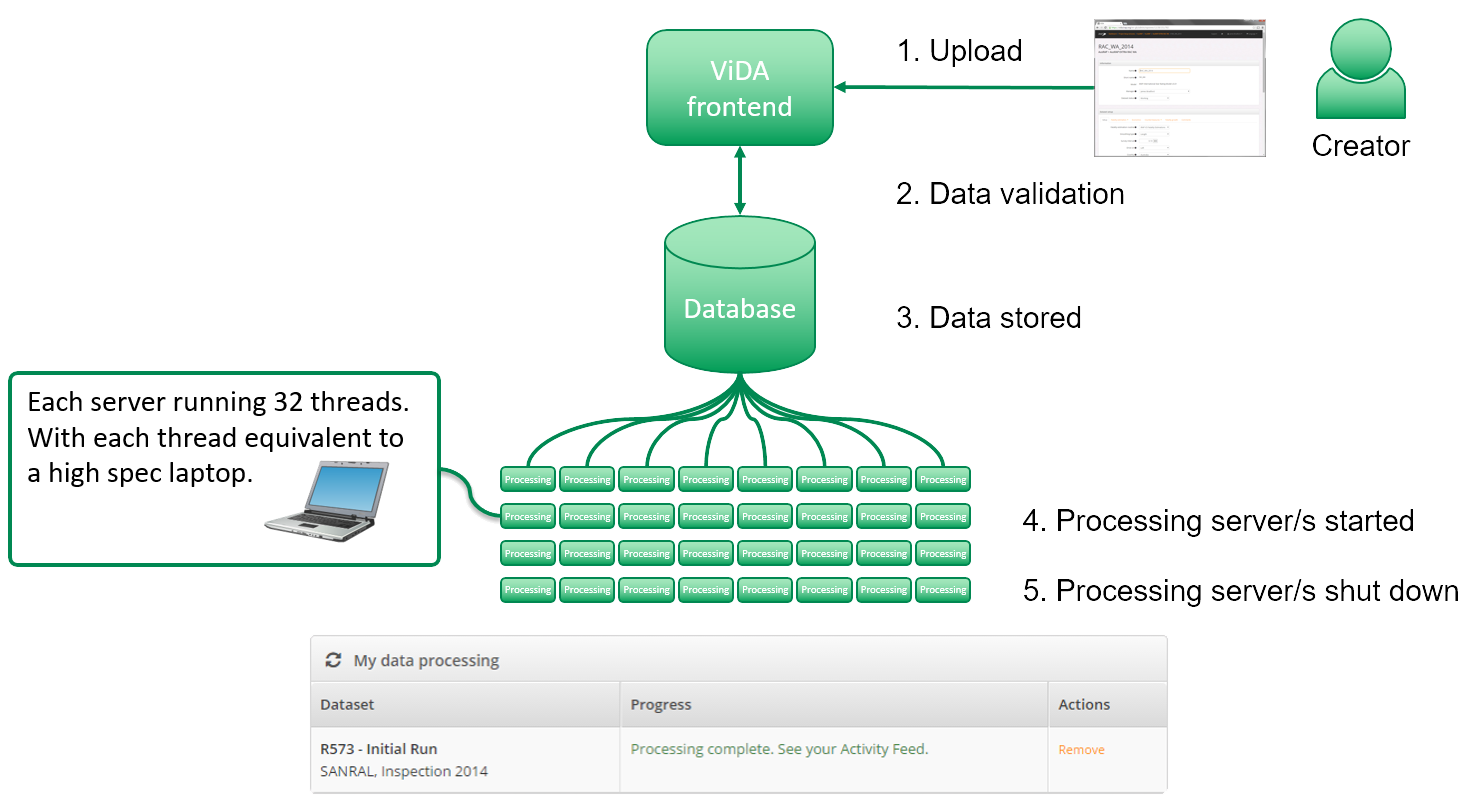
- Ensure that iRAP methodologies and tools – such as the Star Rating Demonstrator, Star Ratings for Schools (SR4S), and CycleRAP – remain freely available worldwide, empowering evidence-based planning and investment, and increasingly harness AI and big-data analytics to accelerate assessments and impact;
- Deliver capacity building for road and transport authorities, practitioners, and communities through training, certification, and technical assistance;
- Support cities, regions, and countries in developing policies and strategies that embed safety with resilience and sustainability at the heart of their transport systems.
Multi-partner joint commitment
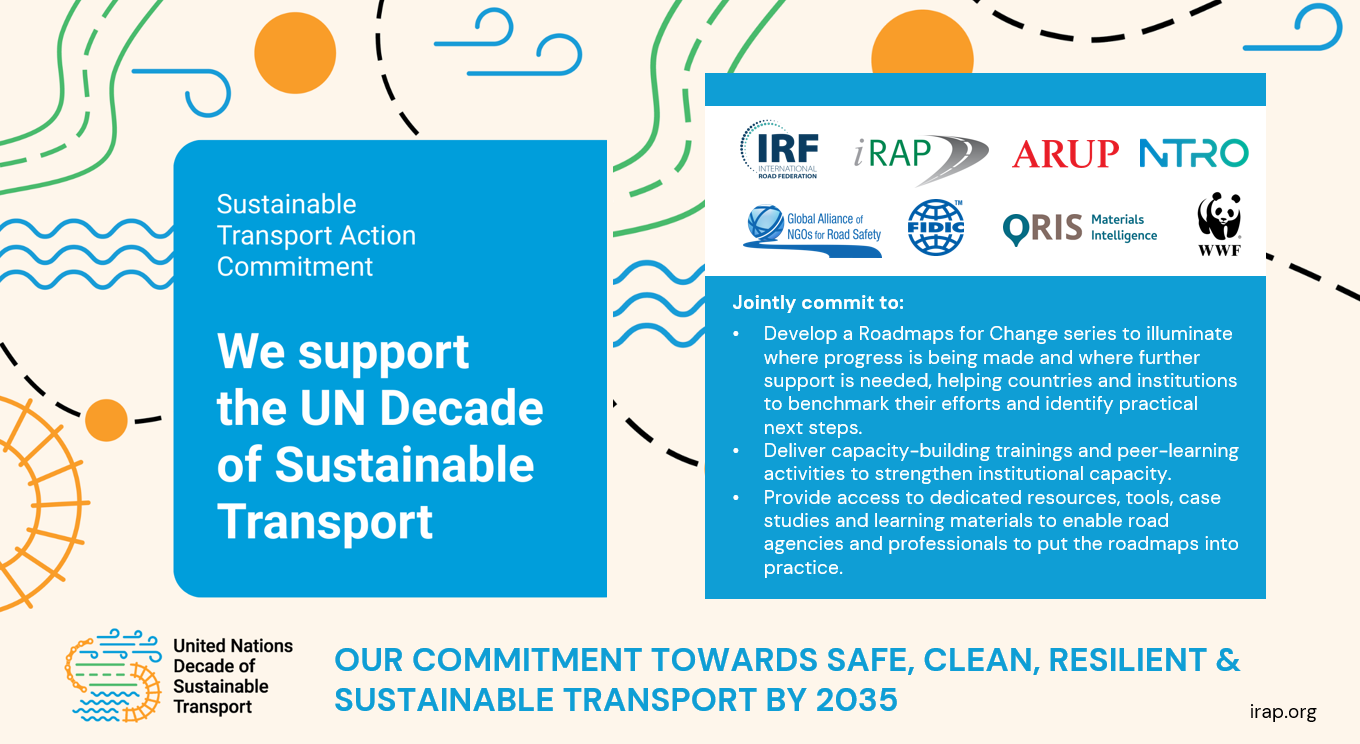
iRAP also joins the commitment of a coalition of global partners led by the International Road Federation (IRF), aimed at accelerating the transition toward road systems that are more inclusive, safer, greener and more efficient for all.
The commitment is endorsed by Arup, Australia National Transport Research Organisation (NTRO), Global Alliance of NGOs for Road Safety, International Federation of Consulting Engineers (FIDIC), iRAP, ORIS and World Wildlife Fund.
It includes the Roadmaps for Change series which will draw on the IRF World Road Statistics, the iRAP Safety Insights Explorer and collaborations with partners to outline policy actions, technical standards and tools, replicable practices, innovation and indicators of progress, helping countries and institutions to benchmark their efforts and identify practical next steps.
Complementing this, a capacity-building programme will offer training and peer-learning activities to strengthen institutional capacity, with a special focus on road and transport public authorities. The programme will support stakeholders, especially from low- and middle-income countries, in taking ownership of their skills development strategies and instruments.
iRAP Training and Accreditation, the iRAP Partner Portal, Road Safety Toolkit and the IRF Global Transport Knowledge Portal (gTKP), will serve as dedicated resources, providing access to tools, case studies and learning materials that enable road agencies and professionals to put the roadmaps into practice.
Speaking at the Special Launch Event Gonzalo Alcaraz, Director General of the International Road Federation, said: “The world’s road systems sit at the intersection of economic opportunity, social inclusion and environmental action. IRF and our partners are joining forces to help countries design and operate roads that are truly inclusive, safe, green and efficient. The Decade of Sustainable Transport is a unique opportunity to rethink how roads serve people and the planet, and we are proud to support its Implementation Plan with concrete roadmaps and capacity-building for those on the frontlines of change.”
Greg Smith, CEO of iRAP said: “Safer streets, roads and highways will be fundamental to achieving a sustainable transport system. If most travel around the world were on roads rated 3-stars or better, there would be nearly 400,000 fewer deaths each year saving almost US$1 trillion in road crash costs. By building on the Decade of Action for Road Safety, the Decade of Sustainable Transport is an opportunity for the world to realise this extraordinary potential.”
Looking ahead: The Decade Implementation Plan
As mandated through General Assembly resolution 78/148 titled “Strengthening the links between all modes of transport to achieve the Sustainable Development Goals”, the Implementation Plan for the United Nations Decade of Sustainable Transport (2026–2035) has been prepared by the United Nations Department of Economic and Social Affairs (UN DESA) in collaboration with the United Nations Regional Economic Commissions, within their respective mandates, and in consultation with Member States, specialized agencies, funds, programmes, and bodies of the United Nations, as well as other intergovernmental organizations, non-governmental organizations and relevant stakeholders.
The Implementation Plan provides a shared vision for the United Nations Decade of Sustainable Transport and outlines six priority areas and the means of implementation needed for transformative action by all relevant stakeholders.
iRAP’s Partnerships for 2030 Impact Strategy and jointly supported Roadmaps for Change Initiative will support the Implementation Plan, accelerating the transition toward road systems that are safer and more inclusive, greener and efficient for all.
The UN Decade for Sustainable Transport was launched on December 10 in the Trusteeship Council Chamber at United Nations Headquarters in New York, at a special event hosted by the UN Department of Economic and Social Affairs.
iRAP’s Safer Journeys Expert Samar Abouraad was in attendance and our Board Member Raquel Barrios, Executive Director of YOURS (Youth for Road Safety) shared insights and solutions in the Stakeholder Roundtable at the event.
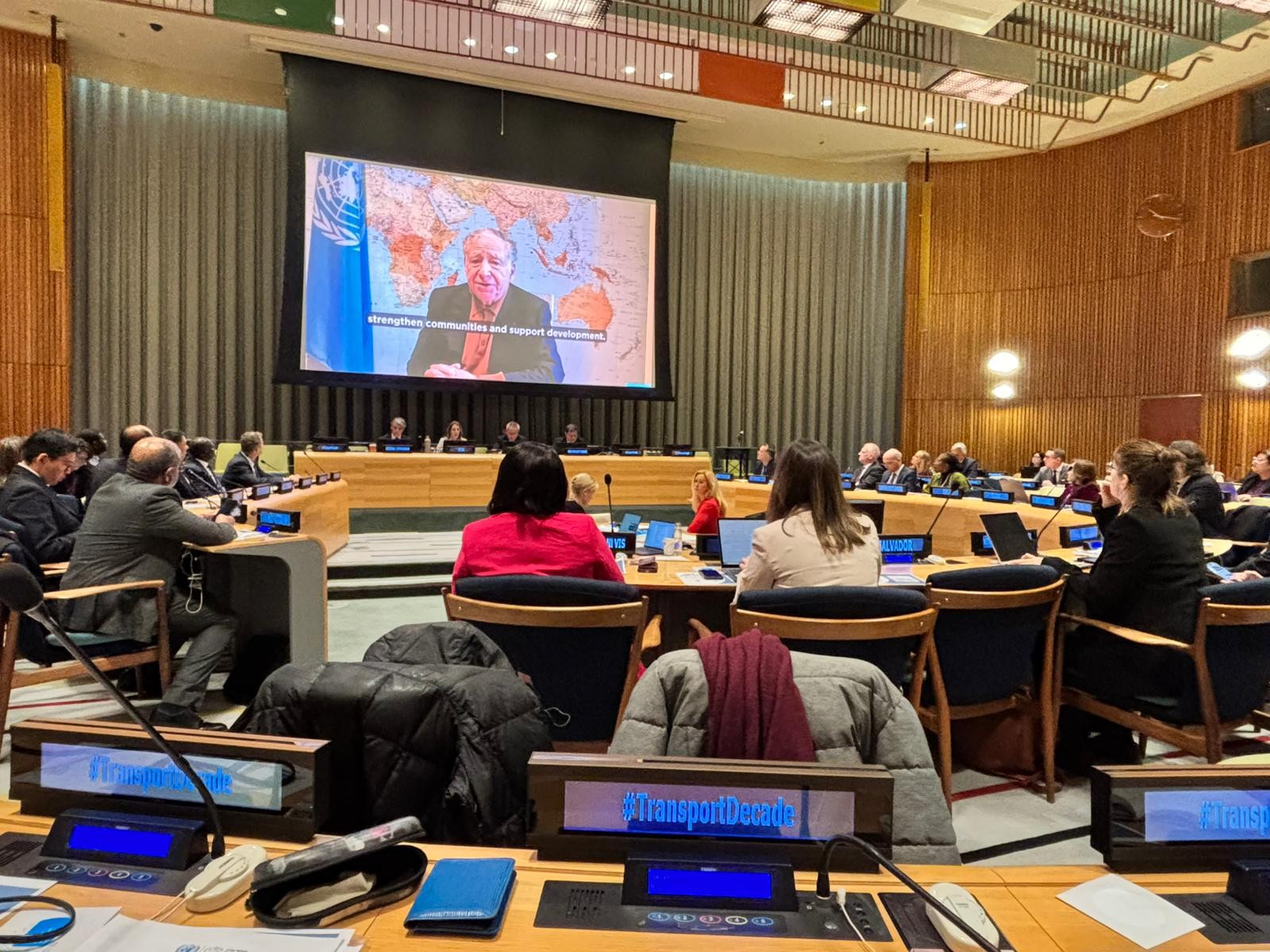
UN Secretary-General’s Special Envoy for Road Safety Mr Jean Todt at the Launch of the UN Decade of Sustainable Transport in New York
For more information
- On the Decade click here.
- Download the Decade Implementation Plan here.
- See UNDESA’s “Seven Things You Should Know About Sustainable Transportation” here.
- To access the logo and communications assets for the Decade, click here.
- To see the Launch event, streamed online through the public UNTV channel, click here.
- To sign up to receive the Sustainable Transport newsletter, click here.
- Read UNECE’s blog – Sustainable transport is not only about systems – it is about people here.
#Roadmaps4Change #SustainableTransport4All #TransportDecade #SustainableTransportChampion

 English
  Português do Brasil
  Français
  Tiếng Việt
  Русский
  Español de Colombia
  Nederlands