It’s been 12 months since the the CAMBER Project launched, dedicated to improving safety and maintenance on urban and secondary roads across Europe with demonstrated impact mounting.
The Connected and Adaptive Maintenance for Safer Urban and Secondary Roads Project (‘CAMBER’) is a three-year initiative funded by the European Union. It aims to address pressing challenges in road safety and infrastructure management by integrating real-time data insights with cost-effective solutions, innovative interventions, and digital technologies.
The project is piloting approaches in five European countries – Portugal, Greece, the Netherlands, Croatia, and Spain – led by a consortium of 14 partners from nine countries including research institutions, road authorities, and industry experts.
Let us catch you up on project news:
Trikala Gears up for Pilot Demonstrations: Collecting Data from Cyclists’ Smartphones and Building a Digital Twin for Enhanced Road Management

The city of Trikala is preparing for a series of real-world demonstrations set to begin in 2026. These activities will introduce innovative digital tools designed to improve the safety, quality and maintenance of urban streets, with a particular focus on cyclists and other vulnerable road users.
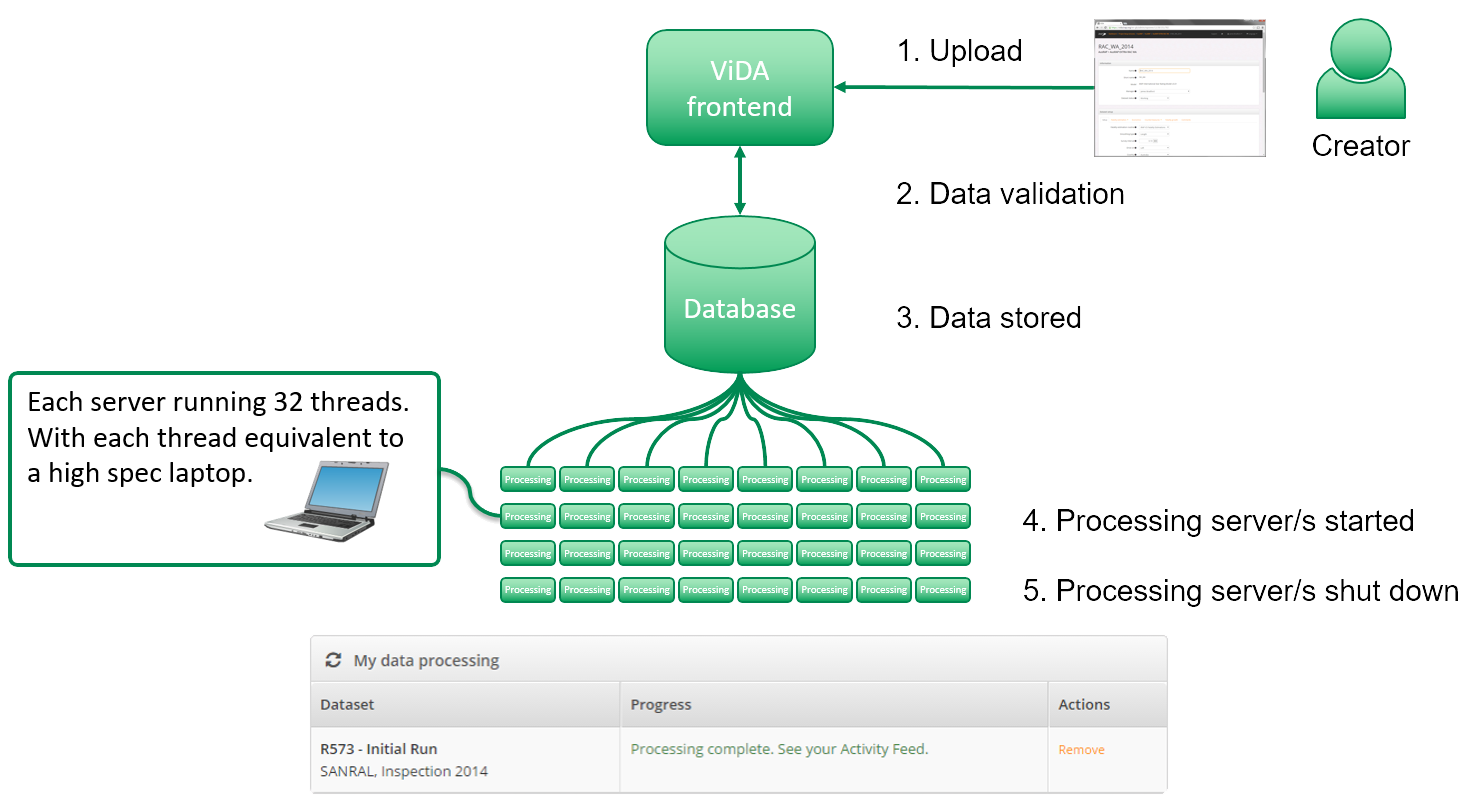
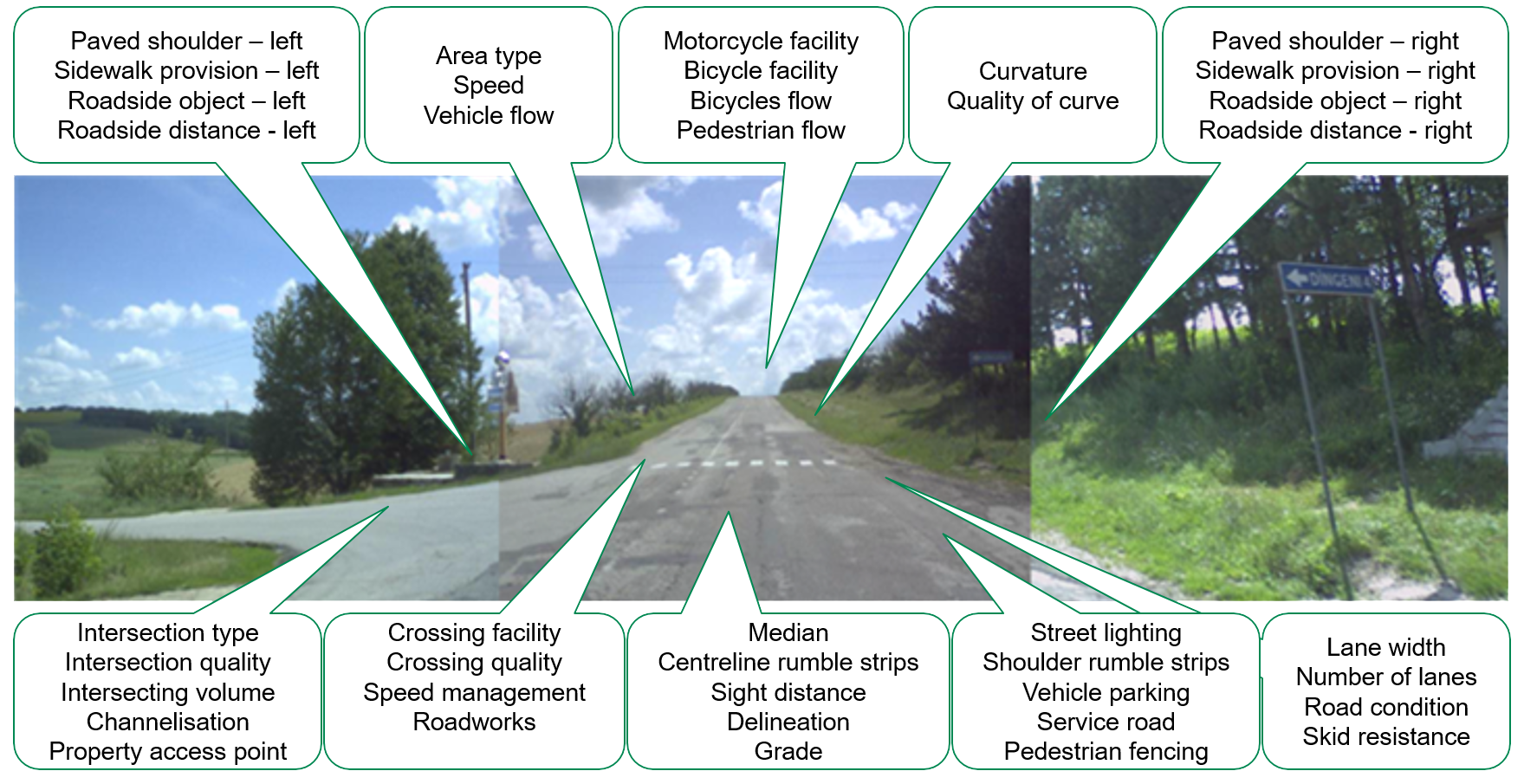
A central component of the Greek pilot is a mobile platform developed by ICCS, which will collect data directly from cyclists’ smartphones as they travel through the city. Using a combination of GPS tracking, video, and motion sensors, the platform will detect cracks, bumps and surface irregularities across bike lanes and streets. AI and Machine Learning (AI/ML) techniques will analyse this information, and through the iRAP framework, translate it into actionable safety insights and performance indicators. ICCS will provide the digital platform and API that make this information accessible to local stakeholders. Working closely with eTRIKALA, the system is expected to integrate with the municipality’s control room, enabling faster and more informed decision-making on street maintenance and infrastructure planning.
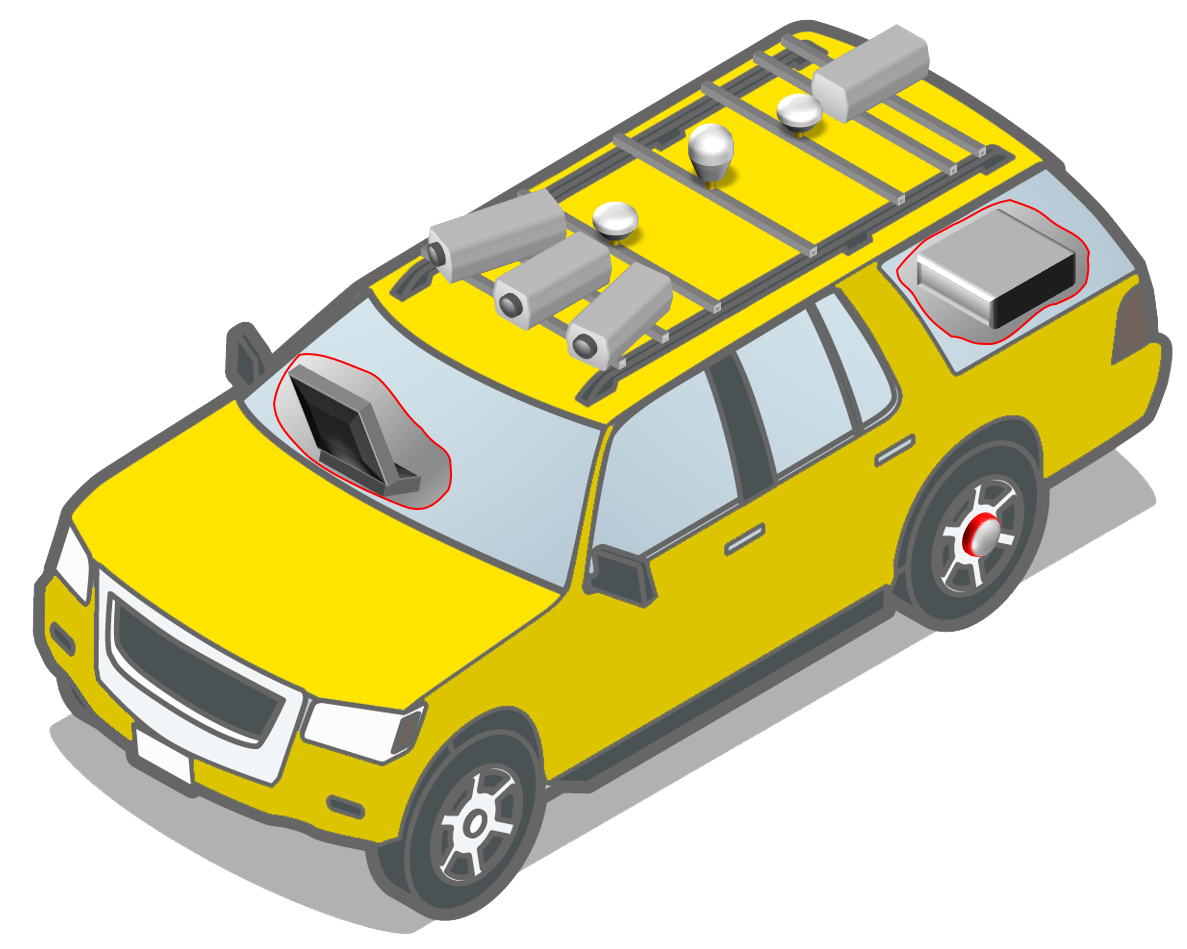
Beyond the urban centre, CAMBER is preparing the deployment of AIT’s RoadLab campaign along a 5 km corridor to gather high-precision “ground-truth” data. This one-time campaign will generate a detailed point cloud of the road environment, forming the foundation for a GIS-based digital twin. This digital twin will combine high-accuracy measurements with georeferenced photos, offering a rich, real-world visual and analytical representation of the corridor. The model will feed into advanced simulation environments developed by ICCS, supporting the testing and evaluation of Advanced Driver Assistance Systems (ADAS) and Cooperative, Connected and Automated Mobility (CCAM) performance under realistic conditions.
Together, the cyclist-based data platform, Digital Twin, and simulation tools will provide Trikala with a comprehensive framework to assess how infrastructure and mobility technologies interact with real-world conditions. This integrated approach will support better-informed decisions on road maintenance, safety improvements and future mobility planning. With pilot activities scheduled to begin in spring 2026, the CAMBER project is laying the groundwork for a safer, smoother and more resilient mobility network in Trikala, benefiting all who walk, cycle or drive through the city.
Learn more about the Greek Pilot here.
Hydrogen Buses Power CAMBER’s Portuguese Pilot
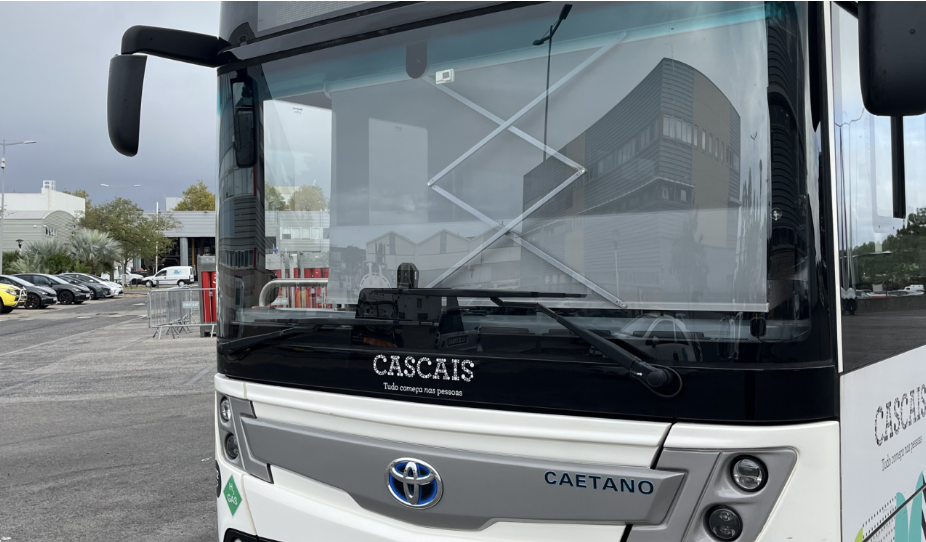
The CAMBER project has made important progress in Portugal with the completion of the installation of Mobileye devices on four hydrogen-powered buses operated by Cascais Próxima. Throughout daily service along urban routes, the Mobileye-equipped buses will continuously collect data related to road conditions, traffic interactions and safety-relevant events. This real-world data will support the Cascais pilot in developing and testing new methods for assessing safety levels, with a focus on vulnerable road users (VRUs) such as pedestrians and cyclists.
As part of CAMBER’s broader mission, the Portuguese pilot contributes to building practical, data-driven tools that help cities better understand safety risks and design more effective, proactive interventions. By integrating the sensing devices into hydrogen-powered buses – already an environmentally friendly mobility solution – the pilot combines sustainability with advanced safety technology, demonstrating how public transport fleets can contribute to next-generation road safety analysis. More updates from the Portuguese pilot will follow as data collection progresses and results emerge.
Learn more about the Portuguese Pilot here.
Spanish Pilot Completes First Phase of Data Collection
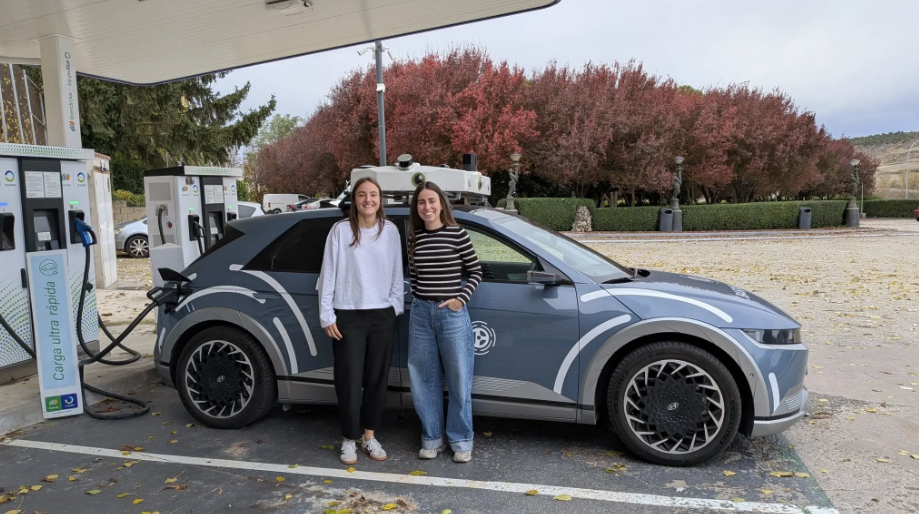
The first phase of data collection for the Spanish pilot has been completed, marking the start of an in-depth effort to analyse road conditions and safety challenges on secondary roads in Spain.
The Vicomtech team from the Intelligent Systems for Mobility and Logistics research area carried out a detailed data-capture campaign along a 40 km stretch of the N-120 road in Burgos, a route that forms part of the historic Camino de Santiago. Using specialised sensing equipment, the team collected essential information to support the development of digital tools and safety assessments within CAMBER.
In close collaboration with the Ministerio de Transportes y Movilidad Sostenible, the Spanish pilot aims to demonstrate and evaluate innovative, cost-effective solutions to improve both the safety and maintenance of secondary roads. Particular attention is placed on the safety of cyclists, a vulnerable group frequently travelling along this corridor. The pilot’s approach combines sensor data, digital analysis and low-cost interventions, all tested in real-world conditions. These activities will help CAMBER develop practical recommendations and contribute to better-informed road management strategies across Europe.
Learn more about the Spanish pilot here.
AIT Leads Road Data Collection Campaign in Croatia
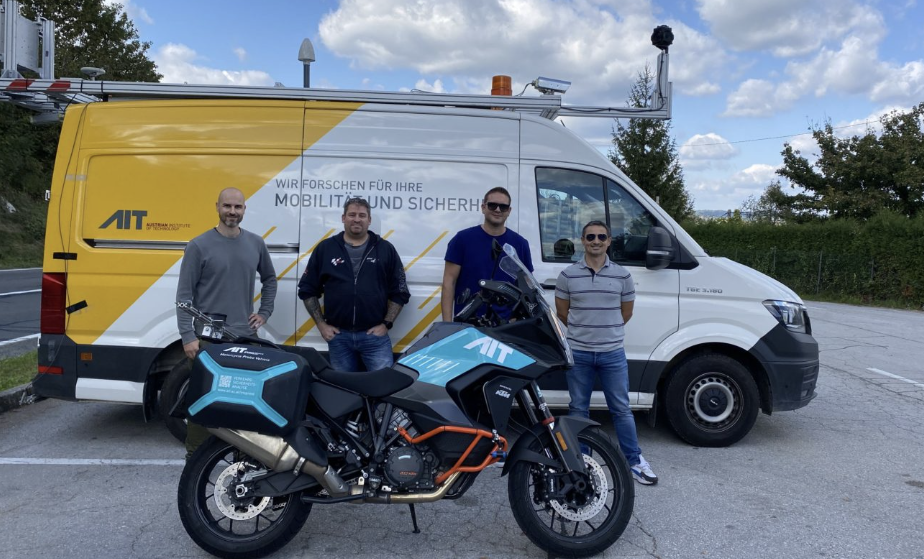
At the end of September, CAMBER partner AIT Austrian Institute of Technology successfully completed a comprehensive data collection campaign in Croatia, marking an important step in developing digital solutions for safer and smarter road maintenance.
Using the high-performance RoadLab measurement vehicle and the sensor-based MoProVe (Motorcycle Probe Vehicle) system, the AIT team carried out detailed surveys on selected sections of the Croatian national road network. The instruments collected high-precision reference data on road geometry, slope, transverse and longitudinal levelness, surface condition, and the location of infrastructure elements. In addition, motorcycle driving dynamics data – including trajectory and acceleration – were gathered to better understand the specific challenges faced by powered two-wheelers.
The campaign was conducted in close collaboration with the University of Zagreb and the Croatian Road Administration, whose local expertise was key to ensuring accurate and relevant measurements. The data collected will serve as a foundation for the development of digital twins of the road network. These digital representations will enable the simulation of different usage scenarios, improve the efficiency of maintenance planning, and ultimately enhance road safety for all users.
Further data collection campaigns will be planned in the other pilot sites in 2025 and 2026, broadening CAMBER’s research and validation activities across Europe.
Learn about the Croatian Pilot here.
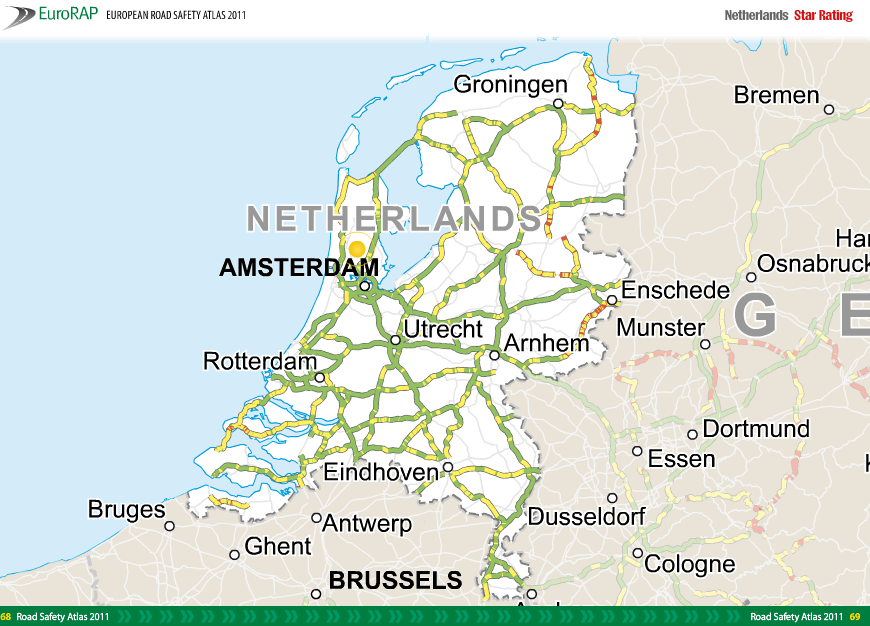
North Holland Pilot

The North Holland pilot aims to improve road and cyclist safety by integrating safety insights, multi-source data and asset-management processes.
The Province of North Holland has 691km of national roads and motorways, 645 km of provincial rural roads and 12,423km of local authority urban roads. There is also an extensive network of dedicated infrastructure for cyclists and mopeds. It’s a data-rich region and its various data sources and suppliers will be utilised by the CAMBER project to progress the development of new asset and safety performance metrics.
Already the Province has an active road safety management system which SWOV was involved in building and populating, as was the case with the Network Safety Index (NSI) for the City of Amsterdam. North Holland is also involved in several innovative initiatives to improve the management of the road network, from asset management, traffic management, road safety to maintenance and smart mobility. The Province is involved in the national-led Road Monitor (ROMO) project24 which has delivered vehicle sensor data from Mercedes Benz vehicles to provincial and larger local road authorities to support road maintenance and safety monitoring, including data on road safety, hazard warnings, lane marking quality, road signs, road surface damage and waviness, and micro-weather. This project is of particular significance to CAMBER, as it has been identified as a state-of-the-art approach to utilising (close to) real-time vehicle data for asset and safety monitoring for secondary road network managers.
The North Holland Pilot will combine static data, probe and sensor information, user feedback and cycling-infrastructure data to identify safety hotspots across the network. Data currently held by the road authority and that collected by IRAP, SWOV and others will be correlated and used to assess the safety of roads and cycle paths using iRAP and CycleRAP technologies. This will complement and strengthen current RSM and RAM systems deployed by the Province and possibly the metropolitan area of Amsterdam, particularly with respect to cycle paths and certain categories of (semi-)urban roads (Component 1). Additional data will be collected for ground truth measurements on selected rural and urban roads using for example AIT’s Roadlab and MoProVe. This will be supported by data collected on the entire road network of North Holland through traffic information and Cooperative Intelligent Transport System (C-ITS) service providers (BMOB) and navigation applications (such as BMOB’s Flitsmeister app) (Component 2) and will be the basis for developing a regional digital twin by AGIL for provincial road network and including parallel cycling infrastructure.
The pilot will also trial the communication of hazards and other warnings to road users (in addition to the road managers). This will be done via the BMOB Flitsmeister app, and will establish whether road user feedback can improve safety outcomes and driver responses to hazards. The data form the basis for refining current low-cost remedial measure selection, prioritisation and implementation processes
The pilot team is currently refining study areas and preparing ground-truth measurements ahead of digital twin development and real-world testing.
Learn more about the North Holland Pilot here.
CAMBER joins the EU Road Safety Cluster
CAMBER has joined the EU Road Safety Cluster, a collaborative platform bringing together European research and innovation projects working towards a safe, inclusive and sustainable mobility system that is resilient, trustworthy and centred on the road user.
Led by POLIS, the EU Road Safety Cluster connects projects addressing key challenges in road safety, cooperative and automated mobility, vulnerable road user protection, and data-driven infrastructure management. By fostering dialogue and coordination across projects, the Cluster aims to maximise impact, avoid duplication and accelerate the uptake of research results at European level.
The Cluster currently brings together initiatives such as AI4CCAM, EVENTS, EVOROADS, FRODDO, HEIDI, IDRIVING, PROTACT-US, SAFETEEN, SOTERIA, and V4SAFETY, creating a joint space for knowledge exchange and strategic collaboration.By joining the EU Road Safety Cluster, CAMBER will actively contribute its expertise in secondary road safety, digital twins, new generation data sources, and low-cost, implementable safety measures.
Follow Cluster updates here and subscribe to the newsletter here.
First Scientific Publication
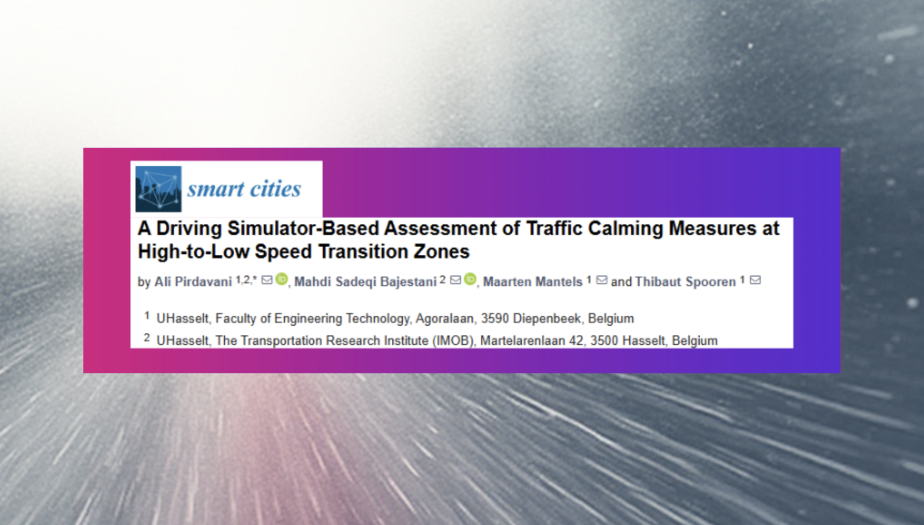
The first scientific article linked to the CAMBER project: “A Driving Simulator-Based Assessment of Traffic Calming Measures at High-to-Low Speed Transition Zones” has been published.
The study was conducted by Ali Pirdavani (CAMBER’s Technical Coordinator) together with Mahdi Sadeqi Bajestani, Maarten Mantels and Thibaut Spooren from Hasselt University.
This publication represents an important contribution to developing cost-effective and innovative interventions to improve road safety, which is one of CAMBER’s core objectives. Within the project, traffic-calming measures have been identified as a key intervention to enhance safety in the secondary road network.
Using a high-fidelity driving simulator, the research team evaluated various gateway designs providing valuable behavioural evidence on how different physical and psychological measures affect driver speed and stability at urban entry points. The findings offer practical insights for designing safer, more perceptually effective and sustainable transitions between high- and low-speed areas, fully aligned with CAMBER’s ambition to improve safety through data-driven, implementable solutions.
Read the full publication here.
CAMBER Podcast Launches
In this first episode of the CAMBER podcast series “On the Road to Safety”, Project Coordinator Olivera Rozi and Technical Coordinator Ali Pirdavani introduce the CAMBER project and its mission to improve safety on Europe’s urban and secondary roads.
They discuss the key challenges facing these road networks, why the work of the project matters for the EU and local authorities, and how CAMBER combines digital twins, new data sources, ADAS performance and low-cost interventions to deliver practical and scalable safety solutions.
CAMBER Showcased at European Events
CAMBER has been presented at Europe’s leading mobility events this year including the ITS Europe Congress in Sevilla, the International Road Safety Conference on the Road to Vision Zero in Bulgaria, an EVOROADS’ Workshop on Implementing a holistic, data-driven safe system for all road users – requirements and criteria, challenges and best practices, and Velo-City in Gdansk.
Read more on these events here.
About the CAMBER Methodology and Consortium
There is no single ‘silver bullet’ or one-size-fits-all solution which can address the safety and maintenance challenges facing road managers. For this reason, the CAMBER project will focus on five priority ‘components’ which the project team will advance through research and innovation to meet the stated project objectives. The components are:
- Safety-integrated maintenance systems and processes
- New-generation data sources
- Digital twins
- ADAS performance
- Low-cost safety interventions
Project partners include ERTICO, EIRA, iRAP, SWOV Institute for Road Safety Research, Laboratorio Nacional de Engenharia Civil, iSENSE Group, BEMOBILE, FPZ, UHASSELT, Vicomtech, Agilysis, Austrian Institute of Technology (AIT), e-Trikala, Ministerio de Transportes y Movilidad Sostenible, and Red de Carreteras del Estado.
Images credit: CAMBER and Mario Guti (lead image)

 English
  Português do Brasil
  Français
  Tiếng Việt
  Русский
  Español de Colombia
  Nederlands