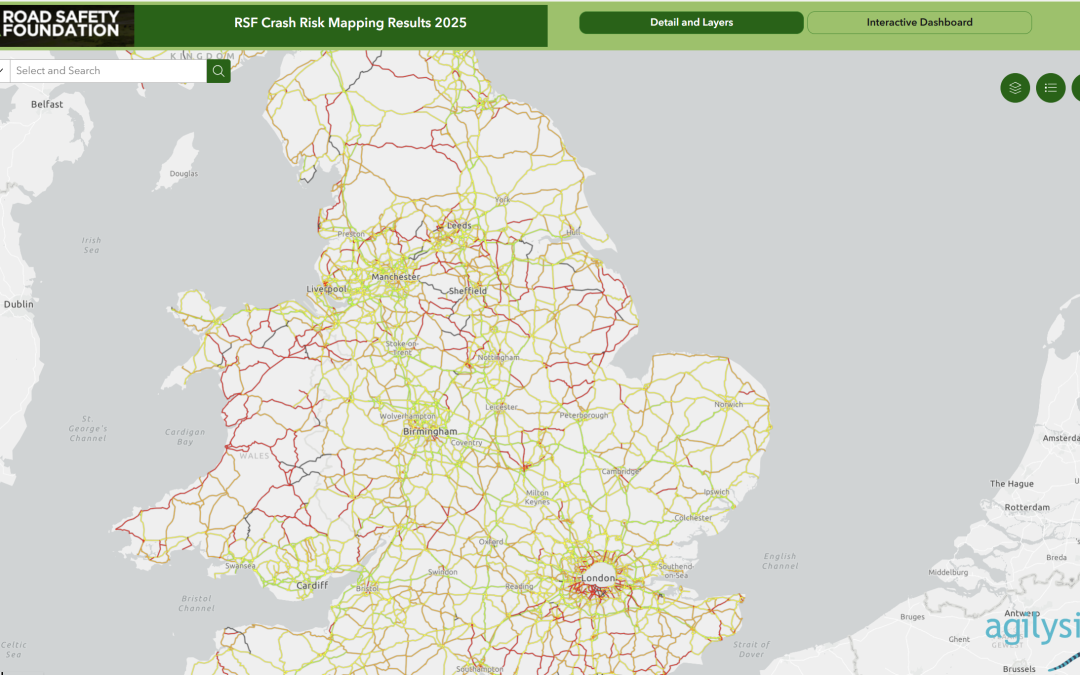
United Kingdom RAP Lead Road Safety Foundation (RSF) has today released its 2025 Crash Risk Mapping Results, mapping the statistical risk of a fatal or serious injury occurring on Great Britain’s motorways and ‘A’ roads for 2021-2023, and tracking the safety performance of the network.
The assessed road network represents less than 15% of Britain’s total road length, but almost 60% of fatal road crashes and more than 40% of serious road crashes occur on these roads.
For more than 20 years, the Road Safety Foundation has published annual Crash Risk Mapping results and now provides a free portal for people to access the results.
The Crash Risk Mapping work is used to help articulate the overall business case for investment on Britain’s Motorways and ‘A’ roads and to help identify which routes would be the best candidates for investment.
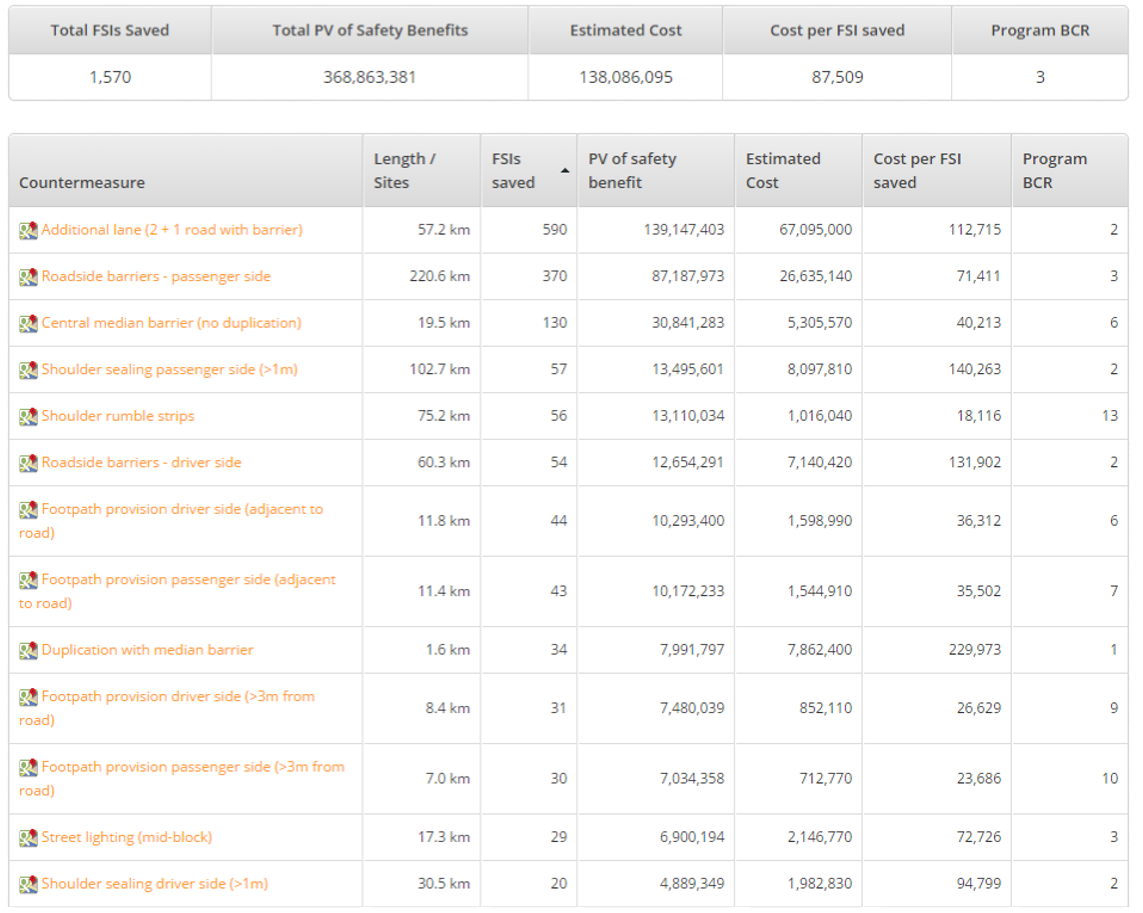
Colour-coded maps show the level of risk for individual users on each route, classified into one of five bands both for crash density (crashes per kilometre road length) and for crash rate (crashes per vehicle-kilometre). Significantly improved routes are identified. On routes with higher numbers of crashes, indicative benefit-cost ratios of potential road safety schemes are also calculated which can be used to outline cases for investment on roads.
The Portal is freely accessible to all authorities and practitioners, allowing them to:
- Identify high-risk road sections;
- Understand changing risk patterns over time;
- Prioritise routes where targeted investment will save lives; and
- Support funding bids and strategic safety plans with robust, evidence-based insight.
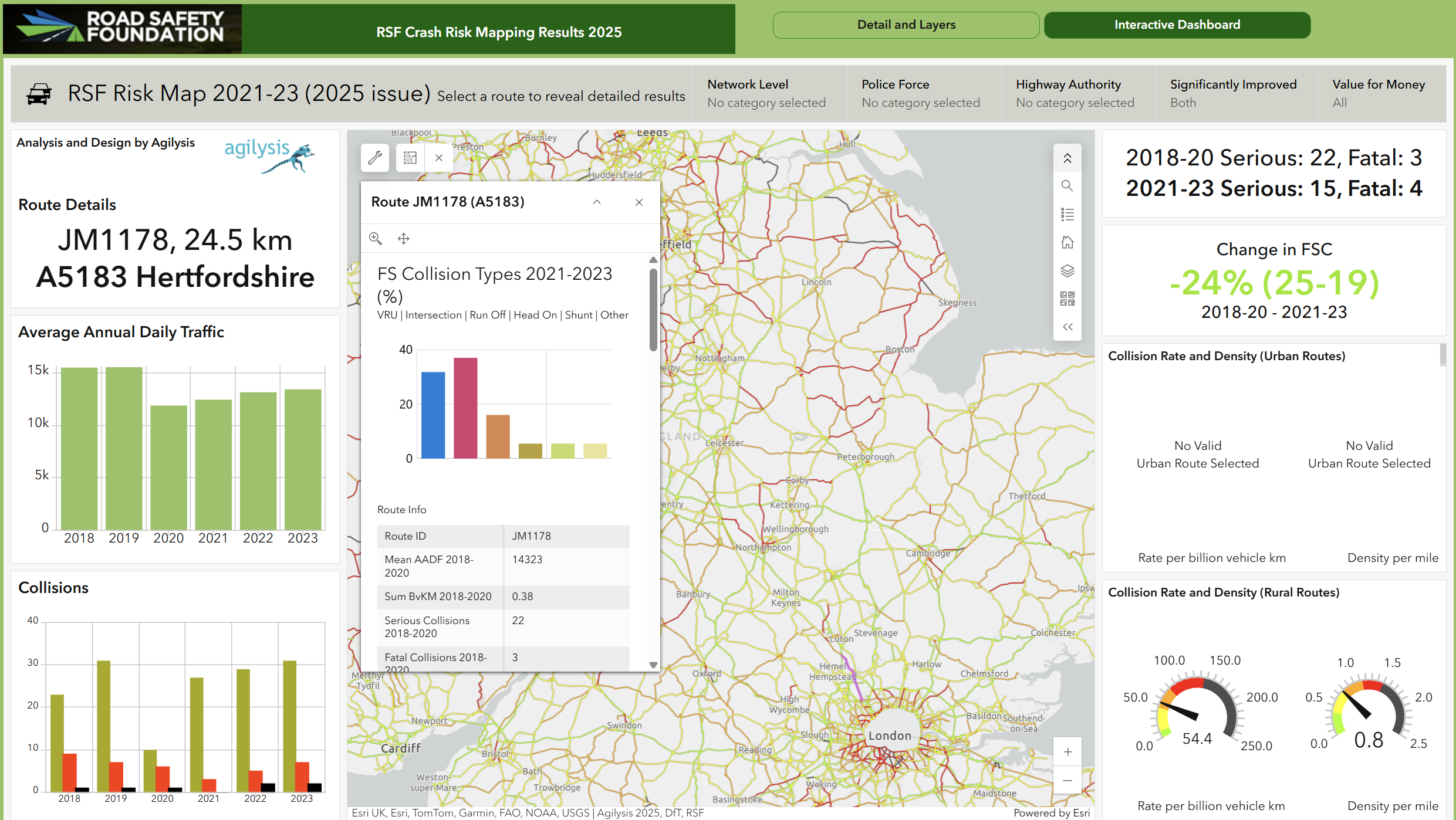
RSF can help partners maximize the value of the underlying data, for example providing assistance to interpret the results, incorporate crash risk mapping insights into risk assessments, or use the data to strengthen road-safety strategies.
To find out more about the Road Safety Foundation and its methodology, click here.
Together, RSF and its partners are helping to make Britain’s roads safer for everyone, supported by the iRAP methodologies and tools.

 English
  Português do Brasil
  Français
  Tiếng Việt
  Русский
  Español de Colombia
  Nederlands