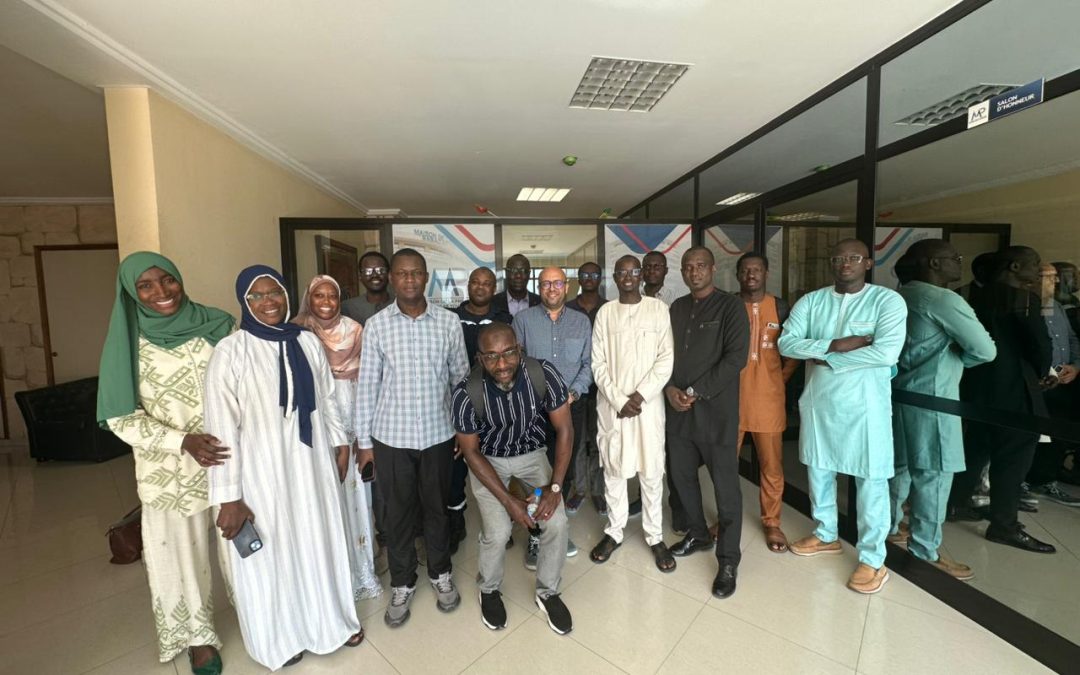
The first in-person training session for the Ten Step Plan for Safer Road Infrastructure Project was held in Dakar, Senegal, from September 29 to October 1.
This three-day training focused on ‘road safety engineering,’ with a particular emphasis on the new PIARC Road Safety Manual. The event saw 20 participants from a range of key organizations, including the Senegal National Road Safety Agency (ANASER), Ageroute, the General Directorate of Road Infrastructure and Accessibility (DGIRD), universities, and the Executive Council of Urban Transport in Dakar (CETUD). This session is the first of a series of in-person trainings and complements the ongoing electronic training platform, which currently serves over 150 participants.
The Ten Step Senegal Project is a three-year initiative funded by the United Nations Road Safety Fund (UNRSF). The project aims to improve road infrastructure safety by strengthening capacities through training, updating road design standards, and implementing targeted strategies. It is a collaborative effort between the Government of Senegal, through the Ministry of Infrastructure, Land, and Air Transport (MITTA) and ANASER, and a consortium led by iRAP. The consortium also includes the International Road Federation (IRF), PIARC (World Road Association) and LASER International, with support from the Private Infrastructure Development Group (PIDG) and FIA Foundation.
The project works to create synergies with other internationally funded road projects, provide key performance indicators and recommendations, and support the implementation of the National Road Safety Plan.
Read more on the Ten Step Plan for Safer Road Infrastructure in Senegal here.
Read more on the Senegal Road Assessment Programme (SnRAP) here.


The World Health Organization estimates that road crashes claim more than 3,500 lives every year in Senegal, and result in over 40,000 more injuries, with a national economic burden of US $1.4 billion. National data shows road crashes are the leading cause of death among young people aged 15 to 24, and the second leading cause among 25-39 year-olds, after AIDS.
Senegal is only the second country in the Africa to use the United Nations Road Safety Collaboration (UNRSC) Ten Steps approach, following its award-winning implementation in Tanzania. The Ten Step Plan framework has been produced by the United Nations Road Safety Collaboration (UNRSC) partners to support countries seeking to implement initiatives in relation to the “improved safety of road infrastructure and broader transport networks”, the UN Convention on Road Traffic and Road Signs and Signals, and the achievement of UN Member States agreed Global Targets 3 and 4 for safer new and existing roads.

 English
  Português do Brasil
  Français
  Tiếng Việt
  Русский
  Español de Colombia
  Nederlands