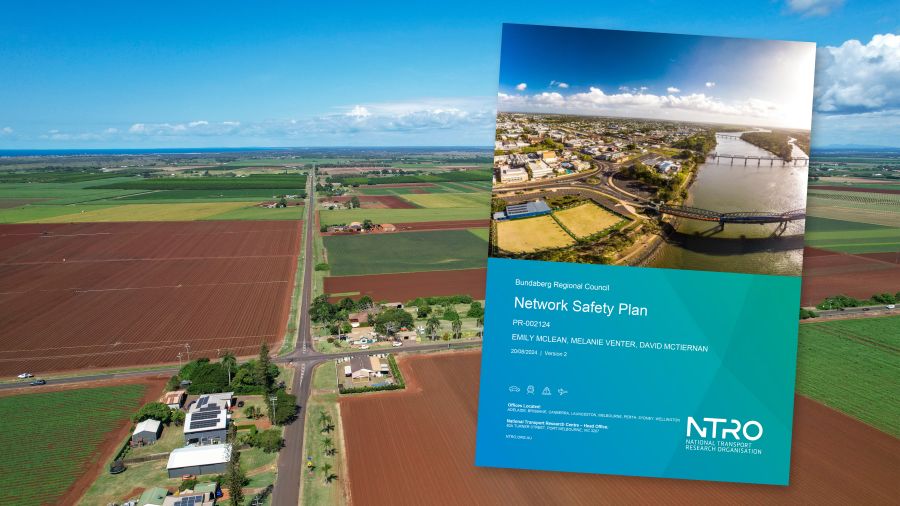
Bundaberg Regional Council in Australia is setting a new national benchmark in road safety with its Network Safety Plan (NSP), designed to optimise investment to achieve a minimum 3-star safety rating across its network, and developed in partnership with the National Transport Research Organisation (NTRO).
The Council, which received a Yellow Ribbon Excellence Award for the Plan last year, shared its impact at a special Australasian College of Road Safety (ACRS) Excellence in Road Safety Webinar last week.
Bundaberg Regional Council’s Network Safety Plan (NSP) is a pioneering, data-driven strategy designed to proactively improve road safety across the region’s road network.
The Council is responsible for 3,084 kilometres of sealed and unsealed roads with an estimated value of AUD$1.18 billion. In order to best manage their investment strategy in periodic maintenance and new or upgrade works across the network, a good understanding of levels of safety, service, demand and prioritisation is required.
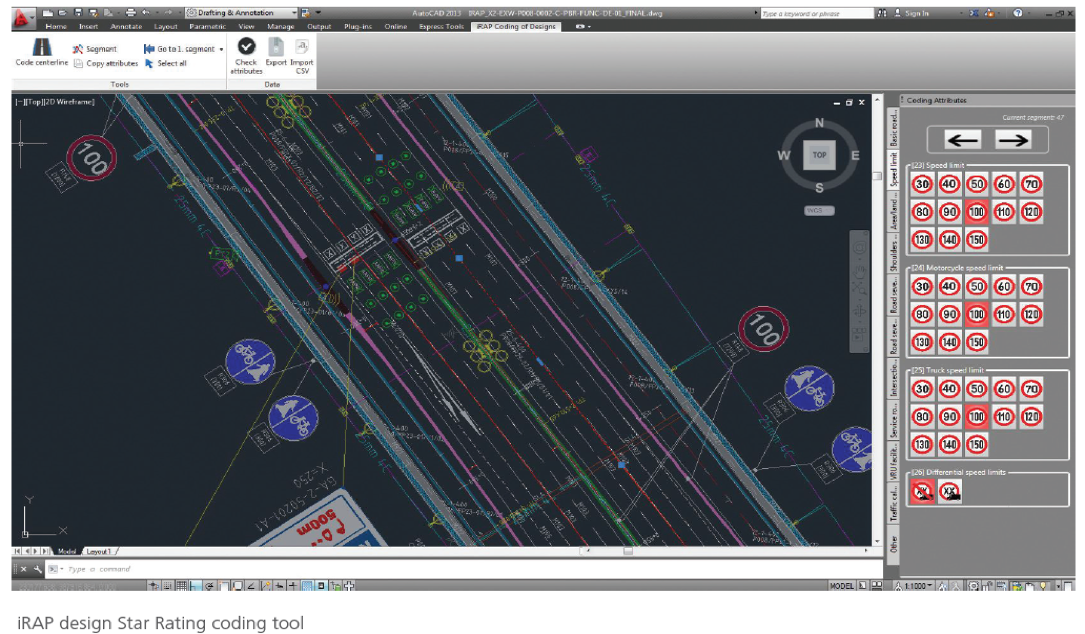
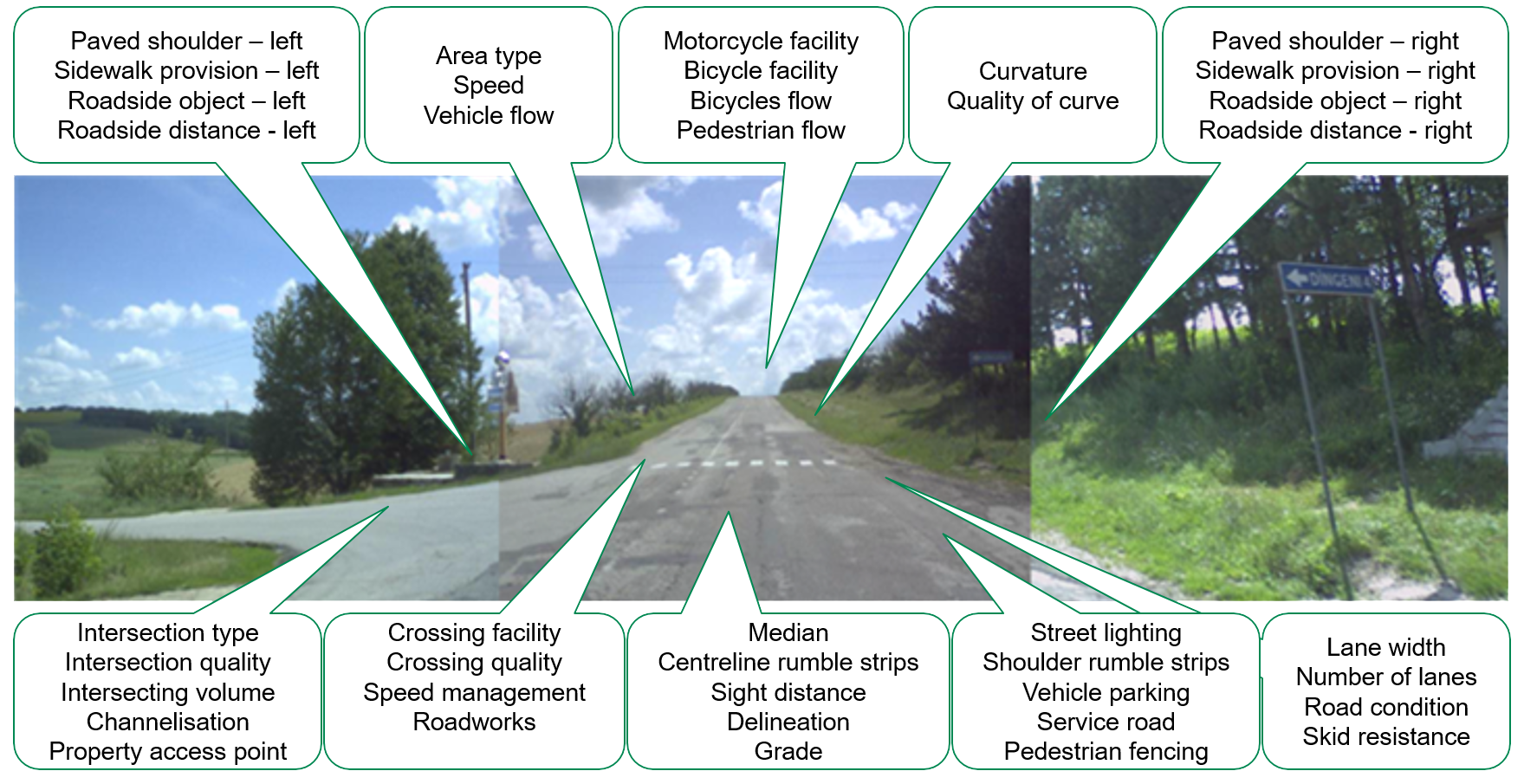
A network-wide infrastructure risk assessment was undertaken across all sealed and higher-order unsealed roads in the Bundaberg Region using the iRAP methodology and AusRAP ANRAM assessment models to understand the existing safety ratings of the network.
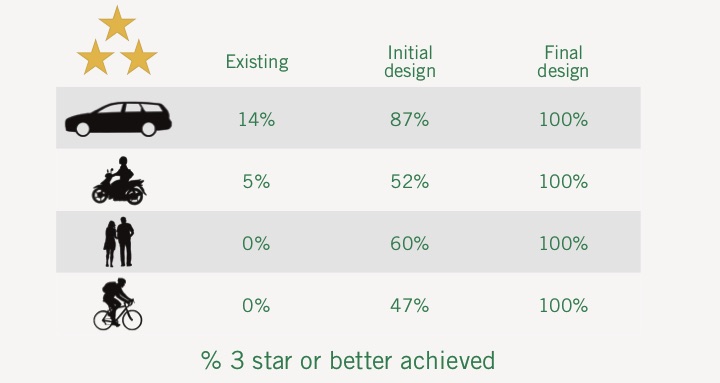
With the identification of high-risk road sections, the Plan compares existing roads with a defined “Corridor Safety Vision” — a future network standard where roads achieve a minimum 3-star safety rating.
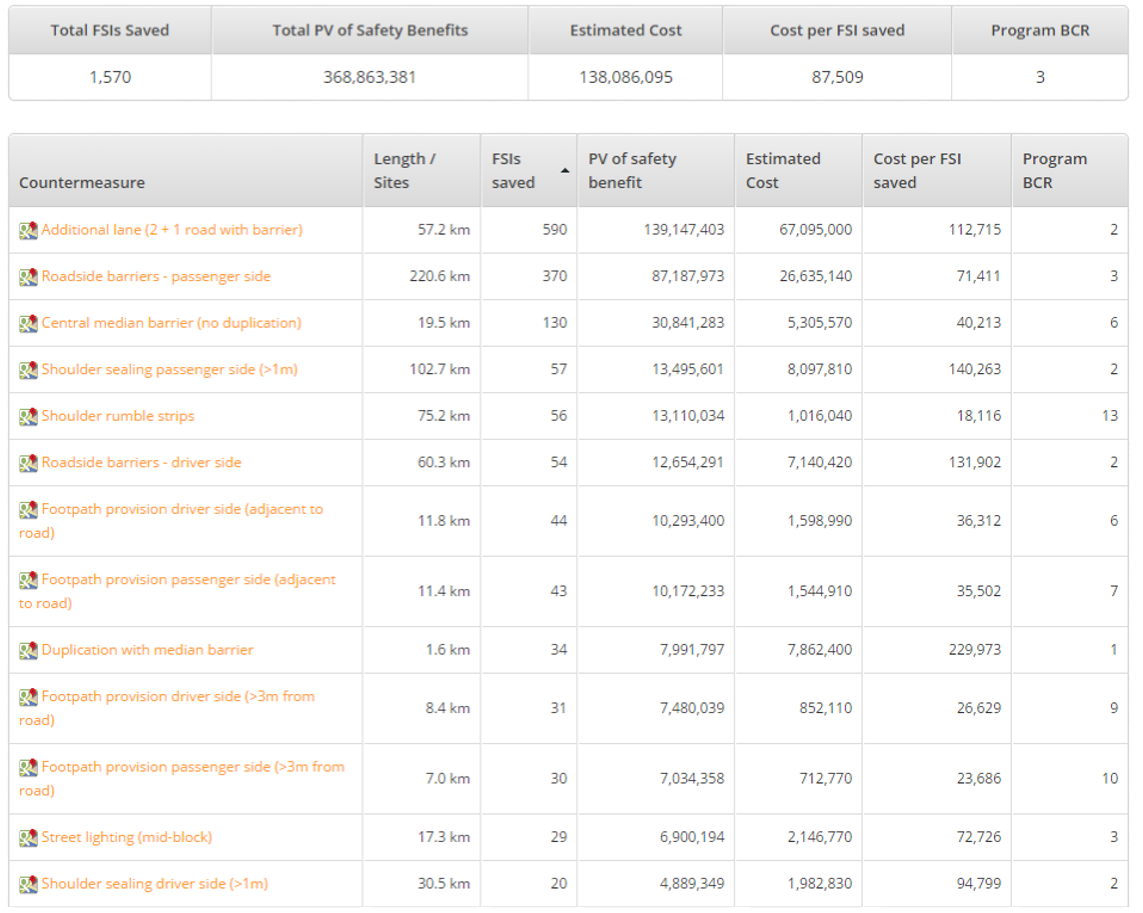
The Plan provides a prioritised investment schedule, adaptable to different funding levels, and based on measurable safety outcomes — including fatal and serious injury (FSI) reductions, benefit-cost ratios, and infrastructure star ratings — to guide decision-making.
Bundaberg Region Mayor Helen Blackburn said the initiative ensured a smarter, evidence-based approach to network planning which was proactive and more cost-effective for ratepayers.
“Like many Local Governments throughout regional Australia, one of our challenges is that we have thousands of kilometres of road to maintain and the road safety risk, along with observed crashes, are often highly dispersed across this large network which often consist of many rural roads with low traffic volumes.
“In addition to this, Local Governments often have limited available funding with many competing priorities.
“Our Network Safety Plan enables us to make informed, cost-effective decisions to save lives and reduce road crash injuries, based on data and an evidence-based tool that is adaptable to changes in funding.
“This is about delivering the greatest road safety improvements for every dollar spent,” Mayor Blackburn said.
Bundaberg’s NSP is among the first of its kind in Australia, aligning with the National Road Safety Strategy 2021–2030 which calls for proactive, network-wide safety planning but lacks detailed implementation guidance. This positions Bundaberg’s Plan as a potential model for other councils nationwide.
The Council’s proactive NSP approach ensures future road infrastructure investments — whether public or private — will align with the 3-star or better safety standard, further embedding safety in long-term regional planning.
For more information on the Plan and Bundaberg Regional Council’s work, contact David Fulton, Senior Engineer – Infrastructure Planning on email david.fulton@bundaberg.qld.gov.au.

 English
  Português do Brasil
  Français
  Tiếng Việt
  Русский
  Español de Colombia
  Nederlands