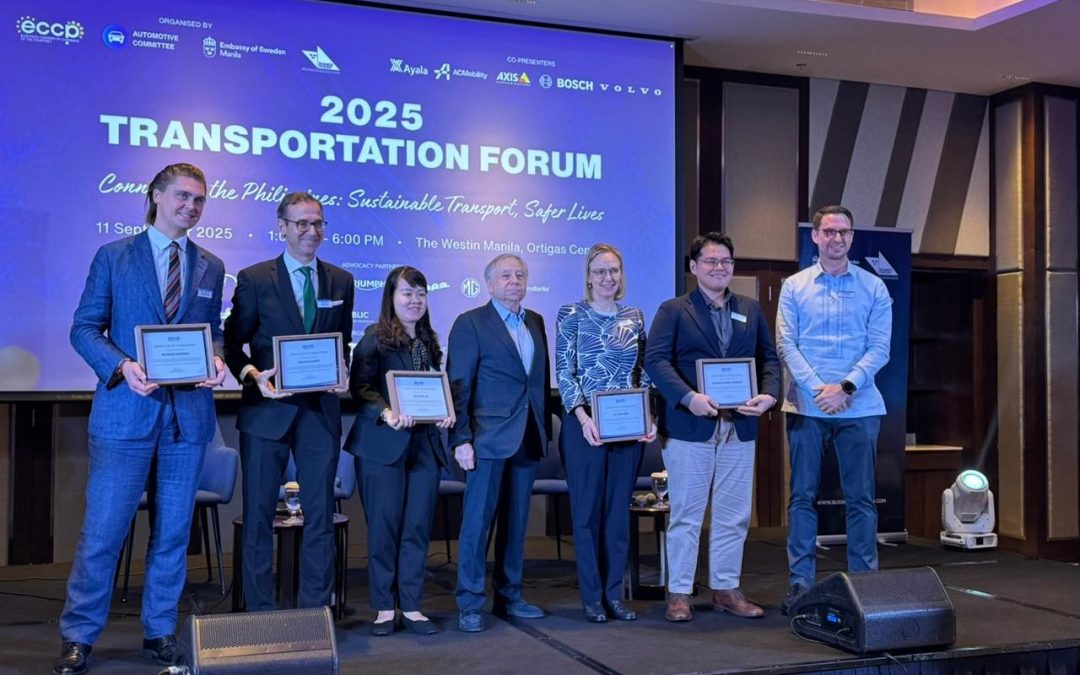
Our Star Rating for Schools Coordinator Minh Vo was honoured this month to contribute to panel discussions at the 2025 Transportation Forum in Manila, focussed on “Connecting the Philippines: Sustainable Transport, Safer Lives”.
The Forum, co-organized by the European Chamber of Commerce of the Philippines (ECCP) and Team Sweden, brought together government leaders, industry pioneers, and mobility experts on 11 September to explore solutions for a more efficient, safe, and sustainable road transport system in the country.
With increasing urbanization, growing transport demand, and the urgency of decarbonization, the forum served as a catalyst for collaboration between the public and private sectors to modernize The Philippines’ transport landscape.
The Forum focussed on the key pillars of road transport transformation:
- Safer Infrastructure – Strengthening road and rail safety policies, infrastructure, and enforcement to protect all commuters
- Smart and Safer Vehicles – Accelerating the shift to cleaner, connected, and technology-driven mobility solutions
- Sustainable Mass Transport – Promoting low-carbon transport, EV adoption, and green infrastructure development
Minh shared her expertise on a panel exploring “From Planning to Pavement: Ensuring Safer Roads Through Strategic Infrastructure Development”.
It provided an excellent opportunity to highlight the crucial work iRAP partners are doing in The Philippines and worldwide creating safer journeys for children and their families to and from school each day.

The event culminated an important week of activities in Manila focussed on road safety, with the Asia Pacific Road Safety Conference (APRSC2025) also held in the city during the week. Read more on iRAP activities at APRSC2025 here.
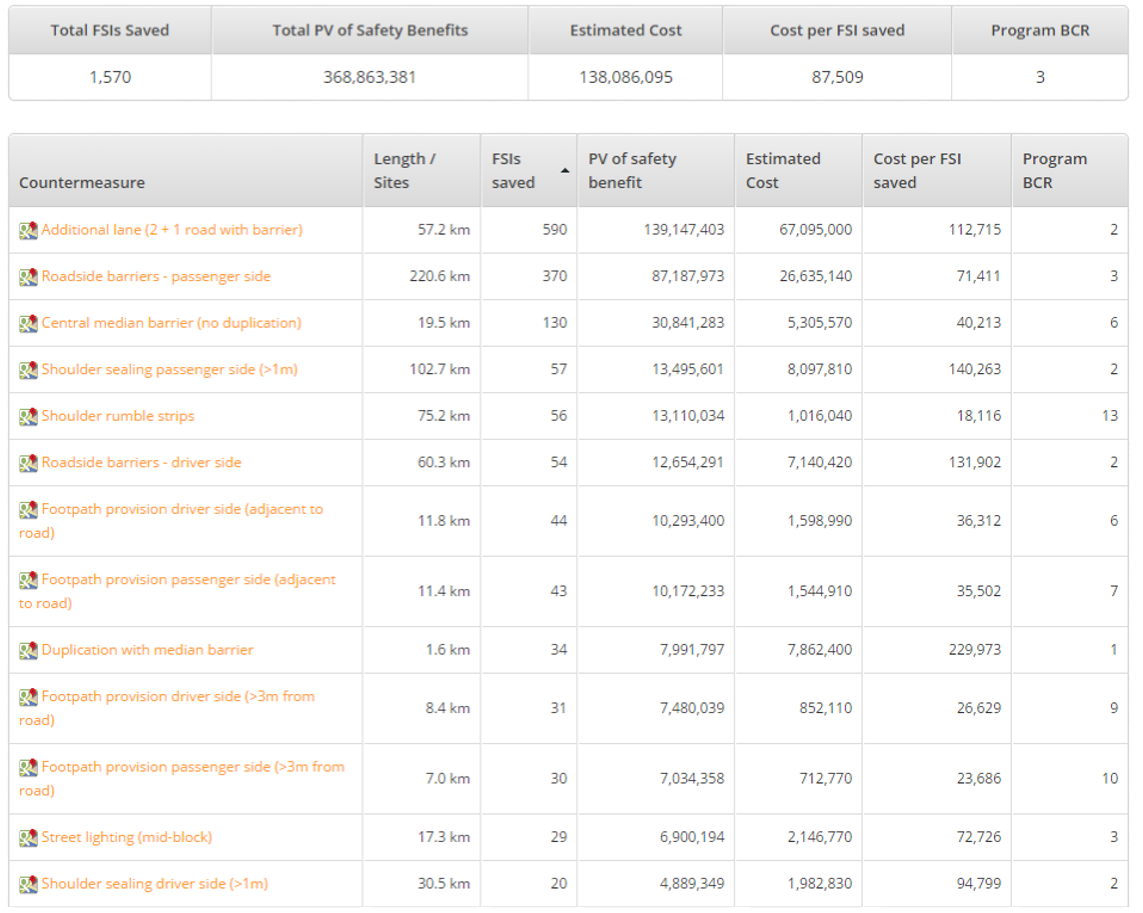
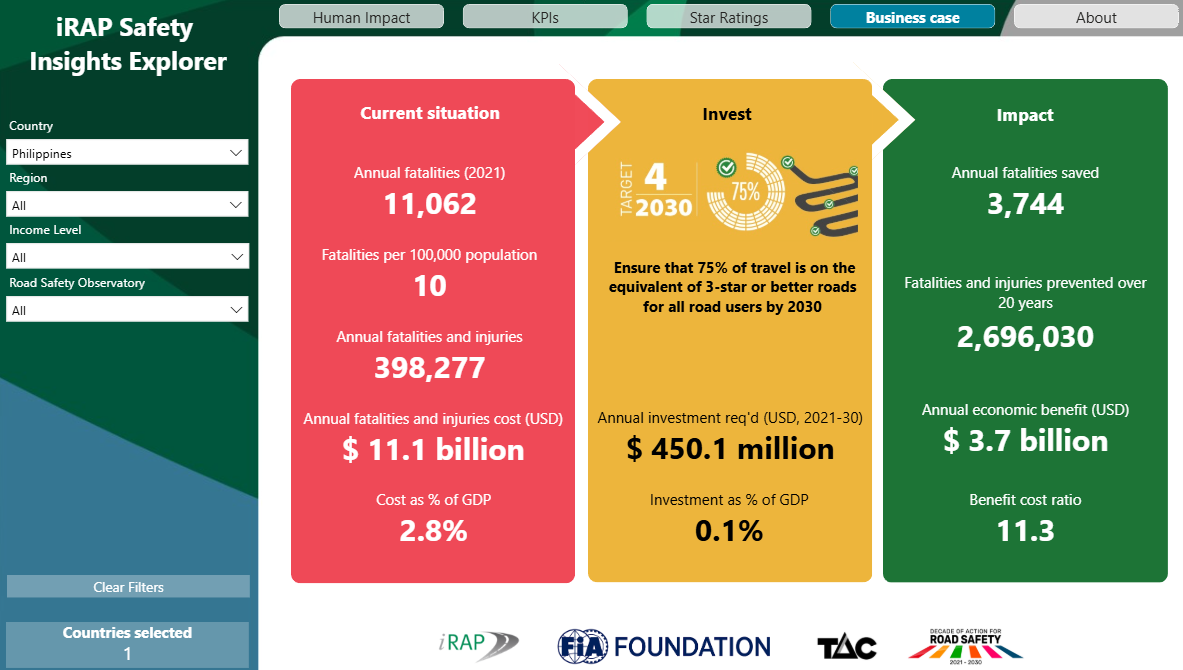
According to iRAP Safety Insights Explorer, road crashes claim 30 lives and more than 1,000 fatalities and injuries in The Philippines each day. Achieving UN Target 4 for more than 75% of travel to be on 3-star or better roads for all road users in the country by 2030 stands to save an estimated 3,744 lives each year and nearly 2.7 million lives and injuries over the 20-year life of road treatments, with an economic benefit of USD$3.7 billion – $11.30 for every $1 spent.

 English
  Português do Brasil
  Français
  Tiếng Việt
  Русский
  Español de Colombia
  Nederlands