
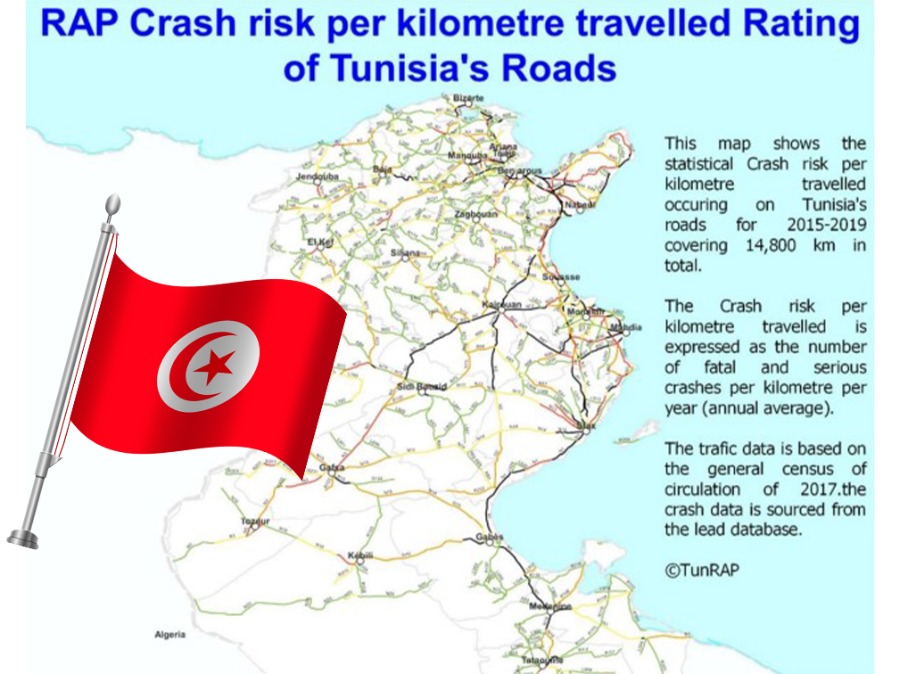
Université de Sfax a réalisé une évaluation de cartographie des risques sur 14 800 km du réseau routier tunisien afin de mieux comprendre les risques d'accidents et de réaliser des investissements fondés sur des données probantes pour réduire le nombre de décès et de blessures graves sur les routes du pays.
La Tunisie est le deuxième pays le plus meurtrier du Maghreb. Les accidents de la route constituent désormais la cinquième cause de mortalité dans le pays et le parc automobile a doublé entre 2000 et 2015.
Cartes des risques d'accident utiliser des données détaillées sur les accidents pour saisir le risque combiné découlant de l'interaction entre les usagers de la route, les véhicules et l'environnement routier, et fournir une indication de la performance globale du système routier en matière de sécurité.
Ces cartes offrent une vue d'ensemble objective des lieux où se sont produits les accidents mortels et les accidents ayant entraîné des blessures graves, ainsi que des zones où le risque d'accidents graves est le plus élevé. La méthodologie globale de iRAP permet d'établir des points de référence et de suivre les performances dans le temps.
Les indicateurs principaux comprennent les taux d'accidents par kilomètre/mile et les taux d'accidents par kilomètre/mile parcouru, avec des versions plus détaillées incluant l'usager de la route, le groupe d'âge ou par rapport aux taux d'accidents moyens pour ce type de route.
Cartes des risques d'accidents et Évaluation par étoiles Ces outils sont souvent utilisés conjointement dans le cadre d'une approche stratégique de la gestion des risques et des investissements. Ils constituent également une source précieuse de référence pour les estimations des risques de décès et de blessures graves (RDBG) et les plans d'investissement.
L'étude tunisienne a produit deux cartes des risques détaillant le risque d'accident par kilomètre parcouru et un indice de densité d'accidents :

 Les résultats ont été publiés dans un rapport et pourraient éclairer les choix en matière de sélection d'itinéraires sûrs et la priorisation des investissements sur les tronçons routiers à haut risque.
Explorateur des informations de sécurité de iRAP Ces données permettent de mieux comprendre l'impact humain et économique des accidents de la route en Tunisie, ainsi que la pertinence économique d'améliorer la sécurité routière dans le pays.
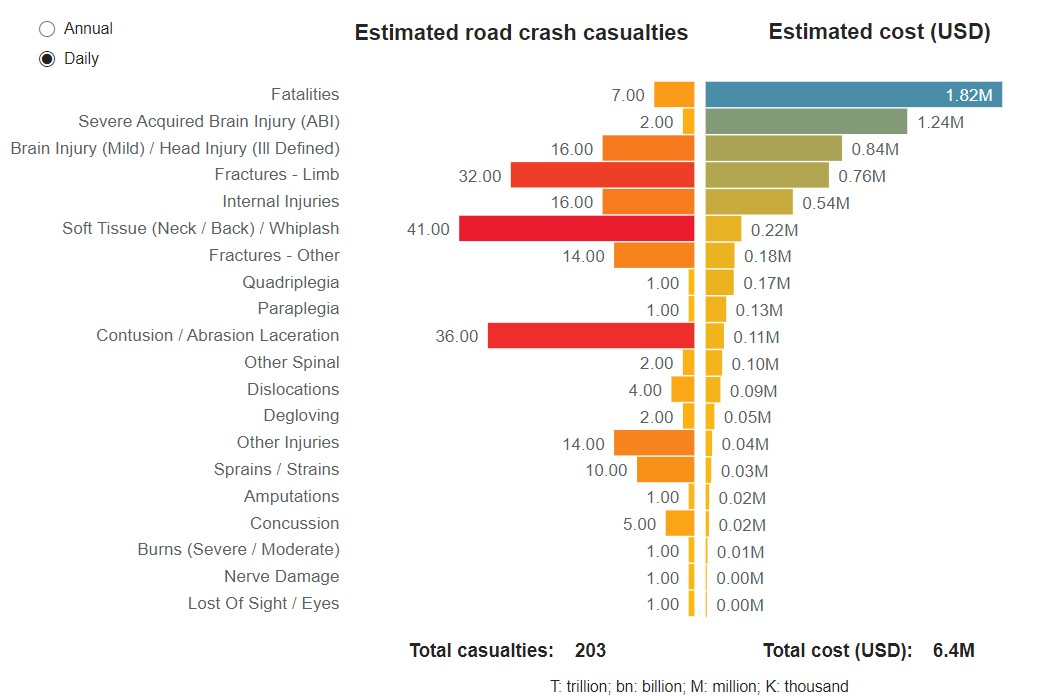
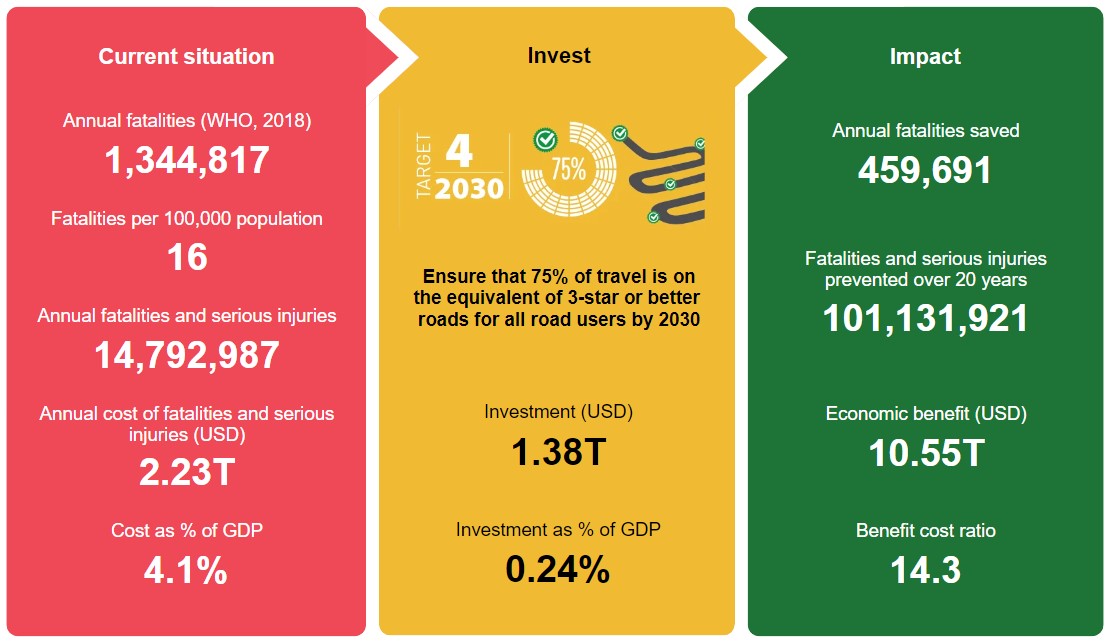
Selon l'explorateur La réalisation des objectifs 3 et 4 des Nations Unies, à savoir plus de 751 000 000 trajets sur des routes 3 étoiles ou mieux pour tous les usagers de la route du pays d'ici 2030, permettrait de sauver environ 193 228 vies et blessures graves sur la durée de vie de 20 ans des travaux routiers, avec un avantage économique de 1 000 000 8,6 milliards de dollars américains – soit 1 000 000 22,8 milliards de dollars américains pour chaque 1 000 000 1 dollar américain dépensé.
À ce jour, les activités du programme iRAP menées par ses partenaires ont permis d'évaluer 14 938 km de routes et 2 écoles en Tunisie. 60 personnes ont bénéficié de la formation mondiale/en ligne du programme iRAP, et 12 personnes ont été formées lors d'événements organisés localement.
Pour obtenir de plus amples informations sur l'étude et ses résultats, veuillez contacter le superviseur du projet, Ahmed Ksentini, par courriel. ahmed.ksentini@fss.usf.tn