
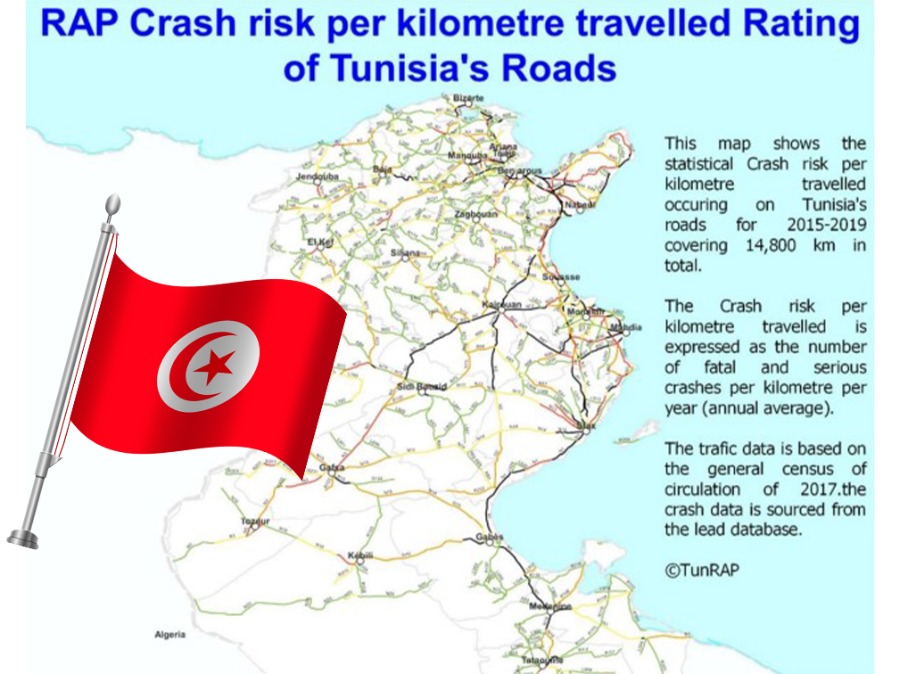
Universiteit van Sfax heeft een risicoanalyse van 14.800 km van het Tunesische wegennet voltooid om inzicht te krijgen in het risico op verkeersongevallen en om op basis van feiten te investeren in het terugdringen van verkeersdoden en ernstig gewonden in het land.
Tunesië is het land met het op één na hoogste aantal verkeersdoden in de Maghreb-regio. Verkeersongevallen zijn nu de vijfde belangrijkste doodsoorzaak in het land en het aantal voertuigen is tussen 2000 en 2015 verdubbeld.
Risicokaarten voor ongevallen Gebruik gedetailleerde ongevalsgegevens om het gecombineerde risico vast te leggen dat voortvloeit uit de interactie tussen weggebruikers, voertuigen en de wegomgeving, en om een indicatie te geven van de algehele veiligheidsprestaties van het wegennet.
De kaarten bieden een objectief overzicht van waar dodelijke ongevallen en ongevallen met ernstig letsel hebben plaatsgevonden en waar het risico op ernstige ongevallen het grootst is. Dankzij de wereldwijde methodologie van iRAP kunnen prestaties worden vergeleken en in de loop van de tijd worden bijgehouden.
De belangrijkste meetwaarden zijn het aantal ongevallen per kilometer/mijl en het aantal ongevallen per afgelegde kilometer/mijl, met meer gedetailleerde versies die gegevens bevatten over weggebruikers, leeftijdsgroepen of in verhouding tot het gemiddelde aantal ongevallen voor dat type weg.
Risicokaarten voor ongevallen en Sterrenbeoordelingen worden vaak samen gebruikt als onderdeel van een strategische aanpak voor risico- en investeringsbeheer. Ze bieden ook een nuttige bron voor het ijken van schattingen van dodelijke en ernstige verwondingen (FSI) en investeringsplannen.
Het onderzoek in Tunesië leverde twee risicokaarten op, met details over het ongevalsrisico per afgelegde kilometer en de ongevalsdichtheid:

 De bevindingen zijn gepubliceerd in een rapport en kunnen van belang zijn voor de keuze van veilige routes en voor prioritaire investeringen in risicovolle weggedeelten.
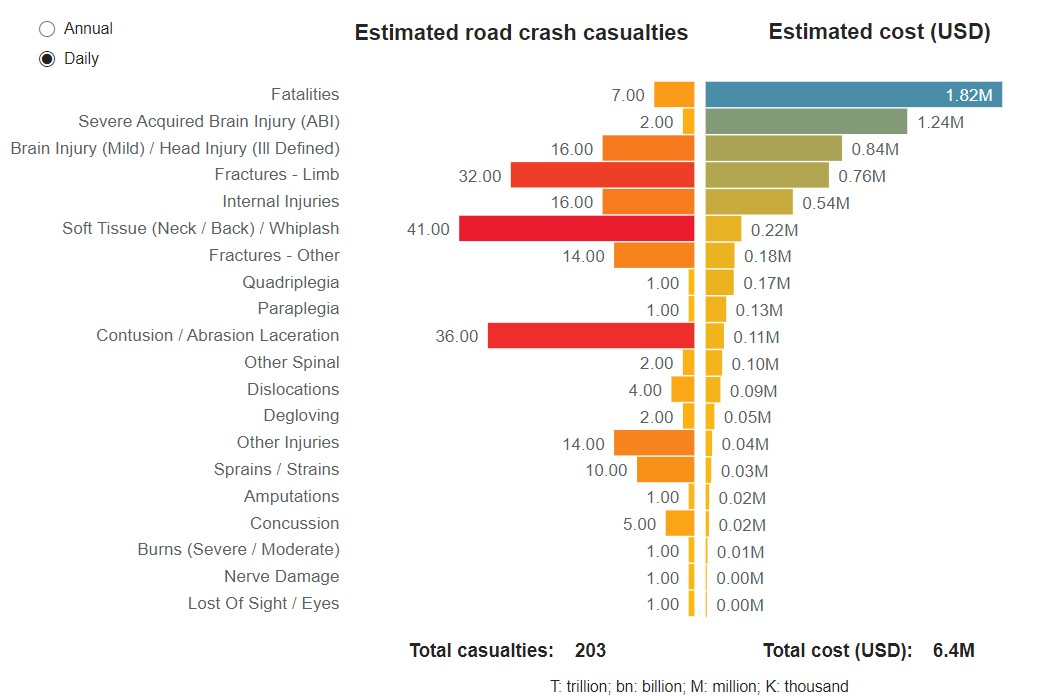
iRAP's Safety Insights Explorer De gegevens werpen meer licht op de menselijke en economische impact van verkeersongevallen met letsel in Tunesië, evenals op de zakelijke argumenten voor veiligere wegen in het land.
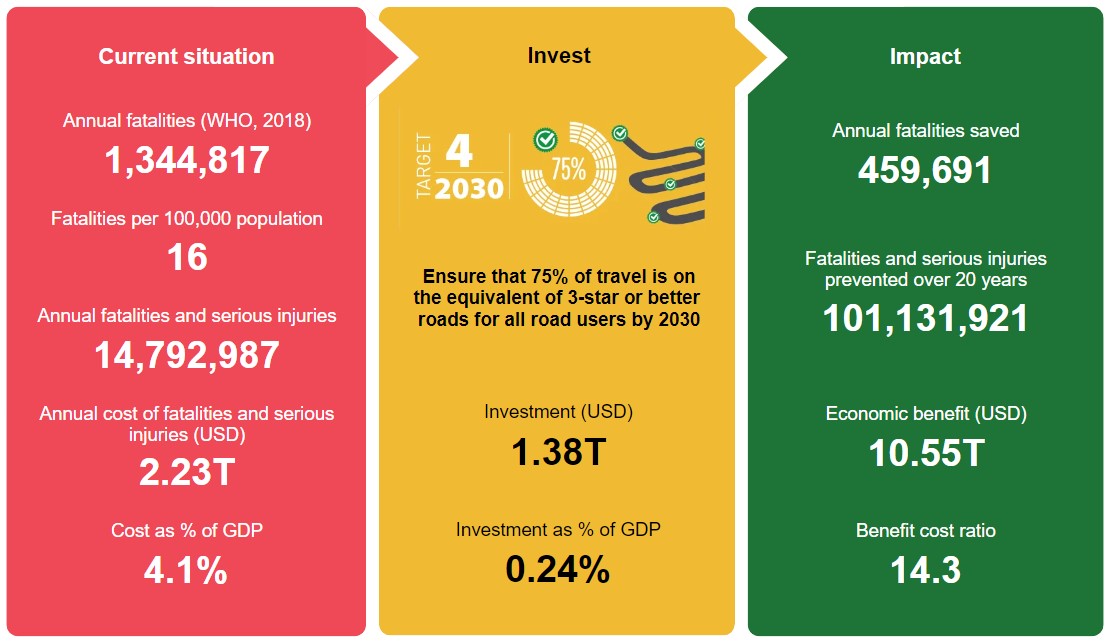
Volgens de ontdekkingsreiziger Het behalen van VN-doelstellingen 3 en 4, namelijk meer dan 751 ton aan reizen over wegen met 3 sterren of beter voor alle weggebruikers in het land tegen 2030, zal naar schatting 193.228 levens en ernstig letsel besparen gedurende de 20 jaar dat de wegbehandelingen meegaan, met een economisch voordeel van 1,9 biljoen dollar – 22,8 biljoen dollar voor elke 1,9 biljoen dollar die wordt uitgegeven.
Tot nu toe heeft het door partners geleide iRAP-programma 14.938 km aan wegen en 2 scholen in Tunesië beoordeeld. 60 mensen hebben geprofiteerd van de wereldwijde/online trainingen van iRAP, en 12 mensen zijn getraind tijdens lokale evenementen.
Voor meer informatie over het onderzoek en de resultaten kunt u contact opnemen met projectleider Ahmed Ksentini via e-mail. ahmed.ksentini@fss.usf.tn