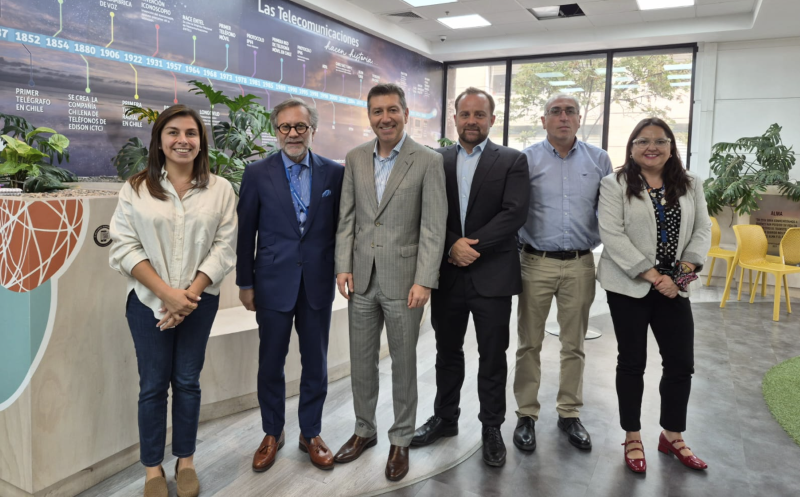
Natalia Escobar, Analista, Departamento de Infraestructura, CONASET; Alberto Escobar, Secretario Ejecutivo, CONASET; Julio Urzua y Morgan Fletcher, iRAP; Ricardo Rojas, Ingeniero de Transporte, Departamento de Infraestructura, CONASET; y Rosemary Planzer, Ingeniera de Transporte, Departamento de Infraestructura, CONASET
Julio Urzua, Director de Proyectos Estratégicos de iRAP y Morgan Fletcher, Líder del Equipo de Operaciones de LAC, se reunieron recientemente con Alberto Escobar Poblete, el recién elegido Secretario Ejecutivo de la Comisión Nacional de Seguridad Vial de Chile (CONASET), para debatir una posible colaboración en iniciativas de seguridad vial para los próximos cuatro años.
Durante la reunión, el Sr. Escobar estuvo acompañado por el equipo de infraestructura de CONASET, y se exploraron varios temas clave para establecer una alianza formal entre CONASET y iRAP. Las conversaciones se centraron en promover la seguridad vial mediante programas innovadores destinados a mejorar la seguridad de la infraestructura vial en todo el país.
Entre los temas clave que se trataron se incluyeron:
- El posible despliegue del Programa Star Rating for Schools En Chile, se promueve la seguridad en los desplazamientos escolares.
- La introducción de CycleRAP Como iniciativa piloto, CycleRAP es un método sencillo, asequible y rápido para evaluar la infraestructura vial y ciclista con el fin de reducir los accidentes y mejorar la seguridad, especialmente para ciclistas y otros usuarios de movilidad ligera.
- El proyecto de desarrollo de ChileRAP, un programa nacional de evaluación de carreteras de propiedad y gestión local, avanzó con un taller de instituciones asociadas previsto para este año en Santiago y el establecimiento de un comité de coordinación interinstitucional.
Esta reunión marca un paso importante en el fortalecimiento de los esfuerzos de seguridad vial en Chile con soluciones basadas en datos y evidencia para lograr carreteras y calles más seguras.
La alianza entre CONASET y iRAP contribuirá a sentar las bases para mejoras sostenibles en la seguridad vial, en beneficio de las comunidades de todo el país.
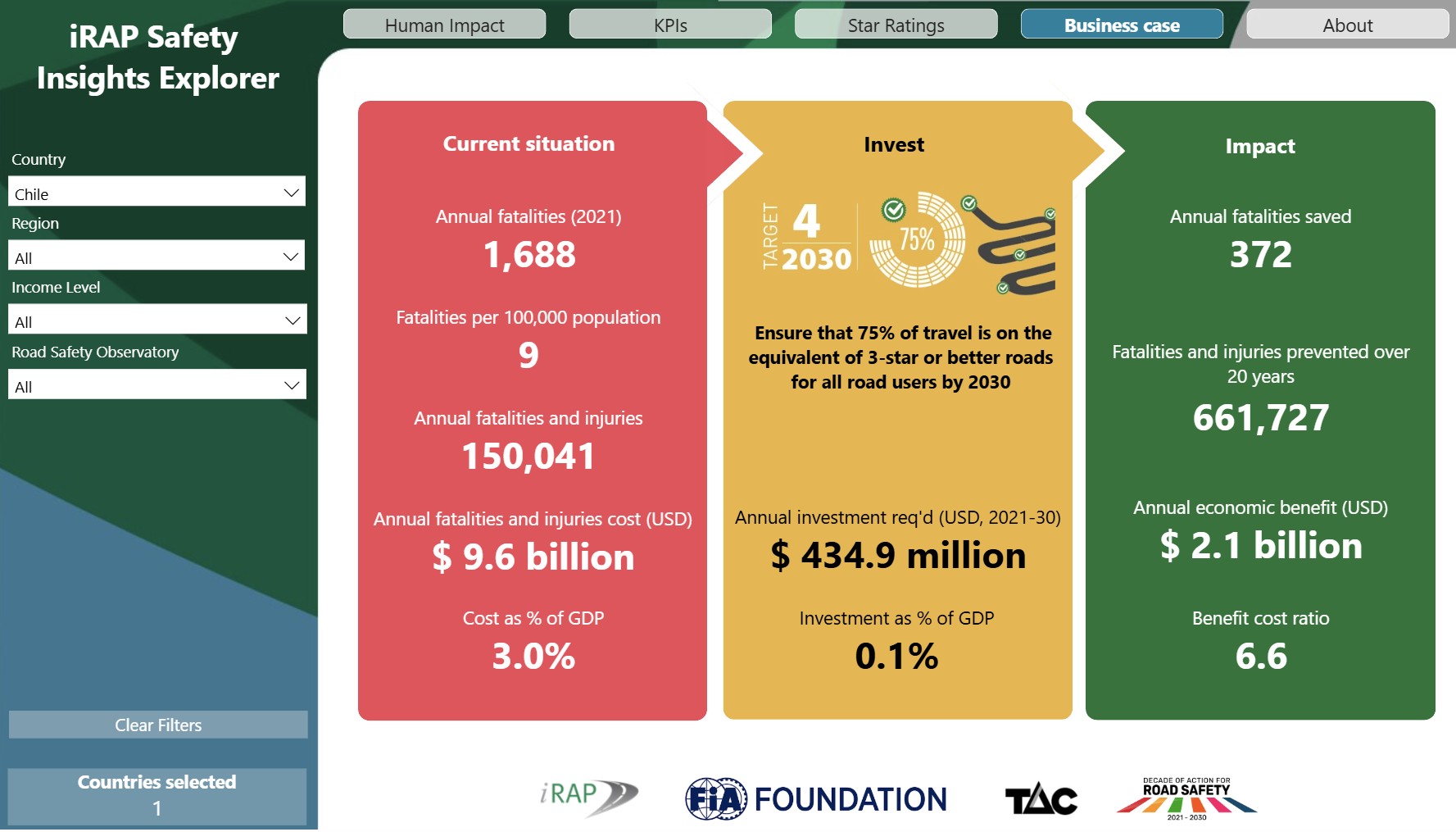
De acuerdo a Explorador de información sobre seguridad de iRAP, lograr el Objetivo 4 de la ONU de más de 75% de viajes en carreteras de 3 estrellas o mejores para todos los usuarios de la carretera en Chile para 2030 salvará un estimado de 372 vidas cada año, y 661,727 muertes y lesiones durante los 20 años de vida de los tratamientos de carreteras, con un beneficio económico de USD$2.1 mil millones – $6.60 por cada $1 gastado.