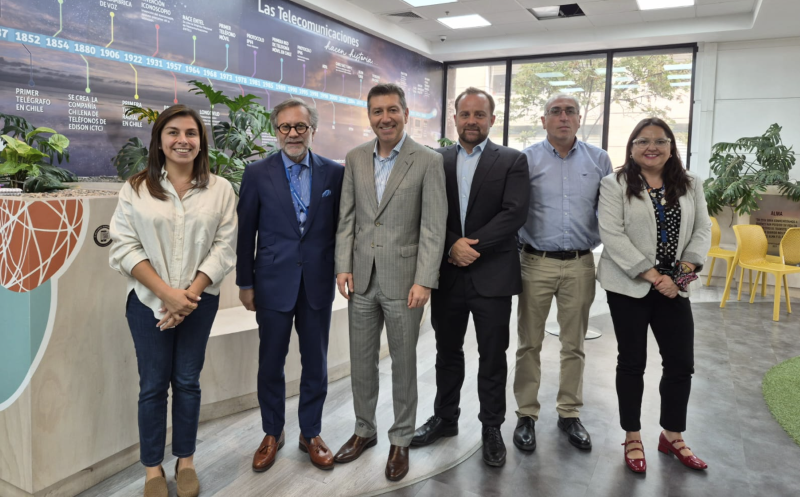
Natalia Escobar, Analista do Departamento de Infraestrutura da CONASET; Alberto Escobar, Secretário Executivo da CONASET; Julio Urzua e Morgan Fletcher, iRAP; Ricardo Rojas, Engenheiro de Transportes do Departamento de Infraestrutura da CONASET; e Rosemary Planzer, Engenheira de Transportes do Departamento de Infraestrutura da CONASET.
Julio Urzua, Diretor de Projetos Estratégicos da iRAP, e Morgan Fletcher, Líder da Equipe de Operações da LAC, reuniram-se recentemente com Alberto Escobar Poblete, o recém-eleito Secretário Executivo da Comissão Nacional de Segurança Rodoviária do Chile (CONASET), para discutir uma possível colaboração em iniciativas de segurança rodoviária para os próximos quatro anos.
Durante a reunião, o Sr. Escobar esteve acompanhado pela equipe de infraestrutura da CONASET, e diversos tópicos importantes foram explorados para estabelecer uma parceria formal entre a CONASET e a iRAP. As discussões se concentraram no avanço da segurança viária por meio de programas inovadores voltados para a melhoria da segurança da infraestrutura rodoviária em todo o país.
As principais áreas abordadas incluíram:
- A possível implementação do Programa Star Rating for Schools No Chile, apoiando deslocamentos escolares mais seguros.
- A introdução de CycleRAP Como iniciativa piloto, o CycleRAP é um método fácil, acessível e rápido de avaliar a infraestrutura viária e cicloviária para reduzir acidentes e melhorar a segurança, especificamente para ciclistas e outros usuários de mobilidade leve.
- O desenvolvimento proposto do ChileRAP – um programa nacional de avaliação de estradas de propriedade e liderança local – avançou com um workshop de instituições parceiras planejado para Santiago este ano e o estabelecimento de um comitê de coordenação interinstitucional.
Este encontro representa um passo importante no fortalecimento dos esforços de segurança rodoviária no Chile, com soluções baseadas em dados e evidências para estradas e ruas mais seguras.
A parceria entre a CONASET e a iRAP ajudará a construir uma base para melhorias sustentáveis na segurança rodoviária, beneficiando comunidades em todo o país.
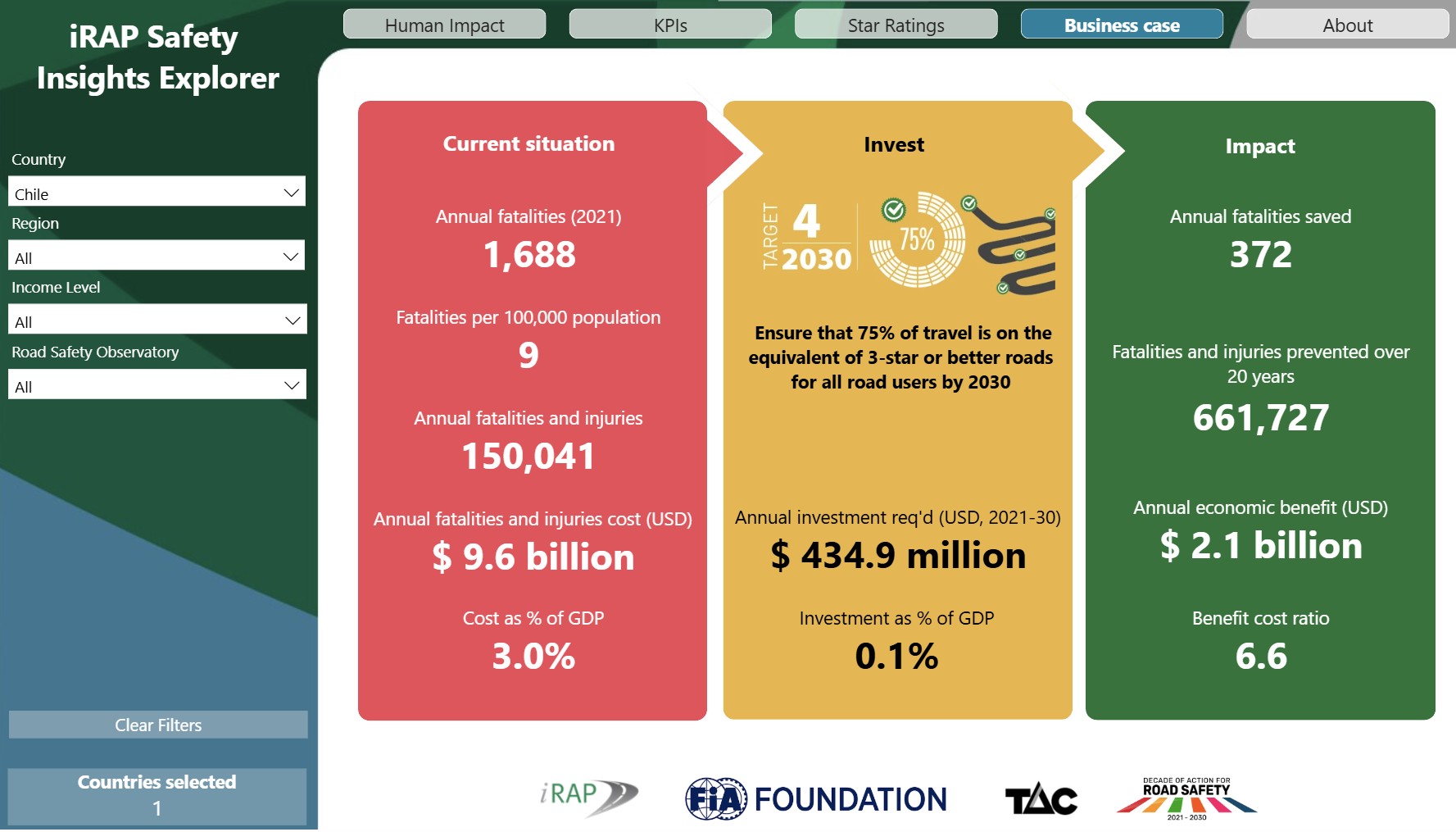
De acordo com Explorador de informações de segurança do iRAP, Atingir a Meta 4 da ONU, que prevê mais de 751.800 viagens em estradas com classificação de 3 estrelas ou superior para todos os usuários no Chile até 2030, poderá salvar cerca de 372 vidas por ano e 661.727 mortes e ferimentos ao longo dos 20 anos de vida útil das obras de melhoria das estradas, com um benefício econômico de US$ 1.900,21 bilhões – US$ 1.900,60 para cada US$ 1.900,1 investido.