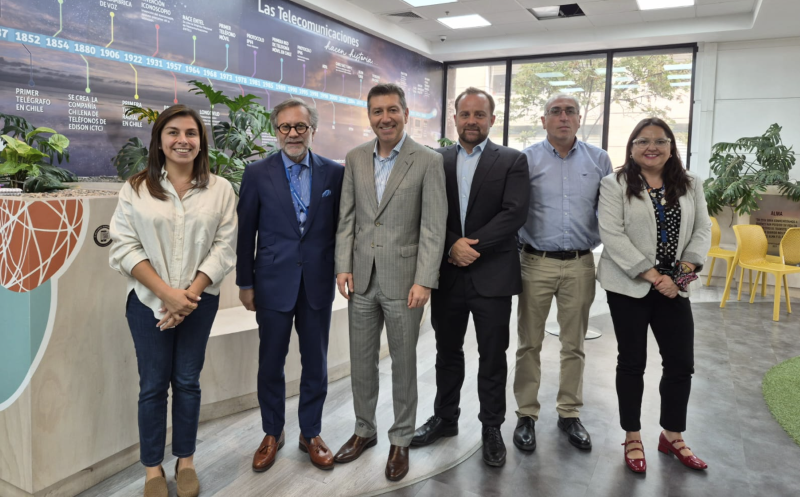
Natalia Escobar, analyste, département des infrastructures, CONASET ; Alberto Escobar, secrétaire exécutif, CONASET ; Julio Urzua et Morgan Fletcher, iRAP ; Ricardo Rojas, ingénieur des transports, département des infrastructures, CONASET ; et Rosemary Planzer, ingénieure des transports, département des infrastructures, CONASET
Julio Urzua, directeur des projets stratégiques de iRAP, et Morgan Fletcher, responsable de l'équipe des opérations LAC, ont récemment rencontré Alberto Escobar Poblete, le nouveau secrétaire exécutif de la Commission nationale de la sécurité routière du Chili (CONASET), afin de discuter d'une éventuelle collaboration sur des initiatives de sécurité routière pour les quatre prochaines années.
Lors de cette réunion, M. Escobar était accompagné de l'équipe infrastructure de CONASET. Plusieurs sujets clés ont été abordés en vue d'établir un partenariat formel entre CONASET et iRAP. Les discussions ont porté sur l'amélioration de la sécurité routière grâce à des programmes novateurs visant à renforcer la sécurité des infrastructures routières à travers le pays.
Les principaux thèmes abordés étaient les suivants :
- Le déploiement potentiel du Programme Star Rating for Schools au Chili, pour soutenir des trajets scolaires plus sûrs.
- L'introduction de CycleRAP CycleRAP, initiative pilote, est une méthode simple, abordable et rapide d'évaluation des infrastructures routières et cyclables visant à réduire les accidents et à améliorer la sécurité, notamment pour les cyclistes et les autres usagers de la mobilité légère.
- Le projet de développement de ChileRAP – un programme national d’évaluation des routes géré et piloté localement – a progressé avec un atelier des institutions partenaires prévu à Santiago cette année et la mise en place d’un comité de coordination interinstitutionnel.
Cette réunion marque une étape importante dans le renforcement des efforts de sécurité routière au Chili grâce à des solutions fondées sur des données probantes pour des routes et des rues plus sûres.
Le partenariat entre CONASET et iRAP contribuera à jeter les bases d'améliorations durables en matière de sécurité routière, au bénéfice des communautés de tout le pays.
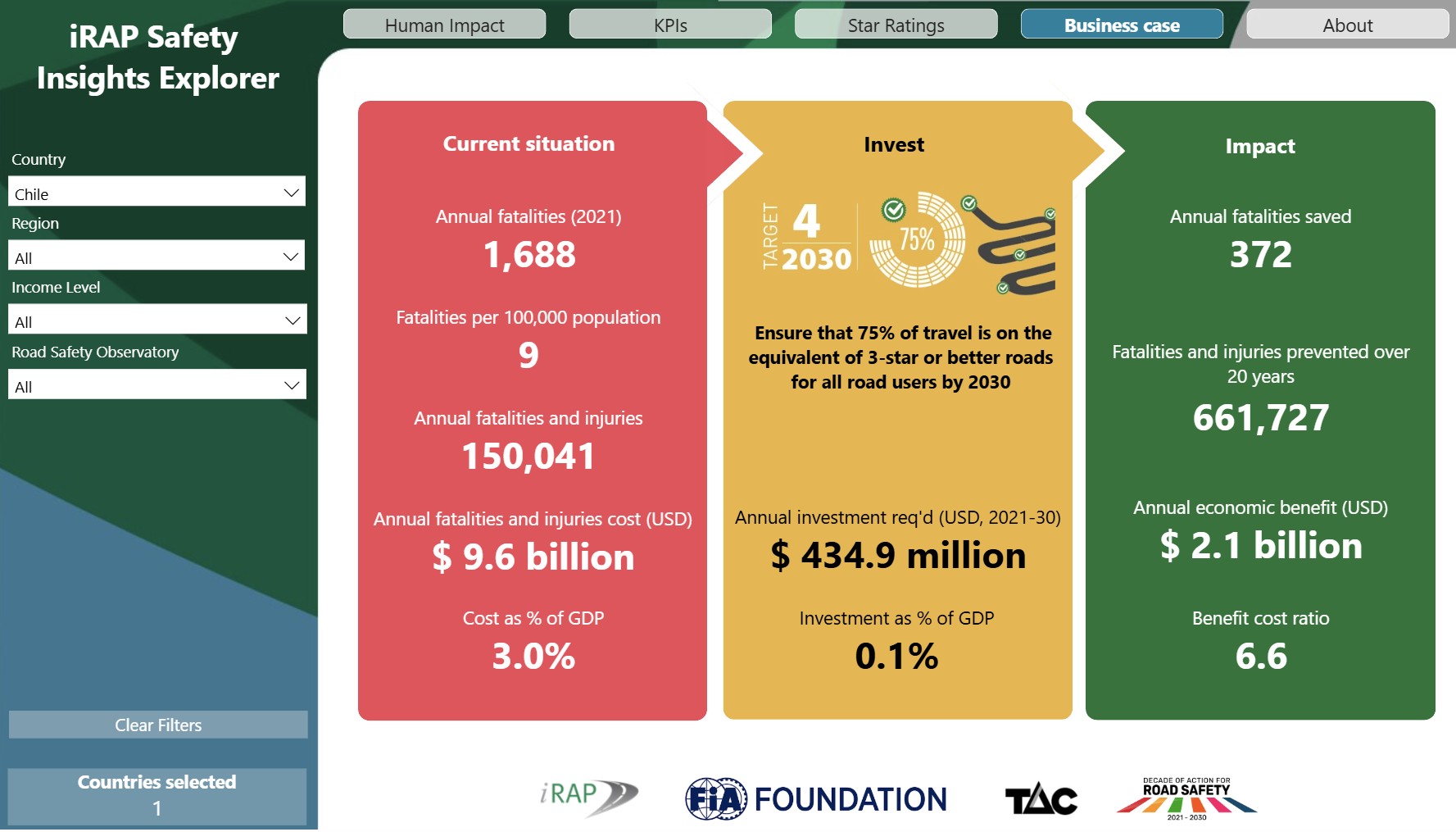
Selon Explorateur des informations de sécurité de iRAP, la réalisation de l'objectif 4 des Nations Unies, qui vise à ce que plus de 751 080 000 trajets sur des routes 3 étoiles ou mieux soient effectués par tous les usagers de la route au Chili d'ici 2030, pourrait sauver environ 372 vies chaque année et 661 727 décès et blessures sur les 20 ans de durée de vie des traitements routiers, avec un avantage économique de 1 090 02,1 milliards de dollars américains – soit 1 090 06,60 dollars américains pour chaque 1 090 010 dépensé.