
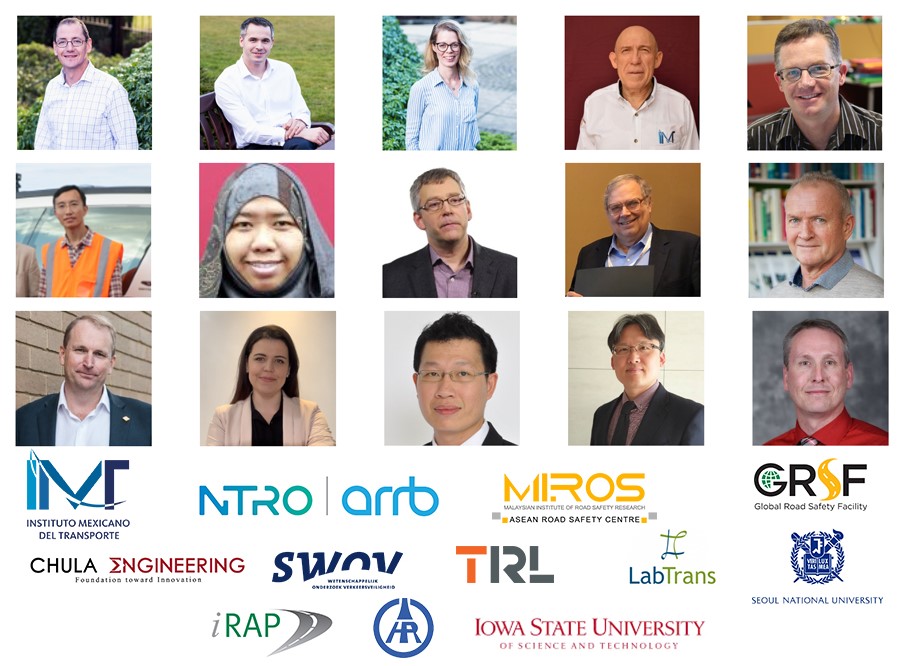
Het Global Technical Committee (GTC) van iRAP kwam vorige week bijeen in het kader van hun belangrijke taak om de ontwikkeling van het iRAP-model en de technische integriteit van de iRAP-protocollen wereldwijd te waarborgen. Belangrijke onderwerpen van discussie waren de ontwikkeling van een type kop-achteraanbotsing voor het iRAP Star Rating-model en het inzicht in de prestaties van hogesnelheidsvoertuigen in de hogere klasse […]
De GTC rapporteert rechtstreeks aan de iRAP-raad en bestaat uit experts van 's werelds toonaangevende instanties op het gebied van verkeersveiligheid en onderzoek, waaronder het Mexicaanse Instituut voor Transport, ARRB NTRO (Australië), Beijing Zhongjiaohuaan Technology (China), het Maleisische Instituut voor Verkeersveiligheidsonderzoek (MIROS), TRL (VK), het SWOV Instituut voor Verkeersveiligheidsonderzoek (Nederland), Global Road Safety Facility (GRSF), Labtrans (Brazilië), Seoul National University (Korea), Chulalongkorn University (Thailand) en Iowa State University (VS).
James Bradford, Global Technical Director van iRAP, zei: "De GTC is belangrijk omdat zij toezicht houden op de iRAP-protocollen en ervoor zorgen dat deze robuust, wetenschappelijk onderbouwd en geschikt voor het beoogde doel zijn.".
“De bijeenkomst was erg nuttig omdat het een diepgaand inzicht gaf in het intensieve onderzoek dat TRL uitvoert naar de relatie tussen kop-achteraanbotsingen en de weginfrastructuur. Dit werk, dat door National Highways in Engeland wordt ondersteund, is belangrijk voor de verdere ontwikkeling van de iRAP-protocollen en Hulpmiddelen,” zei hij.
Dr. John Fletcher, Practice Lead International Safety bij TRL, zei:“TRL heeft de werking van de Sterrenbeoordeling modellen en protocollen in detail. De resultaten en inzichten zijn teruggekoppeld naar de GTC om de bredere iRAP-gemeenschap en de modelprestaties te verbeteren. Dit is mogelijk gemaakt dankzij de steun van Nationale snelwegen.
“TRL breidt momenteel ook het bereik van het Star Rating-model uit door een module voor kop-staartbotsingen te ontwikkelen. De relevante tegenmaatregelen zijn gerelateerd aan ITS (variabel snelheidsbeheer en filebeveiligingssystemen) in plaats van klassieke technische oplossingen, wat het model eveneens aanzienlijk uitbreidt.
“"De verbanden tussen het nieuwe model en de ongevalspatronen blijken 'complex' te zijn, oftewel niet helemaal zoals verwacht, maar zeer diepgaande analyses van de onderlinge verbanden leveren waardevolle inzichten op die de ontwikkeling ten goede komen; deze resultaten zullen ook een grote bijdrage leveren aan het initiatief voor hogesnelheidswegen van hoge kwaliteit," aldus dr. Fletcher.
“"Het ontwikkelen van een dieper inzicht in de prestaties van hogesnelheidswegen van hoge klasse is een uitdaging," aldus de heer Bradford, "en zal ervoor zorgen dat iRAP een iRAP Innovatiepartnerschap om de kennis op dit gebied uit te breiden.”
Zach Hans, directeur van het Center for Weather Impacts on Mobility and Safety en senior onderzoeker aan de Iowa State University, werd verwelkomd bij het GTC. Hij brengt een diepgaande kennis van de veiligheid van de weginfrastructuur en jarenlange ervaring met de toepassing van iRAP-instrumenten in de VS met zich mee.
Voor meer informatie