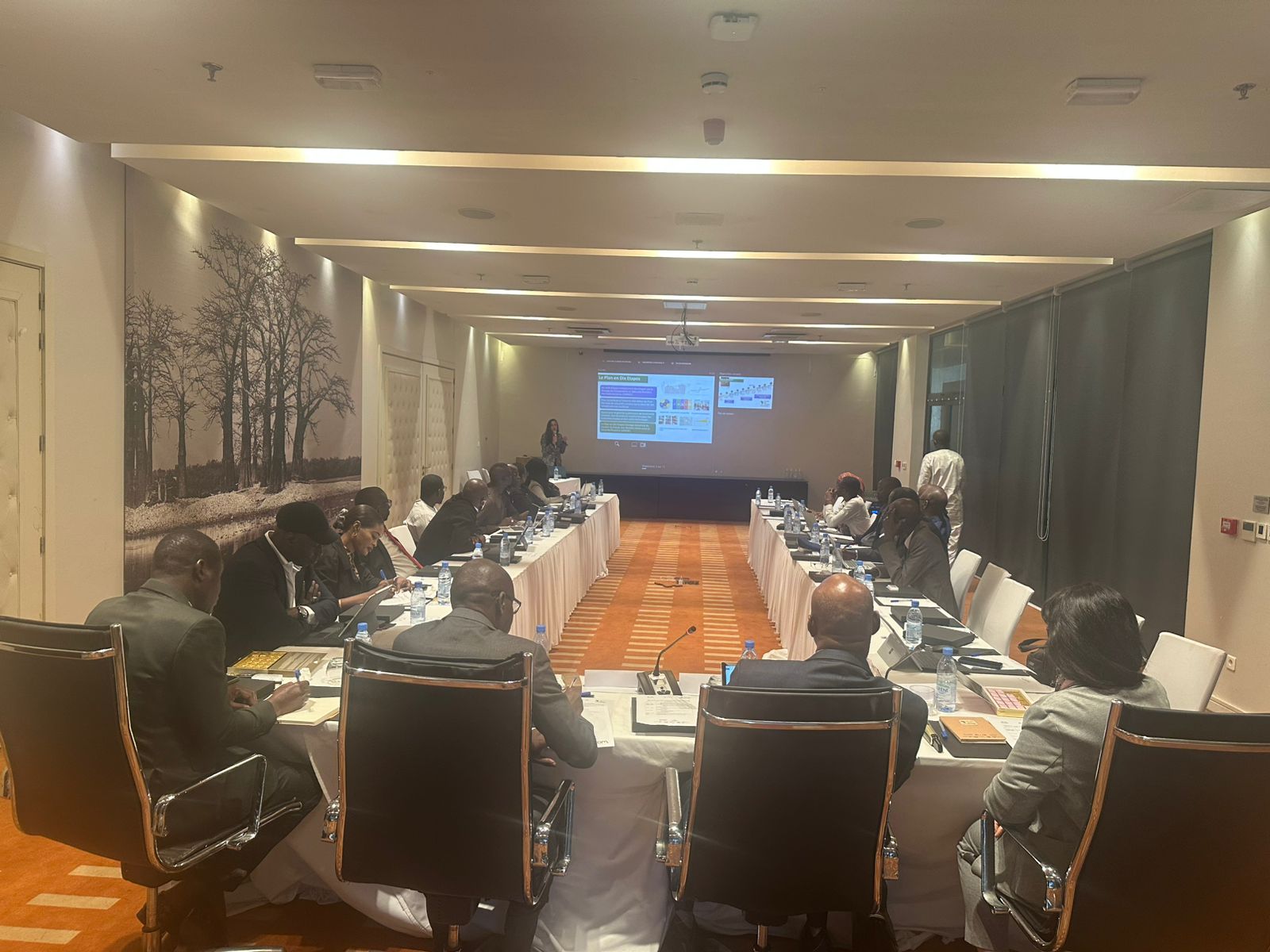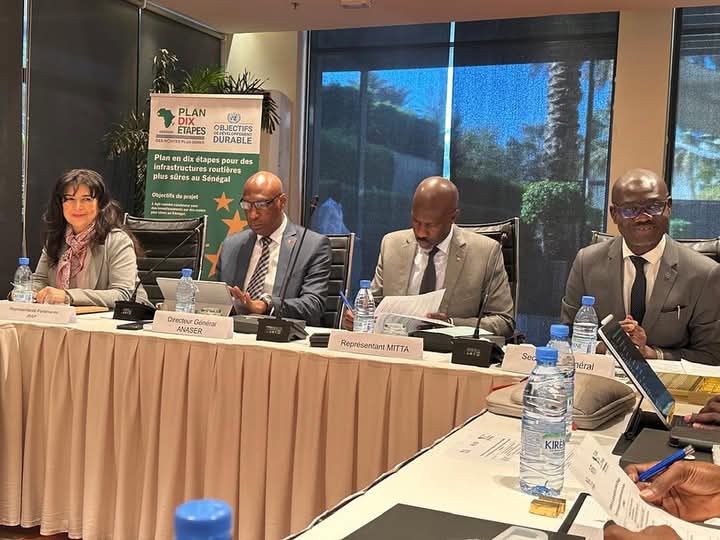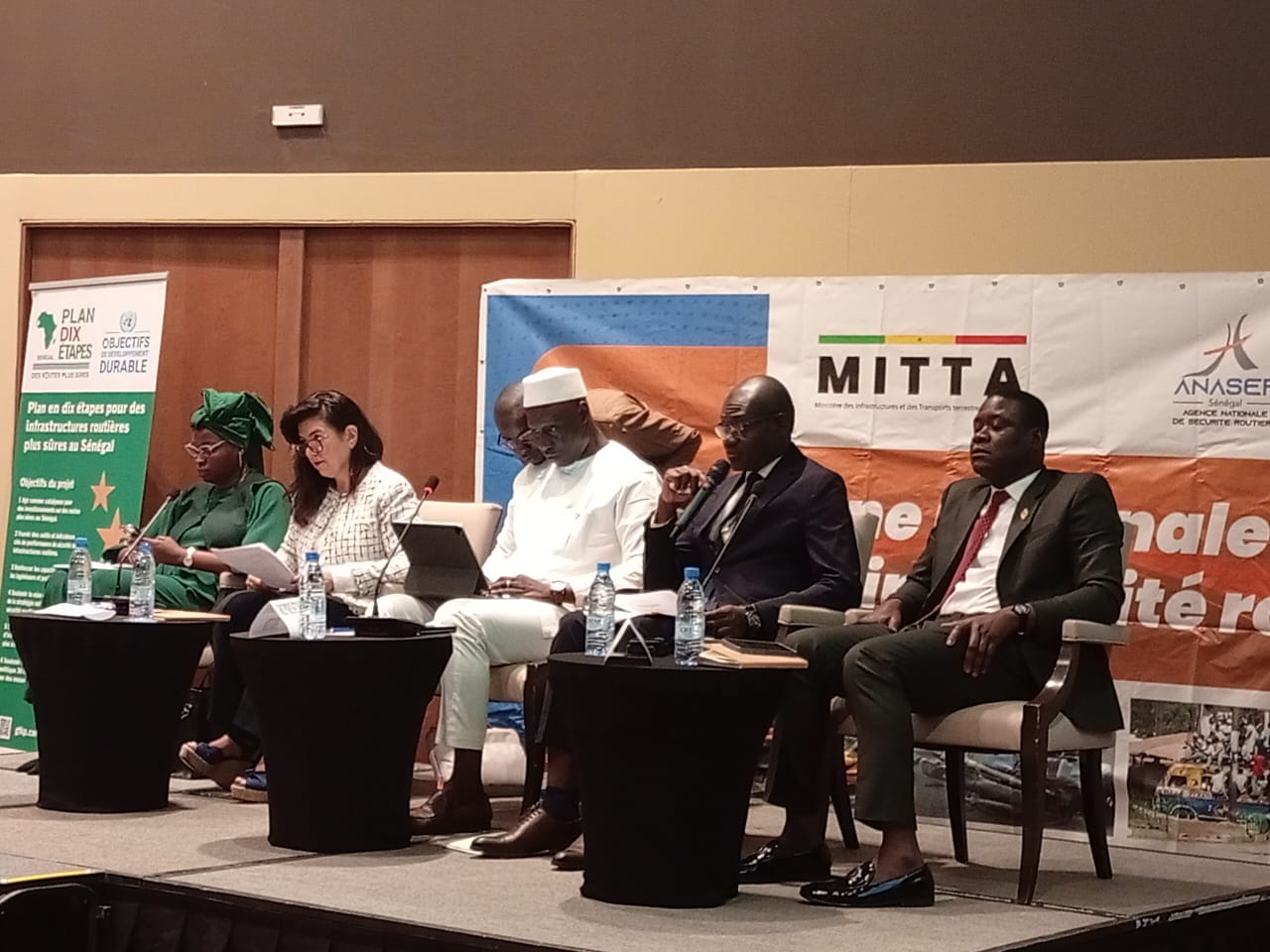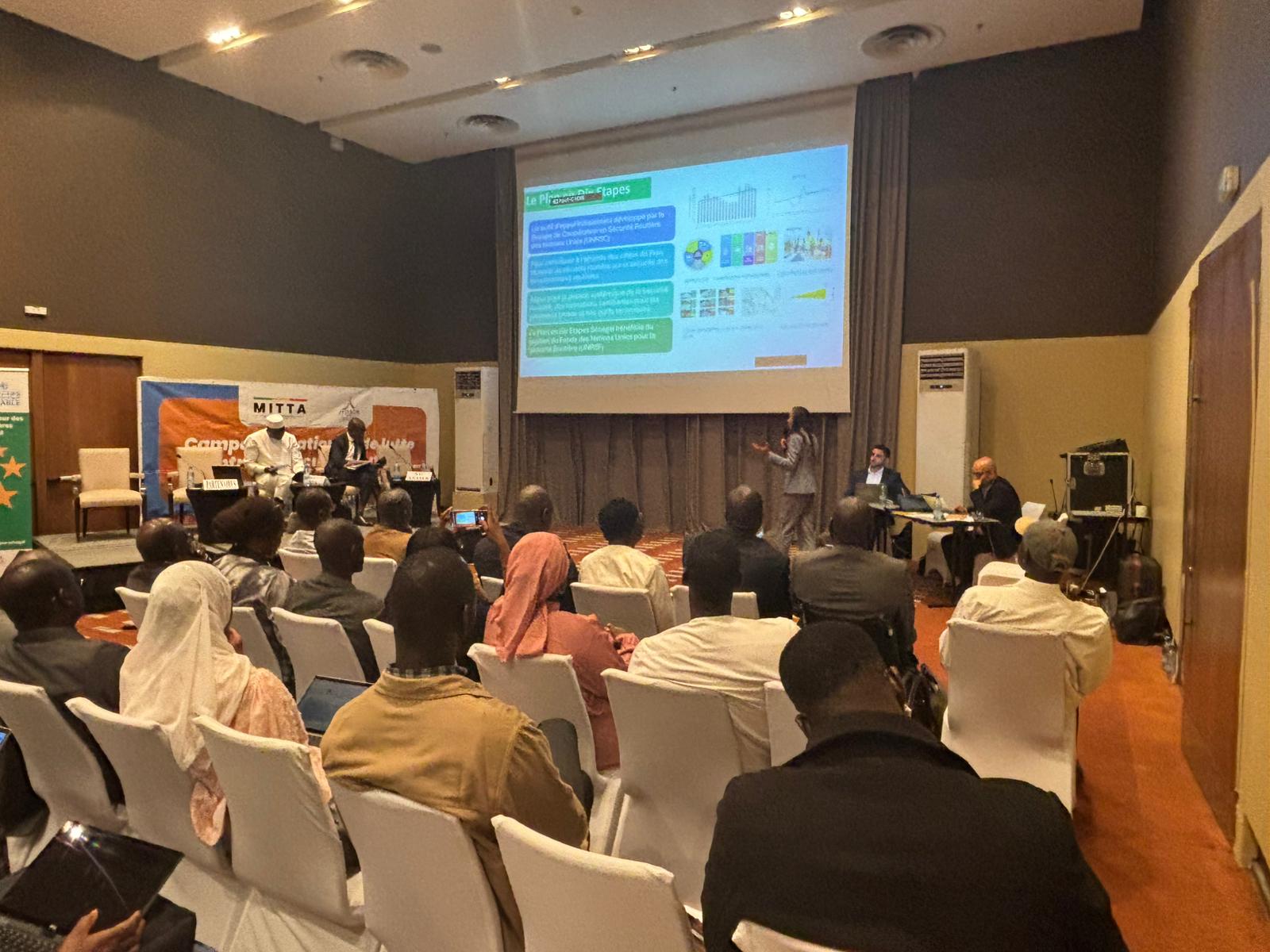
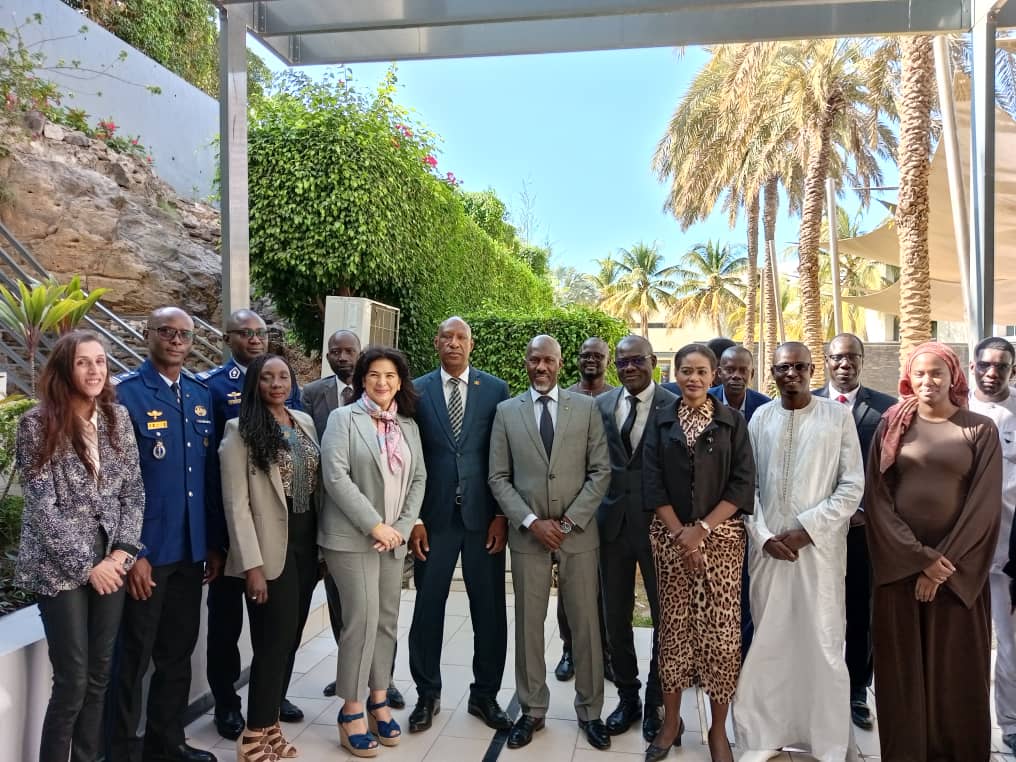
Légende de l'image : Plan en dix étapes pour des infrastructures routières plus sûres – Comité de pilotage du Sénégal
Communiqué de presse: Le projet de plan en dix étapes pour des infrastructures routières plus sûres a débuté au Sénégal le jeudi 23 janvier 2025 à 10h00 GMT, à Dakar.
La République du Sénégal a officiellement lancé “Le plan en dix étapes du Sénégal pour des infrastructures routières plus sûres” Un projet a été lancé jeudi dernier à Dakar. Cet événement, qui a réuni les principaux acteurs nationaux et internationaux de la sécurité routière, témoigne de l’engagement fort du pays à réduire drastiquement le nombre d’accidents, de morts et de blessés sur ses routes. ».
La mise en œuvre du Plan en dix étapes sera supervisée par un Comité de pilotage composé des principales organisations de sécurité routière du Sénégal. Ce Comité, dont la réunion inaugurale s'est tenue le 22 janvier, à la veille de l'atelier de lancement du projet, assurera une coordination efficace et un suivi rigoureux des progrès accomplis.
Ce projet triennal est le fruit d'une collaboration entre le gouvernement du Sénégal et des partenaires nationaux et internationaux visant à renforcer les capacités institutionnelles et les investissements pour des routes plus sûres dans le pays – dans le but d'améliorer les routes existantes et futures afin d'atteindre un niveau de sécurité trois étoiles ou plus pour les piétons, les cyclistes, les motocyclistes et les occupants des véhicules.
Le projet « Ten Step Senegal », financé par Fonds des Nations Unies pour la sécurité routière (UNRSF), est une initiative collaborative impliquant le gouvernement du Sénégal, par l'intermédiaire du ministère des Infrastructures, des Transports terrestres et aériens (MITTA) et de l'Agence nationale des routes ANASER, aux côtés d'un consortium dirigé par le International Road Assessment Programme (iRAP) et y compris le Fédération routière internationale (IRF), PIARC (Association mondiale de la route) et LASER International, avec le soutien de Groupe de développement des infrastructures privées (PIDG) et FIA Foundation.
Le Organisation Mondiale de la Santé On estime que les accidents de la route font chaque année plus de 3 500 victimes au Sénégal et plus de 40 000 blessés, pour un coût économique national de 1,4 milliard de dollars américains. Données nationales Les accidents de la route sont la principale cause de décès chez les jeunes de 15 à 24 ans, et la deuxième cause chez les 25-39 ans, après le sida.
Le Sénégal est le deuxième pays d'Afrique à utiliser le L’approche en dix étapes de la Collaboration des Nations Unies pour la sécurité routière (UNRSC), suite à son Mise en œuvre primée en TanzanieLe cadre du Plan en dix étapes a été élaboré par les partenaires de la Collaboration des Nations Unies pour la sécurité routière (UNRSC) afin d'aider les pays à mettre en œuvre des initiatives relatives à “ l'amélioration de la sécurité des infrastructures routières et des réseaux de transport en général ”, à la Convention des Nations Unies sur la circulation routière et la signalisation routière, ainsi qu'à la réalisation des objectifs mondiaux 3 et 4 convenus par les États membres de l'ONU pour des routes nouvelles et existantes plus sûres.
“ En matière de sécurité routière, il n’existe pas de solution miracle, mais il faut avant tout du courage, de la détermination et une vigilance constante. Avec ce plan, le Sénégal ambitionne de révolutionner sa vision de la sécurité routière, de construire des infrastructures sûres, de développer des outils de suivi des performances et d’évaluer rigoureusement ses progrès ”, a déclaré Alia Diouck, représentante du ministre des Infrastructures et des Transports terrestres et aériens, Yankhoba Diémé.
La responsable du Fonds des Nations Unies pour la sécurité routière, Nneka Henry, a déclaré : “ Améliorer la sécurité routière exige un engagement à long terme et une action globale et fondée sur des données probantes de la part des gouvernements. Nous sommes fiers de soutenir cet important projet et de contribuer à son impact en faveur d’une meilleure sécurité routière au Sénégal, en nous appuyant sur le succès du précédent plan en dix étapes de la Tanzanie. ”
Rob McInerney, PDG de International Road Assessment Programme (iRAP), qui pilote le consortium de partenaires en charge du projet, a déclaré : “ Nous saluons l’engagement du ministère à éliminer les routes à haut risque afin de sauver des vies et de réduire le nombre de blessés. Deuxième application seulement du Plan en dix étapes pour des infrastructures routières plus sûres, il s’agit d’une avancée majeure pour le Sénégal, témoignant de l’engagement du pays en faveur d’une mobilité plus sûre et de son rôle de chef de file en matière de sécurité routière en Afrique et dans le monde. ”
“ Nous sommes fiers de voir le Sénégal adopter l’approche en dix étapes, qui a démontré son efficacité pour instaurer un cadre d’action fondé sur des données probantes et permettant de sauver des vies ”, a commenté Susanna Zammataro, directrice générale de la Fédération routière internationale (IRF). “ Le secteur dispose des outils nécessaires pour concevoir et construire des routes plus sûres, mais ceux-ci doivent être mieux connus et mis en œuvre. Il s’agit de prendre des décisions pertinentes qui sauveront des milliers de vies ”, a-t-elle ajouté.
Pour plus d'informations :
- Pour en savoir plus sur le projet Ten Step Senegal, consultez le site web. gtkp.com/ten-step-project-senegal/ (avec lien vers la traduction française)
- À propos du plan en dix étapes pour des infrastructures routières plus sûres, cliquez ici
- Pour découvrir le niveau de sécurité des routes du Sénégal, les caractéristiques routières importantes et les arguments économiques en faveur de routes plus sûres, consultez l'outil Safety Insights Explorer de iRAP sur irap.org/safety-insights-explorer/ (sélection du Sénégal)
– Fin –
Notes aux rédacteurs :
Télécharger le communiqué de presse dans Anglais et Français.
Selon Explorateur des informations de sécurité de iRAP, La réalisation de l'objectif 3 des Nations Unies, qui vise à ce que plus de 751 000 milliards de dollars de trajets soient effectués sur des routes classées 3 étoiles ou mieux pour tous les usagers de la route au Sénégal d'ici 2030, pourrait permettre de sauver environ 1 185 vies par an et 308 428 décès et blessures graves sur les 20 ans de durée de vie des travaux routiers, avec un bénéfice économique de 1 000 000,417 millions de dollars pour l'économie sénégalaise – soit 1 000 000,185 milliards de dollars pour chaque 1 000 000 dollars dépensés.
Contacts médias :
Pour ANASER :
Latir Mane
Directeur de la promotion et de la communication en matière de sécurité routière
latir.mane@anaser.sn | +221 77 740 42 06 (basé au Sénégal)
Pour iRAP :
Nathalie Chiavassa, responsable du programme « Voyages plus sûrs » pour l’Afrique (iRAP)
Nathalie.chaivassa@irap.org | +223 7937 3917 (basé au Mali)
Pour l'UNRSF :
Marianelly Diaz Medrano, conseillère en communication
marianelly.diazmedrano@un.org (basé en Belgique)
Pour IRF :
Lara Delutis, responsable de la communication de l'IRF
ldelutis@irfofficial.org | +41 22 306 0260
À propos d'ANASER
L’ANASER, l’Agence nationale de sécurité routière du Sénégal, a été créée en 2020 dans le cadre de la politique sénégalaise d’infrastructures et de transports, et a commencé ses activités en 2022. L’ANASER est chargée d’élaborer et de mettre en œuvre le Plan national de sécurité routière du pays pour la période 2021-2030.
anaser.sn/
À propos de iRAP
iRAP et ses partenaires collaborent avec les Nations Unies, l'Organisation mondiale de la Santé, les gouvernements, les banques de développement, les associations de mobilité, l'industrie, les ONG de sécurité routière et les organismes de recherche afin de fournir des outils, des formations et un soutien fondés sur des données probantes pour les aider à sécuriser leurs routes. La méthodologie d'évaluation de la sécurité routière par étoiles de iRAP est gratuite et offre une mesure objective du niveau de sécurité intégrée des routes pour les occupants de véhicules, les motocyclistes, les cyclistes et les piétons. Une route à 1 étoile est la moins sûre et une route à 5 étoiles la plus sûre. iRAP travaille avec ses partenaires pour : inspecter les routes à haut risque et élaborer des systèmes d'évaluation par étoiles, des cartes des risques et des plans d'investissement pour des routes plus sûres ; fournir des formations, des outils et un soutien pour développer et maintenir les capacités nationales, régionales et locales ; et suivre les résultats en matière de sécurité routière afin que les organismes financeurs puissent évaluer les retombées économiques et vitales de leurs investissements. Le projet iRAP et ses partenaires ont certifié 1,8 million de kilomètres de routes et d'aménagements, ainsi que 1 356 écoles, contribuant ainsi à la sécurité d'un investissement de 101 milliards de dollars dans les infrastructures ($). 1,8 million de kilomètres ont été cartographiés et plus de 69 000 personnes ont été formées dans le monde entier. recherche dirigé par l'Université Johns Hopkins, Une étude publiée dans la revue de référence PLOS One révèle que les projets routiers financés par les gouvernements, les banques de développement et les opérateurs routiers du secteur privé à travers le monde, utilisant la méthodologie et les outils iRAP, ont permis d'éviter près de 700 000 décès et blessures graves dans 74 pays entre 2016 et 2024. L'outil Safety Insights Explorer de iRAP met en lumière l'impact humain et économique des accidents de la route, le niveau de sécurité de nos routes et la rentabilité d'infrastructures routières plus sûres à l'échelle nationale et mondiale.
irap.org
À propos de l'UNRSF
Depuis 2018, le Fonds des Nations Unies pour la sécurité routière (UNRSF) mobilise des ressources auprès de donateurs privés, publics et individuels afin de financer des projets de sécurité routière à fort impact, adaptables et durables à travers le monde. Ces initiatives soutiennent une meilleure planification urbaine aux abords des écoles, les transports non motorisés à faibles émissions, la gestion de la vitesse et l'élaboration de normes plus propres et plus sûres pour les véhicules d'occasion. Le Fonds intervient dans 88 pays répartis dans cinq régions, contribuant concrètement à améliorer la sécurité routière dans les communautés où les besoins sont les plus criants.
roadsafetyfund.un.org/
À propos de l'IRF
La Fédération routière internationale (IRF) est une organisation mondiale, indépendante et à but non lucratif, dont le siège se trouve à Genève, en Suisse. Active depuis 1948, l'IRF est une organisation composée de membres représentant des entreprises et des institutions de premier plan issues des secteurs routier et de la mobilité à travers le monde. Sa mission est de promouvoir le développement de routes et de réseaux routiers permettant l'accès et une mobilité durable pour tous. Son approche repose sur des axes stratégiques clés tels que le transfert de connaissances et le partage d'informations, la mise en relation des personnes, des entreprises et des organisations, ainsi que le travail de plaidoyer et d'élaboration de politiques.
www.irfofficial.org