
Nous sommes fiers de soutenir un nouvel Indice ibéro-américain sur la mobilité sûre (IIMS) qui vise à lutter contre la crise croissante de la sécurité routière dans la région, lancé la semaine dernière lors de l'Assemblée générale de l'Observatoire ibéro-américain de la sécurité routière (OISEVI) à Madrid.
Le Retrouver l'espoir : Nouveau récit et indice ibéro-américain sur la mobilité sûre (IIMS) a été coordonné par la Fundación MAPFRE, dirigée par la Fédération ibéro-américaine des victimes de la violence routière (FICVI), et développée en collaboration avec l'OISEVI et près de 40 agences de sécurité routière de premier plan, dont iRAP.
Le rapport souligne qu'environ 144 659 personnes ont perdu la vie sur les routes des Amériques en 2023, tandis que le nombre de décès dans les pays membres de l'OISEVI a augmenté de 7 % entre 2019 et 2023. Ces chiffres montrent que, si la tendance actuelle se maintient, cette décennie pourrait se terminer avec un taux d'accidents de la route plus élevé qu'au début de la période, ce qui souligne l'urgence d'une action plus énergique.
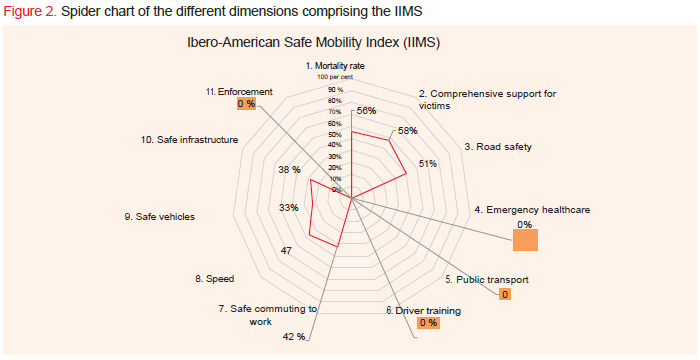
L’Indice ibéro-américain sur la mobilité sûre (IIMS) est un nouvel outil d’évaluation comparative inspiré de l’Indice de développement humain qui aidera les pays à mesurer les progrès accomplis, à identifier les domaines prioritaires d’amélioration et à encourager les investissements fondés sur des données probantes dans une mobilité plus sûre.
L'indice reconnaît le rôle essentiel des routes sûres et comprend un indicateur d'infrastructure sûre dérivé de trois sous-indicateurs :
- Existence de politiques publiques pour la conception et l’entretien de routes sûres (par exemple, les obligations légales de réaliser des audits de sécurité routière ou des évaluations iRAP sur les routes nouvelles et existantes) ;
- Application de critères objectifs pour évaluer les risques liés aux infrastructures : le pourcentage de kilomètres du réseau routier du pays qui ont été évalués à l'aide de la méthodologie iRAP, ou, alternativement, à l'aide d'une autre méthodologie équivalente (telle que celle requise par les directives européennes).
- Investissement efficace dans des routes sûres : le pourcentage de kilomètres du réseau routier du pays qui ont été évalués à l'aide de la méthodologie iRAP (ou équivalente) au cours des dernières années et qui sont considérés comme sûrs, ayant obtenu une note de 3 étoiles ou plus.
Le rapport présente des priorités pratiques et à fort impact, notamment l'amélioration des données sur la sécurité routière, le renforcement des contrôles, l'investissement dans des infrastructures et des transports publics plus sûrs, la protection des usagers vulnérables de la route, l'amélioration de la sécurité des véhicules, le soutien aux victimes d'accidents de la route et l'élargissement de l'application des outils éprouvés en matière de sécurité routière.
Edgar Zamora, co-auteur du rapport et responsable du programme iRAP pour des déplacements plus sûrs en Amérique, a déclaré : “ Le lancement de l’Indice ibéro-américain de la mobilité sûre constitue une avancée majeure pour la région. Il offre aux pays un cadre pratique et fondé sur des données probantes pour mesurer les progrès accomplis et prioriser les investissements qui permettront de sauver des vies. En intégrant des indicateurs objectifs de sécurité des infrastructures basés sur la méthodologie iRAP, l’Indice reconnaît le rôle essentiel que jouent des routes plus sûres dans un système sûr. Conjugué à des données plus fiables, à des véhicules plus sûrs, à une législation efficace et à une action coordonnée, ce nouvel outil contribuera à accélérer les progrès vers un avenir où personne ne sera tué ou grièvement blessé sur les routes ibéro-américaines. ”
Cette publication a été co-écrite par des experts de près de 40 agences régionales de sécurité routière, dont l'Alliance ibéro-américaine pour la mobilité sûre (REDUX), l'Alliance nationale pour la sécurité routière (ANASEVI), la Fédération ibéro-américaine des victimes de la violence routière (FICVI), Aleatica et la Fondation Aleatica pour la sécurité routière, la Fondation MAPFRE, la Fondation RACE, Youth for Road Safety (YOURS), International Road Assessment Programme (iRAP), Latin NCAP, l'Organisation panaméricaine de la santé (OPS), l'Association pour la prévention des accidents de la route – P(A)T, l'Association pour l'étude des lésions médullaires (AESLEME), l'Association des auditeurs de sécurité routière (ASEVI), le Conseil de sécurité routière du Costa Rica (COSEVI), le Conseil européen de la sécurité des transports (ETSC), la Fondation de l'Association routière espagnole (AEC), la Fondation du Club européen des automobilistes (Fondation CEA), la Fondation de la Confédération nationale des auto-écoles d'Espagne (FCNAE), l'Association ibéro-américaine des centres d'éducation et de formation à la sécurité routière (AICEFOV), l'Alliance pour la sécurité routière (ASV) et la Fondation espagnole pour la sécurité routière. (FESVIAL), Fondation RACE, Comité international d'inspection des véhicules automobiles (CITA), Institut universitaire de recherche sur la circulation et la sécurité routière (INTRAS), et Laboratoire national des matériaux et des modèles structuraux, Université du Costa Rica.
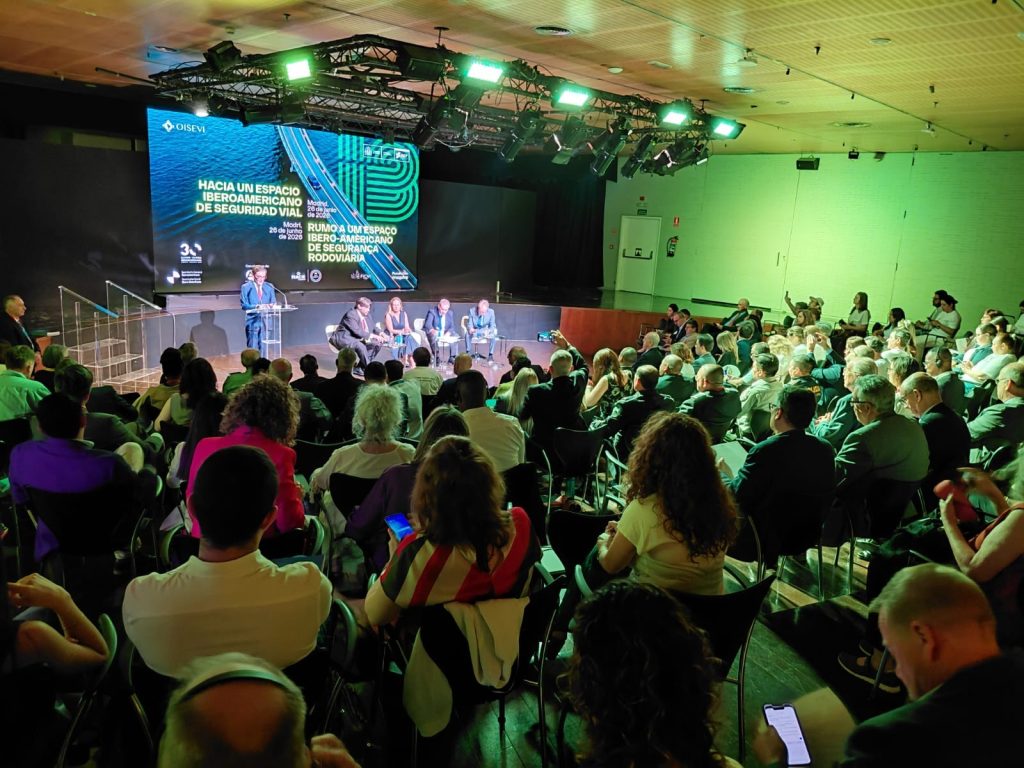
L’indice a été présenté aux délégués des 22 pays membres lors de l’Assemblée générale de l’OISEVI le 26 juin à Madrid.