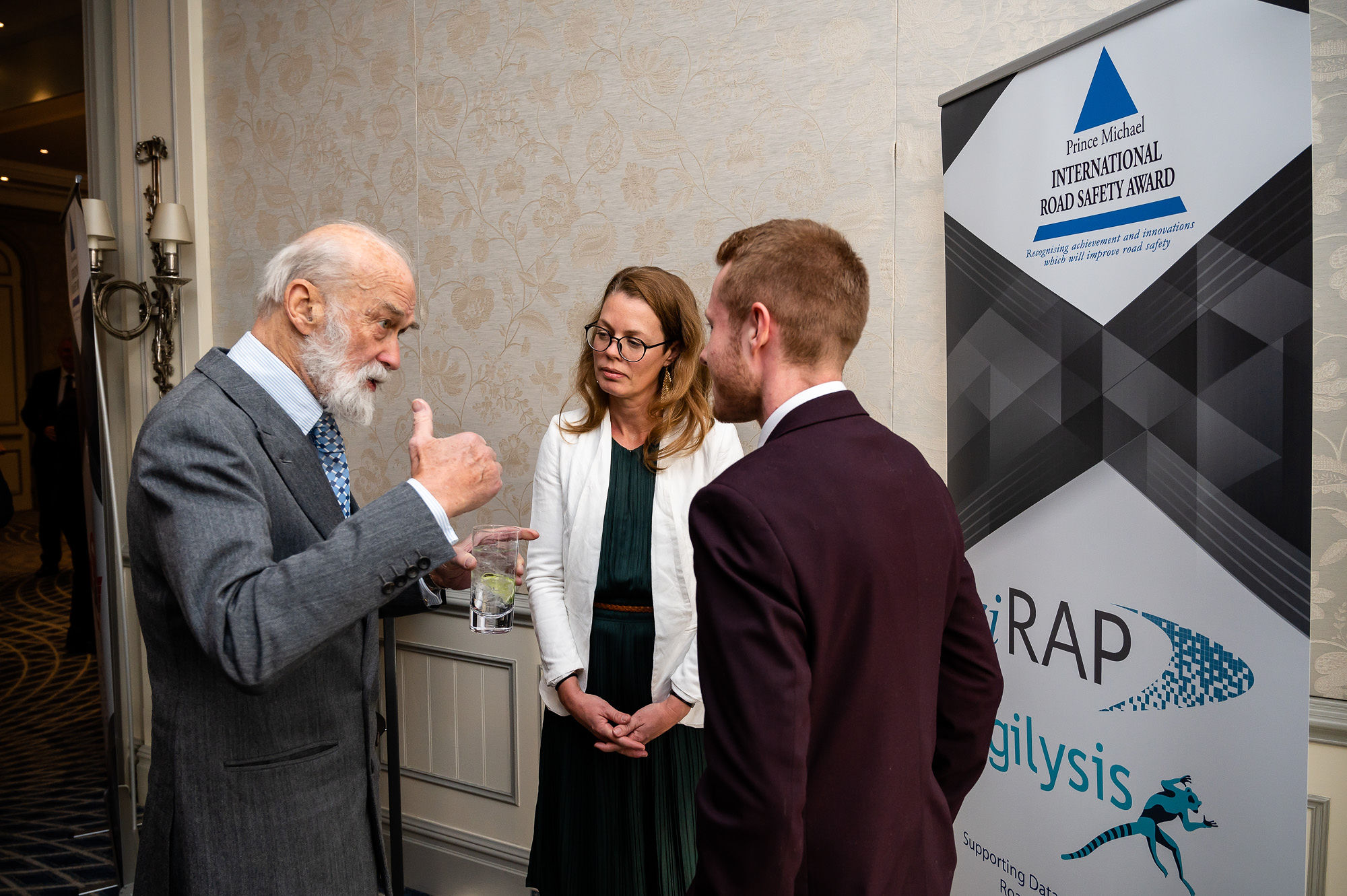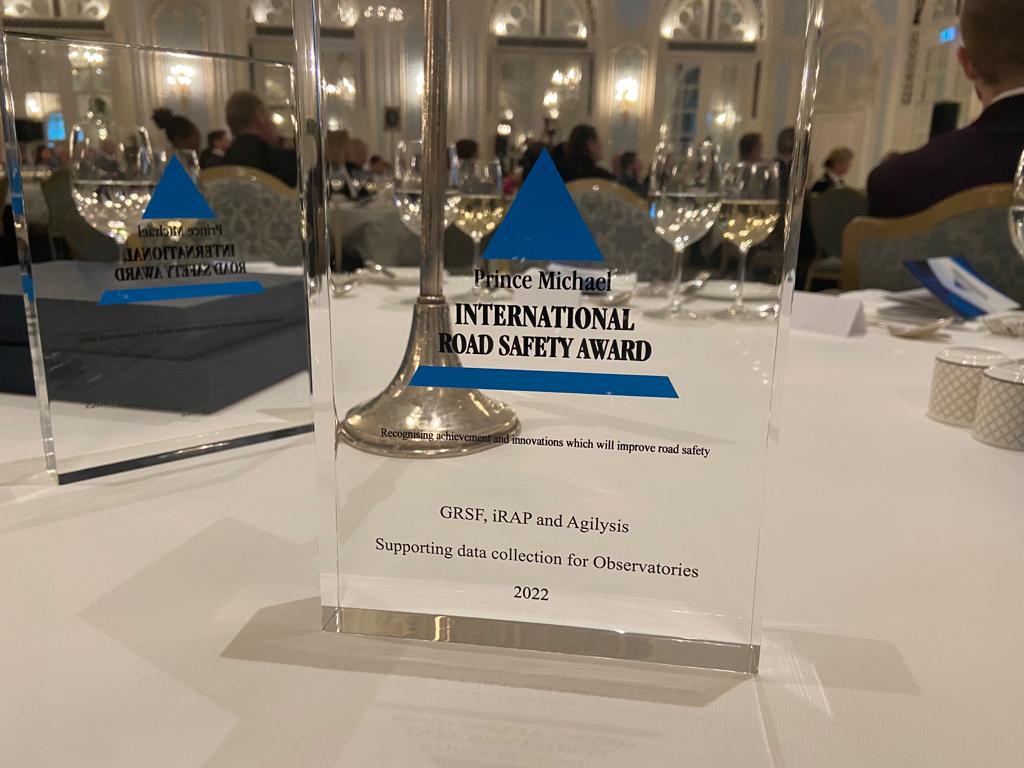
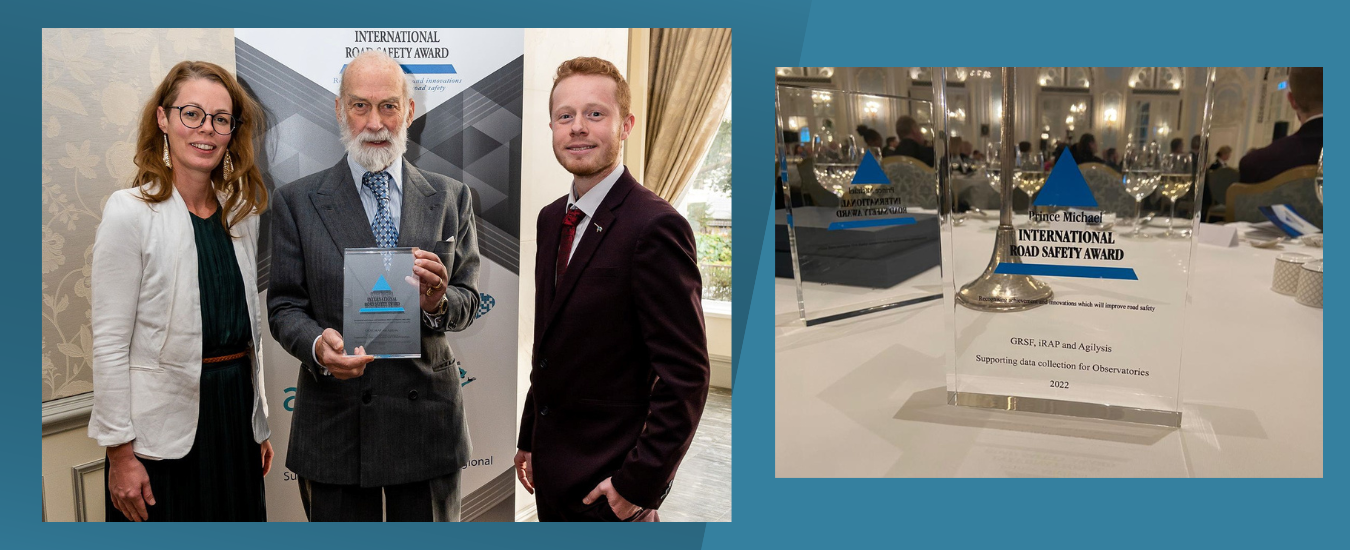
Créditos de las imágenes (arriba y abajo): Fotografía de Chris Fossey
Un proyecto innovador que aprovecha las imágenes satelitales para comprender la seguridad de la red vial ha sido reconocido por la Premios Internacionales Príncipe Miguel a la Seguridad Vial.
Con financiación del Fondo Mundial para la Seguridad Vial del Banco Mundial (GRSF), iRAP y Agilis llevó a cabo un proyecto de investigación y desarrollo pionero para extraer fuentes de datos innovadoras para la seguridad vial en África, en apoyo del Observatorio Africano de Seguridad Vial (ARSO).
Se combinaron nuevas fuentes de datos de imágenes satelitales y de calles con enfoques de aprendizaje automático de vanguardia para mapear dónde se produce el 75% de viajes por carretera en Kenia y Etiopía.
El proyecto también desarrolló tecnología para detectar la velocidad de los vehículos, el flujo del tráfico y otras características de la carretera que son fundamentales para la medición y el control de los indicadores de seguridad vial.
Recopilar datos de seguridad relevantes supone un claro desafío en muchos países; hacerlo de forma coherente y comparable entre países es aún más difícil.
Agilysis aprovechó una variedad de datos abiertos y obtenidos mediante colaboración colectiva de diversas plataformas, además de imágenes satelitales de la plataforma ARD de MAXAR, para evaluar más de una docena de atributos viales diferentes.
Al otorgar este prestigioso premio al proyecto, el jurado comentó que se trataba de "un proyecto sumamente innovador y pionero para quienes trabajan en países de ingresos bajos y medianos, que amplía las iniciativas existentes que han demostrado ser eficaces para aumentar la seguridad vial en todo el mundo".“
En relación con el premio, Richard Owen, director ejecutivo de Agilysis, declaró: “Este proyecto reunió varios años de investigación y desarrollo para crear un método que funciona a gran escala. Ahora contamos con las herramientas y la experiencia necesarias para realizar análisis rápidos de redes nacionales y comprender las características clave de seguridad”.”
iRAP, el International Road Assessment Programme, quien supervisó el proyecto y evaluó los datos de salida, estableció que varias de las métricas clave se estaban midiendo de manera precisa y consistente, reconociendo el enfoque con acreditación bajo su AiRAP programa.
En relación con los resultados del proyecto, James Bradford, director técnico global de iRAP, declaró: “Trabajamos para apoyar a los gobiernos nacionales y a los observatorios regionales en la recopilación de datos esenciales que ayuden a priorizar las inversiones. Los nuevos enfoques, como los explorados en este proyecto, representan un gran avance en el desarrollo de datos para indicadores nacionales y en el apoyo a los objetivos voluntarios de la ONU”.”
Las técnicas avanzadas de visión artificial han permitido que el proyecto vaya más allá de los indicadores a nivel nacional y genere datos a nivel vial sobre los siguientes trece atributos:
- Velocidad media de funcionamiento del vehículo;
- Velocidad de funcionamiento del vehículo en el percentil 85;
- Tráfico diario promedio anual (AADT);
- Uso del suelo;
- Tipo de área;
- Límite de velocidad;
- Curvatura;
- Separación de calzadas;
- Presencia de peatones;
- Instalaciones para cruces peatonales;
- Señalización de paso de peatones;
- Alumbrado público; y
- Tipo de intersección.
El proyecto fue posible gracias a la colaboración con MAXAR y las innovaciones en su plataforma Analysis Ready Data (ARD), que facilitaron el acceso a los datos de observación de la Tierra pertinentes. Los conjuntos de imágenes preprocesadas de ARD permitieron al equipo de investigación obtener datos basados en gráficos geoespaciales muy específicos, lo que redujo el desperdicio y aumentó drásticamente la eficiencia del proceso de análisis de las imágenes.
Tras la finalización del proyecto en el verano de 2023, Agilysis ya ha utilizado este enfoque para proporcionar datos a clientes que trabajan en Sudamérica, África, el sur de Asia y Oceanía.
– termina –
Contactos de prensa:
Agilis
Dan Campsall, Presidente
Correo electrónico: dan.campsall@agilysis.co.uk
Teléfono: +44 1295 731 812
Richard Owen, director ejecutivo
Correo electrónico: richard.owen@agilysis.co.uk
Teléfono: +44 1295 731 815
iRAP
James Bradford, Director Técnico Global
Correo electrónico: james.bradford@irap.org
Acerca de Agility
Agilysis fue creada por un equipo experimentado, cuyos miembros cuentan con casi veinte años de trayectoria en seguridad del transporte. Combinando experiencia en investigación, políticas y práctica, y aprovechando el análisis de macrodatos y enfoques innovadores, Agilysis contribuye a la investigación internacional pionera, además de brindar consultoría y diseño de intervenciones basadas en evidencia de diversas disciplinas en los ámbitos del transporte y la salud. Obtenga más información en https://agilysis.co.uk/
Acerca de iRAP
iRAP es una organización benéfica registrada con la visión de un mundo libre de carreteras de alto riesgo. La organización opera en más de 100 países y trabaja con gobiernos, bancos de desarrollo, clubes de movilidad, organizaciones de investigación y ONG de seguridad vial para proporcionarles herramientas, sistemas y capacitación gratuitos que mejoren la seguridad vial. La metodología de calificación por estrellas de iRAP ofrece una medida simple y objetiva del nivel de seguridad inherente a la carretera para ocupantes de vehículos, motociclistas, ciclistas y peatones. Una carretera de 1 estrella es la menos segura y una de 5 estrellas, la más segura. La organización ha influido en la seguridad de inversiones en infraestructura por valor de más de $80 mil millones de dólares, ha calificado por estrellas más de 1,3 millones de kilómetros de carreteras, ha mapeado riesgos en más de 1,6 millones de kilómetros de carreteras y ha capacitado a más de 54 000 personas en todo el mundo. iRAP es el programa marco que engloba los programas regionales de evaluación de carreteras, incluidos EuroRAP, ChinaRAP, AusRAP, usRAP, KiwiRAP, IndiaRAP, BrazilRAP, South Africa RAP, ThaiRAP y MyRAP, y cuenta con el apoyo financiero de FIA Foundation, Global Road Safety Facility y FedEx. https://irap.org/
Acerca del Observatorio Africano de Seguridad Vial
La iniciativa del Observatorio Africano de Seguridad Vial (ARSO) se lanzó en 2018. Su objetivo final es crear una sólida base de datos que permita monitorear el desempeño de la seguridad vial en África y mejorar la toma de decisiones. Obtenga más información en https://ssatp.org/topics/african-road-safety-observatory