
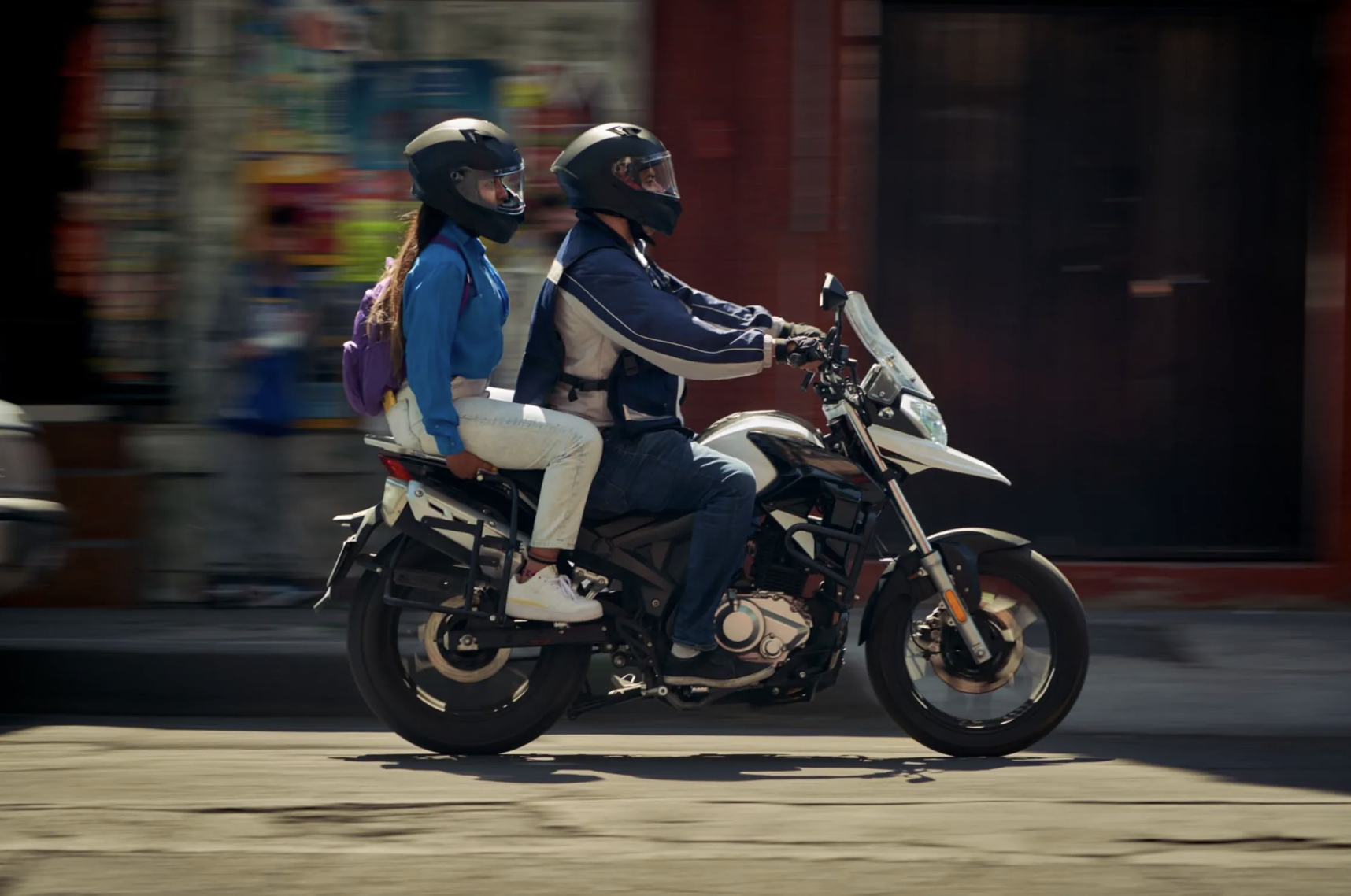
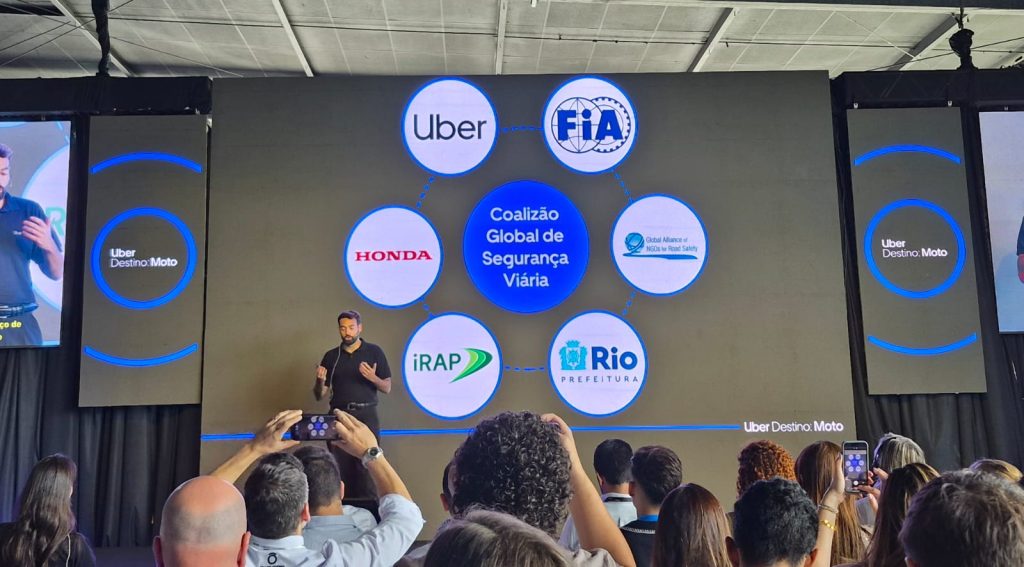
Motorcycles help millions of people around the globe get where they need to go and earn a living. Today in Rio de Janeiro, Uber announced a new Global Motorcycle Safety Coalition, with the International Road Assessment Programme (iRAP), Honda Brazil, the Fédération Internationale de l’Automobile (FIA), and the Global Alliance of NGOs for Road Safety.
Together, the coalition will work on practical ways to improve motorcycle safety, starting in Brazil and expanding to other countries over time. Our shared focus is on better training, safer roads and policies that improve safety for motorcycle drivers, passengers and others sharing the road.
Since launching in 2016, Uber Moto has connected people with affordable motorcycle trips and given drivers a way to earn, while bringing safety tools such as Share My Trip and RideCheck to those journeys. Without the protection of a car, motorcycle drivers and passengers are especially vulnerable to speeding, dangerous intersections and unsafe road conditions.
“Motorcycles are essential to how millions of people move and earn a living, but they also represent one of the greatest challenges in global road safety,” said Annie Duvnjak, Global Head of Safety, Uber. “Uber has an opportunity and a responsibility to help change that. By bringing together leading organizations across the road safety ecosystem, we can address risks that no single company can solve alone and make motorcycle transportation safer for everyone.”
A shared approach to safety
The coalition brings together expertise in motorcycle safety and training, road infrastructure, safety standards and advocacy, and Uber’s commitment to support safety with technology.
Our work will follow the Safe System Approach, which recognizes that roads, vehicles, speeds and road users all have a role in preventing deaths and serious injuries. That means looking at the whole journey: how a driver prepares to carry a passenger, the roads they travel and the conditions they encounter along the way.
Starting in Brazil
Brazil will be the first country to put the collaboration into practice, with an initial focus on Rio de Janeiro.
Uber: New safety features for Uber Moto journeys
The launch comes alongside an Uber Moto product event in Brazil, where new safety features were launched — including moto safety preferences, a driver bluetooth button to reduce phone interaction, and women-recommended moto drivers.
“Motorcycle transportation is essential to daily life in Brazil, and as Uber Moto grows, we’re investing in technologies and partnerships to make these journeys safer. ” said Silvia Penna, General Manager, Uber Brazil. “We’re proud that Brazil will be the first country to put this global coalition into action, combining international expertise and local leadership to address some of our most pressing road safety challenges.”
iRAP: Identifying opportunities for safer roads
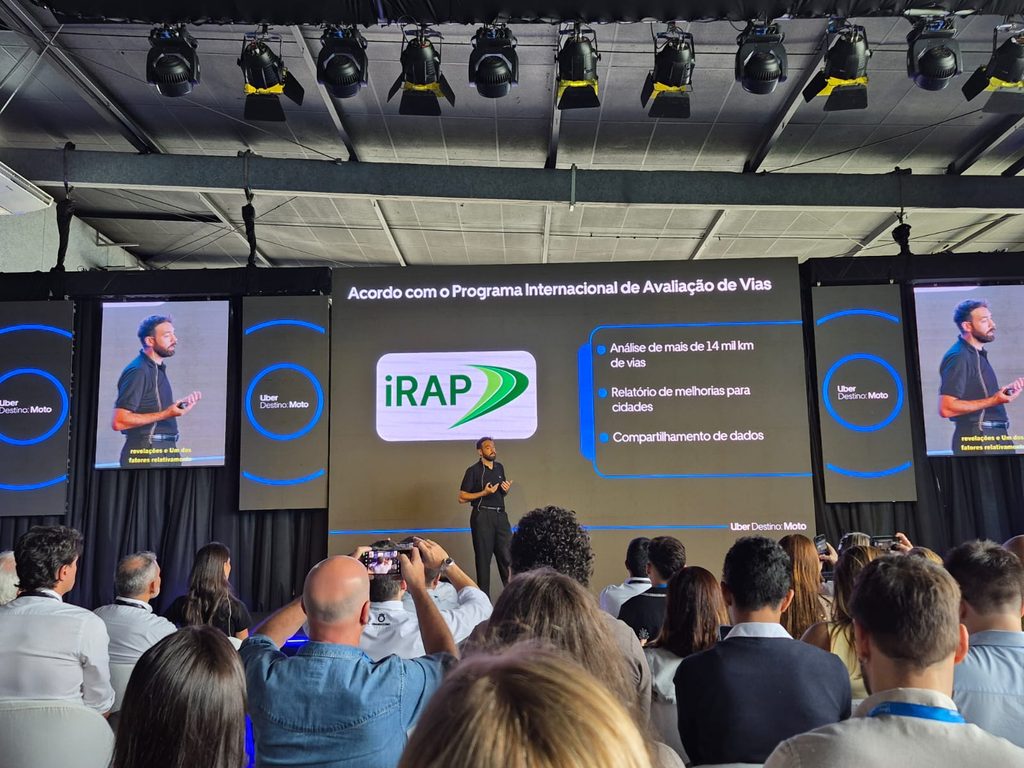
iRAP assesses the safety of roads worldwide. Working with iRAP and BrazilRAP, Uber will support a motorcycle-focused assessment of approximately 14,000 kilometres of Rio’s road network.
The assessment will identify high-risk road locations, calculate iRAP Star Ratings for motorcyclists, and recommend infrastructure improvements and speed management adjustments that reduce fatal and serious injury risk for motorcyclists and all road users.
An interactive dashboard will make the findings easier to explore and could help inform future motorcycle routing and information for drivers. Findings and techniques developed in Rio could inform motorcycle-related safety improvements across other cities and countries where powered two-wheelers are a critical component of mobility.
“Motorcyclists are particularly vulnerable to road and traffic hazards including loss of traction on poor road surfaces, collisions with unforgiving infrastructure, unexpected traffic manoeuvres, and reduced visibility in the traffic mix,” said Greg Smith, CEO, iRAP. ”The motorcycle-specific iRAP assessment will help to identify where risk is greatest, guide targeted investment, and support road design and maintenance measures that maximise safety for all road users, aligned with the global minimum 3-star infrastructure safety standard.”
Honda Brazil: Expanding motorcycle driver training
Honda Brazil will bring its longstanding expertise in motorcycle safety education to the coalition, offering hands-on training tailored to transporting passengers. The program will cover defensive riding, braking, navigating intersections, motorcycle maintenance and protective equipment.
The first phases aim to reach 1,250 Uber Moto drivers in Brazil through Honda’s rider training facilities, mobile training events and online education. Uber and Honda Brazil will assess the program’s impact and explore opportunities to expand motorcycle safety training across Brazil.
“Improving motorcycle safety requires collaboration across the entire road safety ecosystem,” said Leonardo Almeida, Brazil Training Manager, Honda Brazil. “Through this partnership with Uber, we’re bringing Honda’s decades of motorcycle safety expertise directly to the drivers who transport passengers every day. By expanding access to practical training and education, we can help make motorcycle transportation safer across Brazil.”
FIA: Advancing driver training and safety standards
Uber will work with FIA, the governing body of Formula 1 motorsports, and its Brazilian Auto Clubs to offer in-person motorcycle safety training, drawing on their local expertise and facilities.
We’ll also explore how the FIA Road Safety Index can better account for motorcycle safety and help strengthen safety practices across motorcycle ride-hailing and delivery services. This builds on Uber’s three-star rating—the highest available—in the Index’s independent assessment of its global mobility operations, including both car and motorcycle services.
“The private sector has a critical role to play in improving road safety as motorcycle ride-hailing and delivery services continue to grow,” said Luca Pascotto, Head of Road Safety and Global Advocacy, FIA. “Through the FIA Road Safety Index, we help companies strengthen their safety practices and advance higher standards for motorcycle safety. It is encouraging to see Road Safety Index awardees Uber and Honda Brasil working together to advance motorcycle road safety agenda in Brazil, with the active involvement of local FIA Member Clubs in rolling out the FIA Road Safety Index across the country and driving broader engagement from the private sector.”
Global Alliance of NGOs for Road Safety: Turning evidence into local advocacy
The Global Alliance of NGOs for Road Safety and its Brazilian partner, Observatório Nacional de Segurança Viária (ONSV), will lead Deliver Safe Streets: Rio Motorcycle Safety Pilot.
The initiative will combine local street observations, known as Mobility Snapshots, with iRAP’s findings to identify recommendations for safer speeds, intersections, and infrastructure. The Alliance and ONSV will work with city authorities to translate that evidence into action and support a dedicated motorcyclist road safety action plan, aligned with Rio’s wider road safety strategy.
A public advocacy event is planned for Brazil’s Yellow May road safety campaign in 2027, and the partners will document lessons from the pilot that can inform work in other cities.
“Motorcycle safety cannot depend on riders alone,” said Sonia Aguilar, Latin America Regional Coordinator, Global Alliance of NGOs for Road Safety. “In Rio, we will bring evidence from the street together with the coalition’s technical expertise to help city authorities prioritize safer speeds, intersections and infrastructure, and to follow whether those commitments lead to change. We also want to capture what works so NGOs and cities elsewhere can adapt it.”
Expanding the coalition globally
What we learn in Brazil will help shape the coalition’s work in other countries where motorcycles are an essential part of daily life.
As the coalition grows, we’ll welcome additional partners and expand our work on training, road assessments, advocacy and safety standards – all with the shared goal of making everyday motorcycle journeys safer.
The launch and Uber Moto event
iRAP’s Strategic Projects Director Julio Urzua and Operations Manager for Latin America and the Caribbean Morgan Fletcher joined the Coalition launch and Uber Moto product event in Rio.
Julio moderated a Motorcycle Safety Policy Roundtable bringing together coalition partners, road safety experts and policymakers to discuss opportunities to improve motorcycle safety in Rio and beyond.
The impact of changes in speed and road infrastructure features to improve the safety Star Rating for motorcyclists was compelling highlighted using iRAP’s Star Rating Demonstrator – part of a range of safety activations shared at the event.
Images credit: Uber and iRAP