Road Safety Insights: The Global Picture
Why Road Safety Matters
Road crashes remain one of the world’s leading causes of death and serious injury, particularly for young people and vulnerable road users. Every day, thousands of families are affected by preventable crashes that occur on streets, roads and highways around the world. These crashes are not random events — they are predictable, measurable, and preventable through proven infrastructure and speed management solutions.
The International Road Assessment Programme (iRAP) provides global evidence on how safe our roads are, the scale of the global toll, and the human cost behind the statistics.
A Global Development Priority
The UN Global Plan supports the Decade of Action for Road Safety 2021-30 and the SDG aim of halving deaths and injuries by 2030. It was created by the WHO, UN Regional Commissions and partners in the UN Road Safety Collaboration.
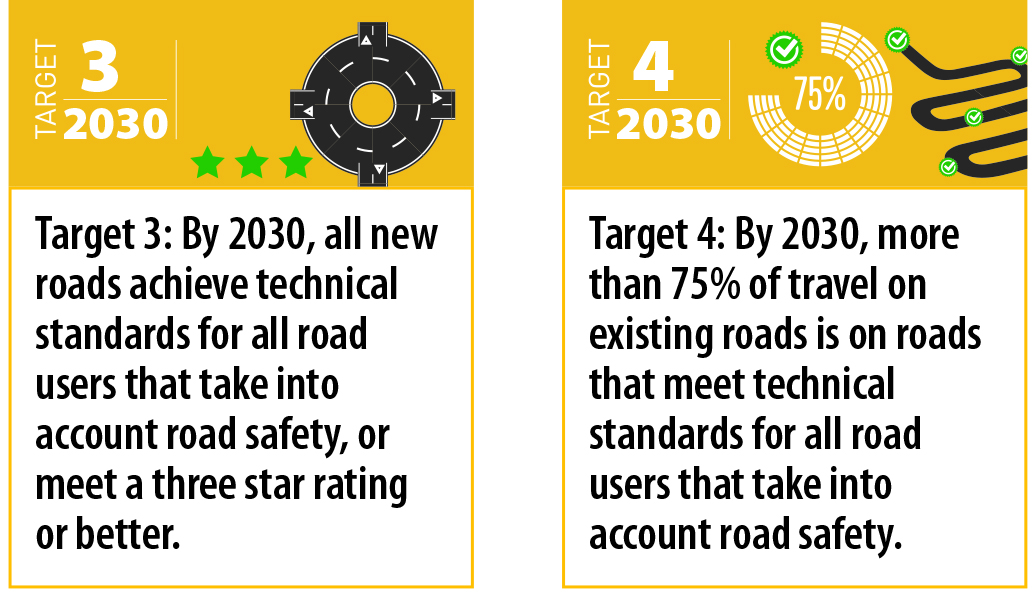
The UN Global Plan’s road safety performance targets include:
- UN Target 3: By 2030, all new roads achieve technical standards for all road users that take into account road safety, or meet a three star rating or better.
- UN Target 4: By 2030, more than 75% of travel on existing roads is on roads that meet technical standards for all road users that take into account road safety [e.g. three star rating or better].
The UN Global Plan recommends that countries make use of Road Safety Audits and Star Ratings to improve the safety of roads and designs.
How Safe Are Our Roads?
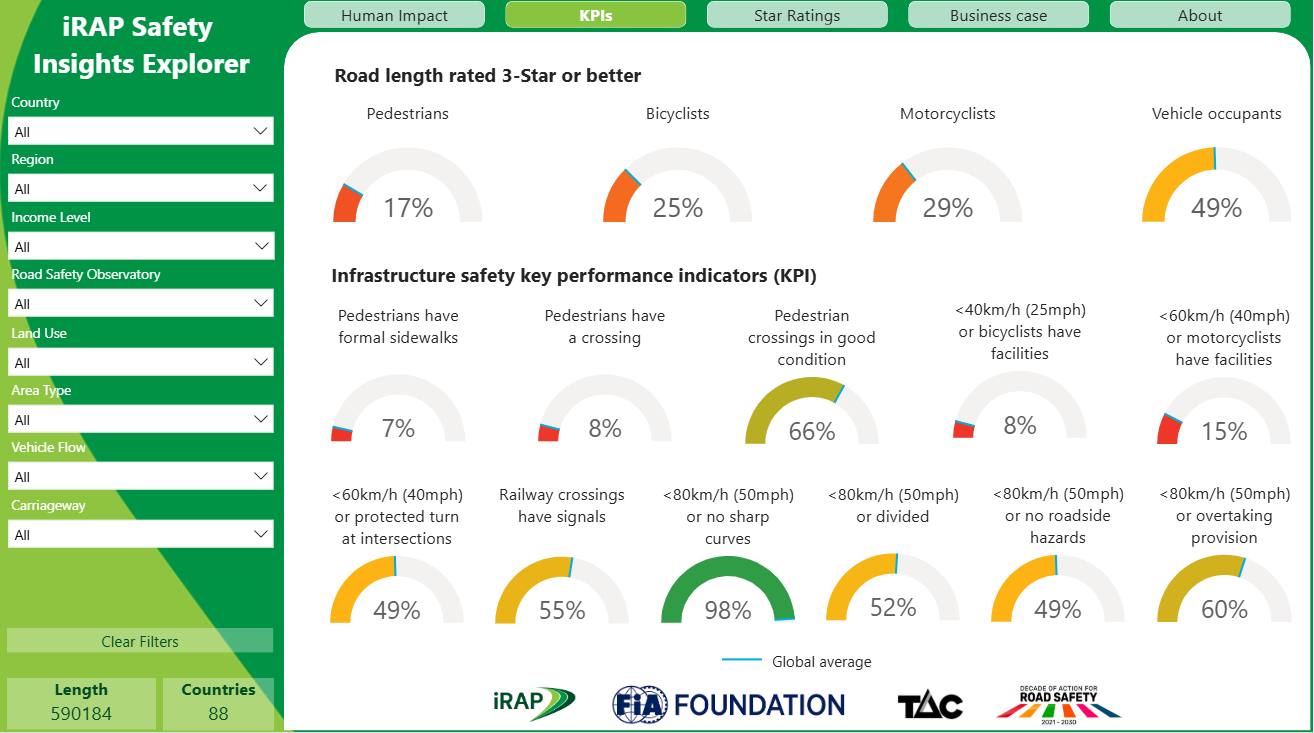
Only a small proportion of global travel occurs on roads that are rated 3‑star or better safety for all road users.
Global assessments by partners using the iRAP methodology show that:
- Many roads are designed in a way that allows high speeds without adequate protection.
- Undivided roads increase the risk of head‑on crashes.
- Poor roadsides increase the severity of run‑off‑road crashes.
- Missing footpaths, crossings and cycling facilities place pedestrians and cyclists at extreme risk.
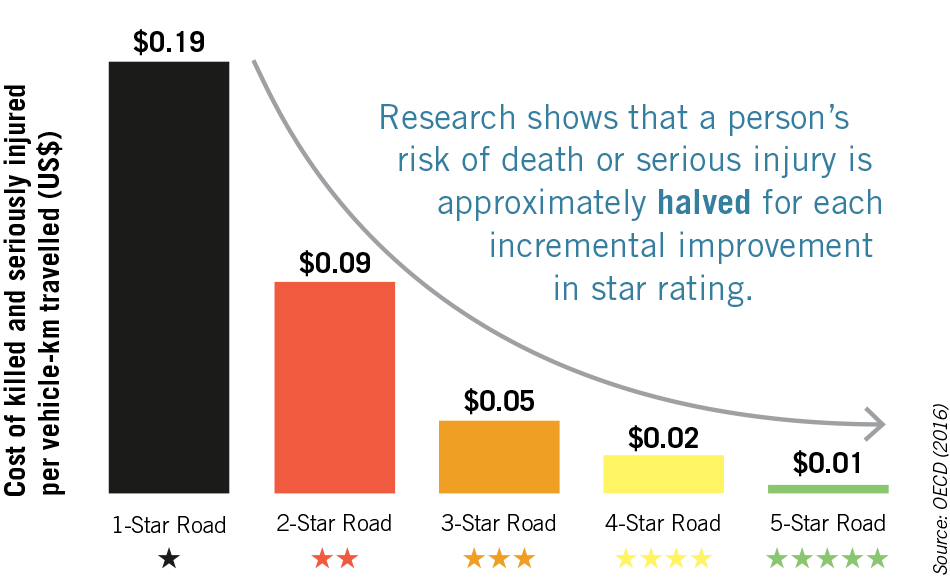
- Safety is assessed using iRAP Star Ratings, which range from 0‑star (least safe) to 5‑star (safest). Each additional star approximately halves the risk of fatal and serious injuries. Importantly, Star Ratings can be applied without needing crash data, making them especially valuable in low‑ and middle‑income countries or where crash data is sparse.
Investment in safer road design – such as traffic calming, median separation, safe crossings, footpaths and cycle lanes – acts like a vaccine for roads, preventing crashes before they occur.
The Global Toll of Road Crashes
The scale of road trauma worldwide is enormous and ongoing:
- Thousands of people are killed every day in road crashes.
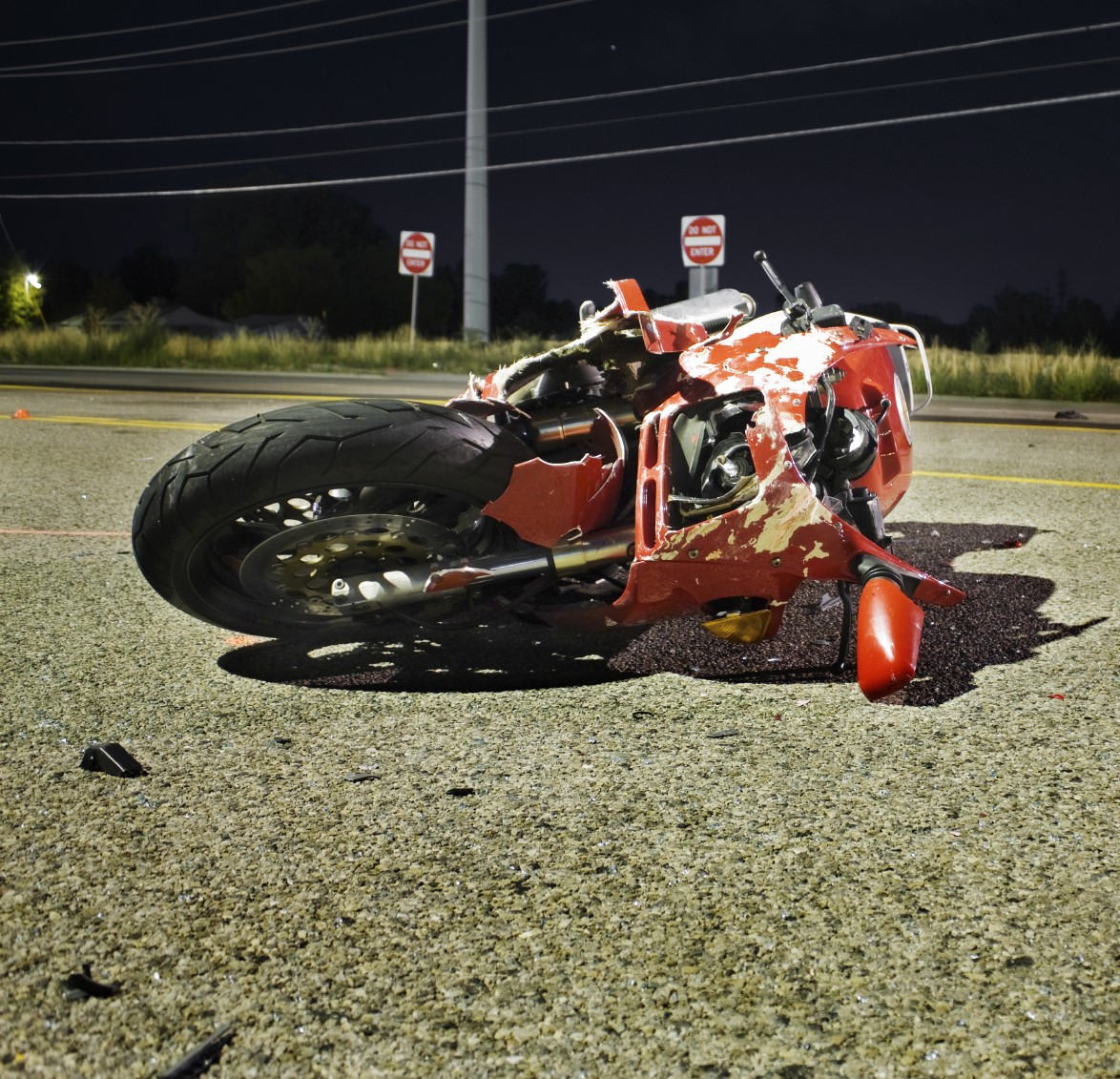
- Many more suffer life‑changing injuries, including brain and spinal injuries, amputations, fractures and burns.
- Road crashes are the leading cause of death for children and young adults in many parts of the world.
Beyond the immediate tragedy, road trauma places a massive strain on:
- Emergency services and hospitals
- Long‑term healthcare and rehabilitation systems
- Families, communities and national economies
- In countries with limited health and social protection systems, the consequences are even more severe. Survivors may live with permanent disability, reduced income, and limited access to care. Costs that are often borne by families for decades.
The Human Toll: People Behind the Numbers
Statistics alone cannot convey the true impact of road crashes. Behind every number is a person whose life has been irrevocably changed — and families whose futures have been altered forever.
The human toll includes:
- Children living with severe brain injuries.
- Adults paralysed after preventable crashes.
- Pedestrians and cyclists struck on high‑speed roads.
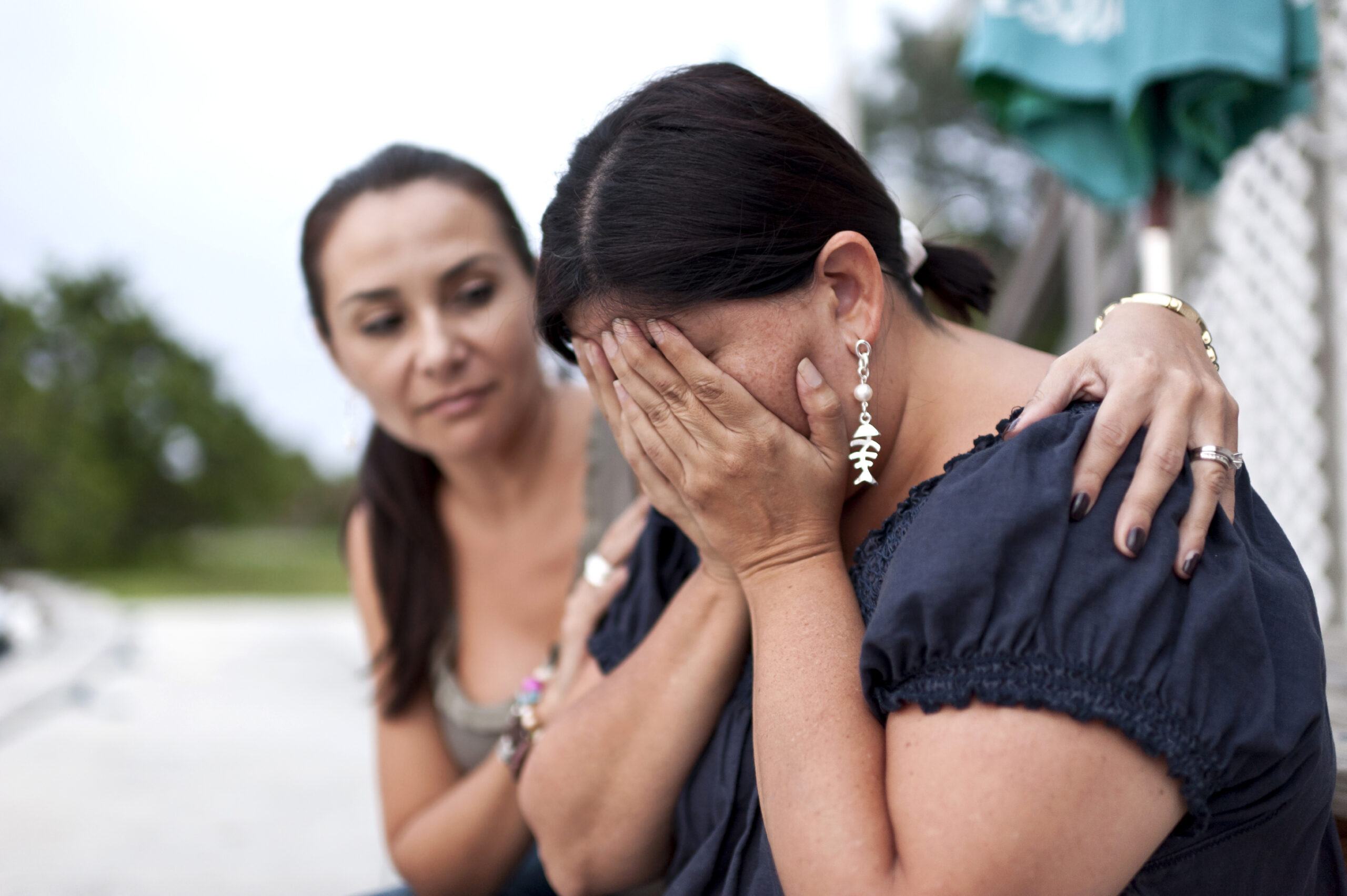
- Families grieving loved ones lost in seconds.
Many of these stories share common causes:
- Excessive or inappropriate speeds.
- Poorly designed intersections.
- Unsafe roadsides.
- Lack of safe space for pedestrians, cyclists and motorcyclists.
These are system failures, not individual mistakes. The same types of crashes occur repeatedly on the same types of roads – highlighting the urgent need for safer design standards and speed management.
What Works: Proven Solutions
The evidence is clear that road trauma can be dramatically reduced by:
- Ensuring roads are 3‑star or better for all users.
- Managing speed to match road function and surroundings.
- Providing safe infrastructure for pedestrians, cyclists and motorcyclists.
- Protecting roadsides and separating opposing traffic.
- Treating safety as a public health and development priority.
- When applied at scale, these solutions save lives, reduce serious injuries, and deliver major economic and social benefits.
A Call to Action
Road deaths and serious injuries are preventable. By investing in safer road design, safer speeds and evidence‑based policies, countries can make rapid progress toward eliminating road trauma.
Every improvement in road safety represents:
- Lives saved.
- Injuries avoided.
- Families kept whole.
- Safer roads are not a luxury — they are a necessity for healthy, sustainable communities worldwide.