
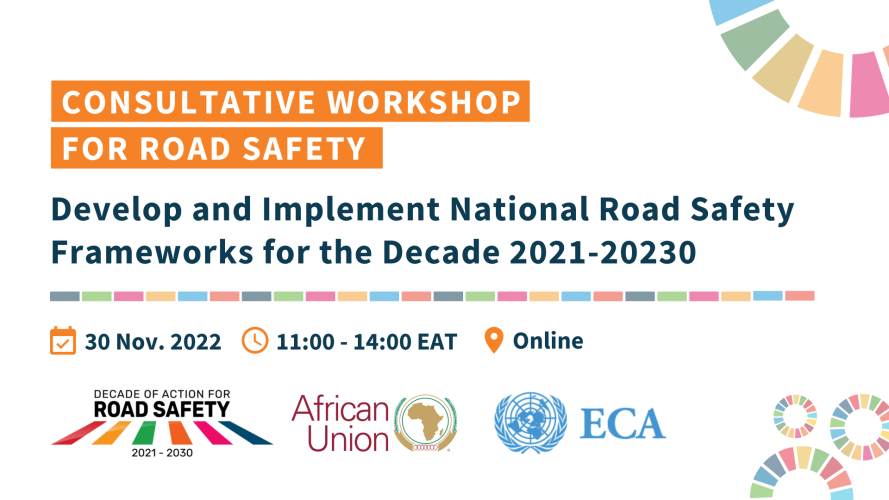
Os parceiros do projeto iRAP são incentivados a participar do próximo evento. “Oficina Consultiva para a Segurança Rodoviária em África: Desenvolver e Implementar Quadros Nacionais de Segurança Rodoviária para a Década de 2021-2030” a ser realizada online no dia 30 de novembro, das 11:00 às 14:00 EAT (9:00 às 12:00 CET), pela Comissão Econômica das Nações Unidas para a África (UNECA).ECA) e a Comissão da União Africana (AUC) no contexto da Década de Ação para a Segurança Rodoviária 2021-2030.
O principal objetivo da reunião é conscientizar sobre Diretrizes estratégicas da África para a segurança rodoviária no período pós-2020 e o Plano de Ação Africano para a Segurança Rodoviária 2021-2030. Esses documentos apoiarão os Estados-membros da UA no desenvolvimento ou atualização de suas estratégias nacionais de segurança rodoviária, levando em consideração as especificidades nacionais e as recomendações da Plano Global para a Década de Ação para a Segurança Rodoviária 2021-2030.
Mais especificamente, os objetivos da reunião são:
- Compartilhar as melhores práticas com os Estados-membros da UA para integrar os Planos de Ação Globais e Continentais em seus respectivos marcos nacionais.
- Defina os princípios fundamentais para melhorar a segurança rodoviária em nível nacional.
- Estimular o debate sobre o caminho a seguir após a entrada em vigor integral da Carta Africana de Segurança Rodoviária.,
- Promover o Observatório Africano de Segurança Rodoviária (ARSO).
O programa incluirá apresentações sobre as parcerias da iniciativa iRAP que ajudam a eliminar estradas de alto risco na África, incluindo:
- Partilha de experiências: Plano de Ação para a Segurança Rodoviária da Gâmbia 2021-2030 – que inclui metas de 3 estrelas ou mais para as rodovias nacionais.
- Partilha de experiências: Plano de Ação para a Segurança Rodoviária de Marrocos 2021-2030 – A iRAP está trabalhando com a Agência Nacional de Segurança Rodoviária (NARSA) e o Departamento Geral de Estradas (GDR) para elaborar um Memorando de Entendimento. Trabalhar em conjunto para eliminar as estradas de alto risco em Marrocos. A iRAP e a Autoroutes du Maroc (ADM) também assinaram recentemente um contrato. Avaliar 200 km de estradas em Marrocos, além de treinar e credenciar o pessoal da ADM.
- Lançamento do Plano de Dez Etapas da Tanzânia e do TanRAP – Um projeto de 30 meses concebido para atender às necessidades específicas da Tanzânia e construir capacidade institucional sustentável, impacto e parcerias – Financiado conjuntamente pelo Fundo das Nações Unidas para a Segurança Rodoviária (UNRSF).UNRSF) e pelo Ministério das Relações Exteriores, da Commonwealth e do Desenvolvimento (Ajuda do Reino Unido), por meio do Mecanismo Global de Segurança Rodoviária (GRSF) do Banco Mundial, sob a orientação da Comissão Econômica das Nações Unidas para a África (UNECA), o projeto está sendo implementado por um consórcio liderado pela Federação Rodoviária Internacional (IRF), e inclui o International Road Assessment Programme (iRAP), a Associação Mundial de Estradas (PIARC) e a Associação de Estradas da Tanzânia (TARA). O projeto reuniu o Governo da Tanzânia por meio do Ministério de Obras Públicas e Transportes (MoWT), a TANROADS, a TARURA, o Instituto Nacional de Transportes (NIT) e outras instituições líderes, ONGs e partes interessadas do setor na Tanzânia.
- Partilha de experiências: Estratégia de Segurança Rodoviária da Etiópia 2021-2030 – Publicação recente do periódico Sustainability Journal 2022. Política de Segurança Rodoviária em Adis Abeba: Uma Perspectiva da Visão Zero que reconheceu o relatório sobre o estado de segurança viária da cidade, baseado em um estudo de 114 km das principais vias de Addis Abeba. A investigação constatou que apenas 391 km de vias eram seguras para ocupantes de veículos e apenas 141 km eram seguras para pedestres.
iRAP na África e o potencial de estradas com classificação de 3 estrelas ou superior.
De acordo com Explorador de informações de segurança do iRAP, Estima-se que mais de 700 vidas sejam perdidas diariamente nas estradas africanas, 1.589 pessoas sofram lesões cerebrais, 194 sofram lesões na coluna vertebral que podem resultar em incapacidade permanente e 21 pessoas percam membros em acidentes rodoviários.
Relatório do Banco Mundial, do Programa de Políticas de Transporte para a África (SSATP), da Organização Mundial da Saúde e do Observatório Africano de Segurança Rodoviária “Um estudo sobre as principais agências de segurança rodoviária na África.”O documento publicado no início deste ano incluía uma recomendação para que os países africanos desenvolvessem medidas de referência para fatores de risco importantes, como: Classificação de segurança por estrelas iRAP.
A iRAP e seus parceiros na África avaliaram quase 49.500 km de estradas e projetos, além de 178 escolas no continente, mapearam riscos em 3.900 km e influenciaram a segurança de mais de US$ 1.900 bilhões em investimentos em infraestrutura rodoviária. Quase 2.300 pessoas foram treinadas em treinamentos e eventos realizados em países africanos e 2.200 participaram de treinamentos e eventos virtuais. Cinquenta (50) profissionais estão... Acreditado iRAP ajudar a garantir que a prestação de serviços de especificação iRAP nos países africanos esteja em conformidade com o padrão global de infraestrutura rodoviária reconhecido em Metas 3 e 4 do Desempenho Global em Segurança Rodoviária da ONU.
Para obter uma visão geral do trabalho dos parceiros do iRAP na África, que pode ser baixada, consulte nosso [link para a página de informações]. Veja aqui as histórias de sucesso de nossos parceiros ao redor do mundo. e pesquise “África”.
Para consultar a Estratégia e o Plano de Ação Nacional de Segurança Rodoviária do Uganda para 2021-2026, que também inclui metas de 3 estrelas ou superiores, em consonância com as Metas 3 e 4 da ONU, Clique aqui.
Atingir as Metas 3 e 4 da ONU até 2030, que preveem que mais de 751 mil toneladas de viagens sejam realizadas em estradas com classificação de 3 estrelas ou superior na África, pode salvar mais de 101.400 vidas e 22,3 milhões de vidas e ferimentos graves, com um benefício econômico de US$ 1,9 trilhão para a economia africana – um benefício de US$ 1,9 trilhão para cada US$ 1,9 trilhão investido.
A iRAP está pronta para apoiar parceiros atuais e novos na África – governos, clubes de mobilidade, instituições de financiamento, indústria e ONGs de segurança rodoviária – com o programa gratuito. Metodologia iRAP, ferramentas, treinamento e apoio ao programa para implementar o Plano Global, Plano de Ação Africano para a Segurança Rodoviária. ...e estratégias e planos de ação nacionais para salvar vidas e prevenir lesões graves em estradas com classificação de 3 estrelas ou superior, mais seguras em todo o continente.
Para obter suporte para o projeto iRAP, entre em contato com a coordenadora do AfricaRAP, Racheal Nganwa, pelo e-mail racheal.nganwa@irap.org.