
Het economisch beleid voor het beoordelen van investeringen in reizen is verouderd; het geeft prioriteit aan snel en gemakkelijk autorijden en weerspiegelt niet de moderne waarden van veiligheid en duurzaamheid. Het is tijd om de focus te verleggen naar het aanbieden van veilige, duurzame en inclusieve mobiliteit voor alle weggebruikers, volgens een rapport dat vandaag is gepubliceerd door de Road Safety Foundation.
Investeren in veiligere mobiliteit: gerichte investeringen in het Britse wegennet. Er wordt gesteld dat het aantal dodelijke slachtoffers en ernstig gewonden is gedaald in vergelijking met de gegevens van vóór Covid, maar dat een terugkeer naar het niveau van voor de pandemie te verwachten is. De recente stijging van de kosten van levensonderhoud kan echter van invloed zijn op de toekomstige verkeersdrukte, reissnelheden en het daaruit voortvloeiende aantal slachtoffers. Daarnaast kunnen we een verder effect zien als gevolg van het toegenomen thuiswerken, dat na Covid voor velen een vast onderdeel is geworden.
“"Nu is het moment om te investeren in onze weginfrastructuur om veiligere en duurzamere mobiliteit voor alle weggebruikers te ondersteunen", zegt dr. Suzy Charman, uitvoerend directeur van de Road Safety Foundation en een van de auteurs van het rapport. "Dit zal de druk op onze gezondheidszorg verlichten en tegelijkertijd bijdragen aan milieu-, gezondheids- en kostenbesparingsdoelstellingen."”
Infrastructuurmaatregelen die het risico op dodelijke en ernstige verwondingen verminderen, zijn algemeen bekend en de investeringsrendementen zijn overtuigend. Maatregelen zoals het beschermen of vrijmaken van bermen, het scheiden van tegengesteld rijdend verkeer en het veiliger ontwerpen van kruispunten bieden grote mogelijkheden om levens te redden. Het bevorderen van veiliger wandelen en fietsen door middel van aparte voorzieningen of het verlagen van de maximumsnelheid is essentieel om een verschuiving naar andere vervoerswijzen te stimuleren en het aantal doden en gewonden onder deze belangrijke gebruikersgroepen te verminderen.
Het jaarlijkse rapport van de liefdadigheidsinstelling over de risico's van verkeersongevallen stelt dat de argumenten voor investeringen in systematische en planmatige vermindering van verkeersongevallen sterker zijn dan ooit.
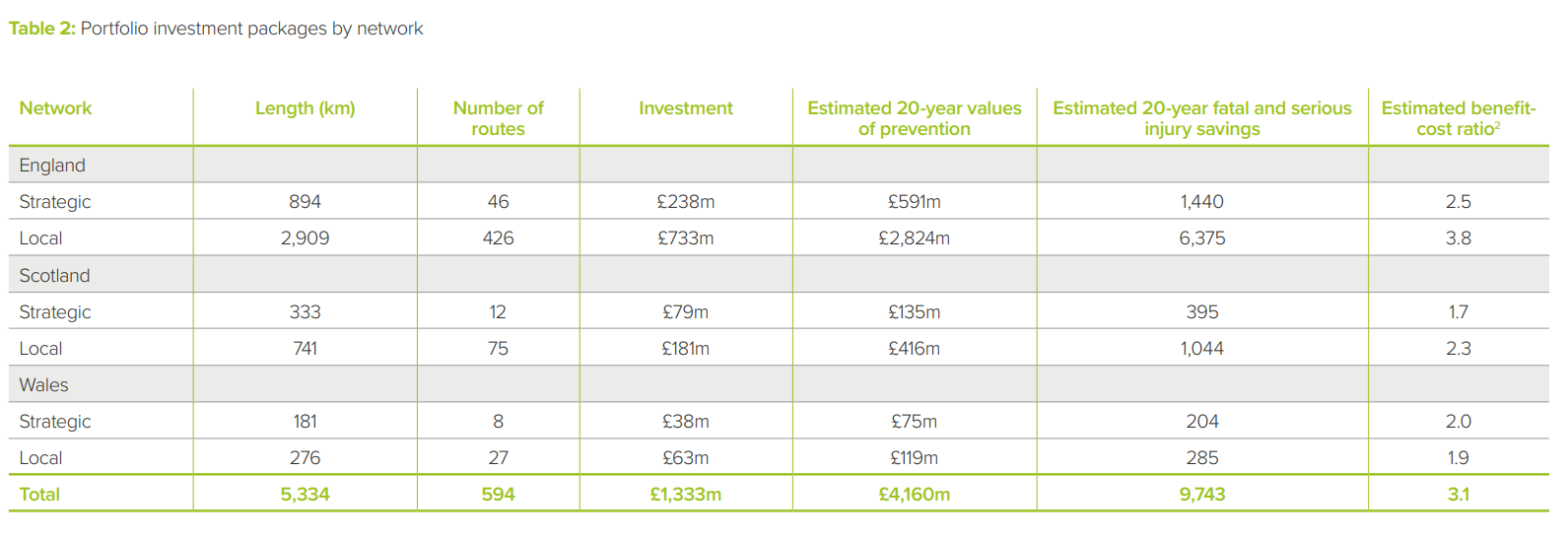
Het rapport wijst op tien procent van de snelwegen en hoofdwegen die duidelijke prioriteit hebben voor investeringen. De argumenten voor investeringen zijn sterk, met aantrekkelijke investeringsmogelijkheden in heel Groot-Brittannië die niet alleen levens zouden redden, maar ook een deel van de enorme maatschappelijke schade zouden aanpakken die jaarlijks aan verkeersongevallen wordt toegeschreven (ongeveer 30 miljard pond in 2021).
De meest verbeterde routes van Groot-Brittannië
Er zijn 52 routes die aanzienlijk verbeterd zijn tussen de eerste dataperiode (2015 tot 2017) en de volgende (2018 tot 2020), een totale lengte van meer dan 1200 kilometer. Tussen de twee periodes van drie jaar daalde het aantal dodelijke en gecorrigeerde ernstige ongevallen op deze routes met 611 ton, van 1058 naar 404. De jaarlijkse maatschappelijke waarde van de voorkomen ongevallen bedroeg meer dan £110 miljoen, oftewel meer dan £90.000 per kilometer weglengte, met een totale maatschappelijke waarde van meer dan £1,6 miljard over 20 jaar. Enkele voorbeelden van routes die aanzienlijk verbeterd zijn, zijn:
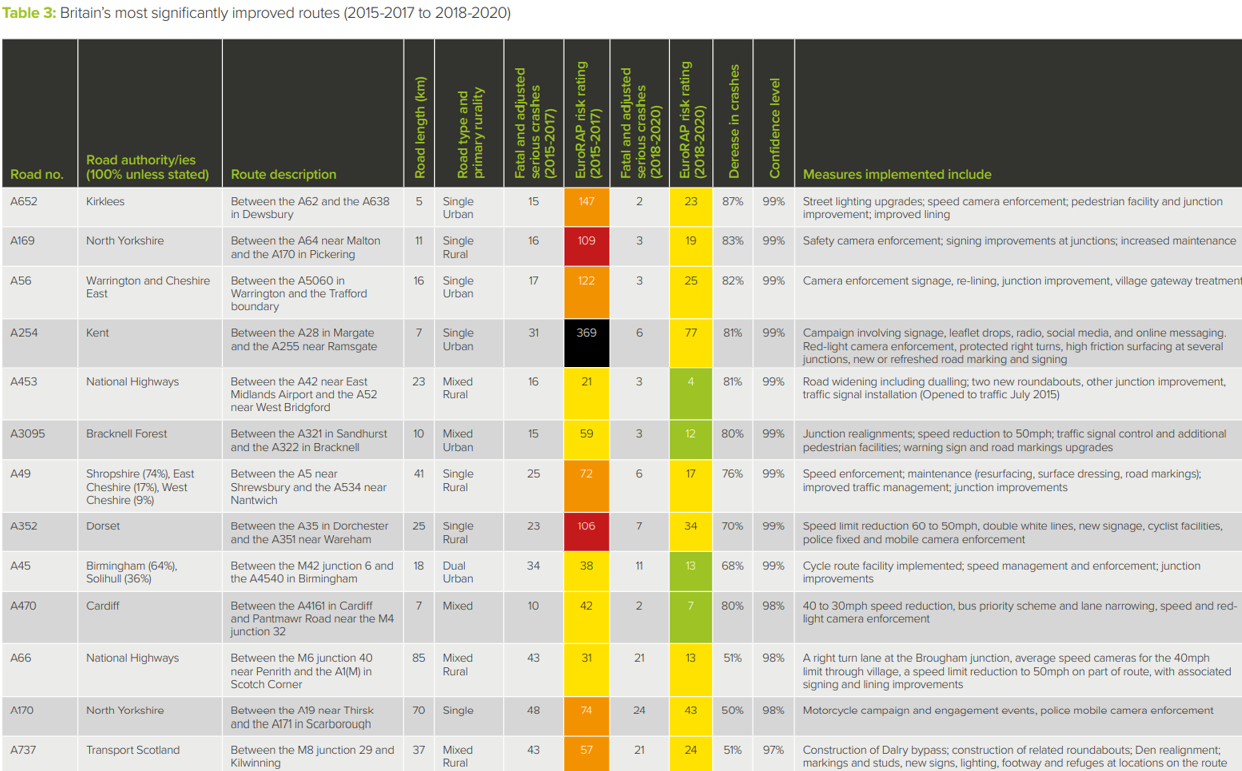
Hoewel een klein aantal verbeteringen bestond uit het verbreden van wegen of de aanleg van een stadsringweg, zijn de meeste bescheiden: straatverlichting, een betere indeling van kruispunten voor voetgangers, vernieuwde wegmarkeringen, betere cameratoezicht en gerichte, lokale snelheidsverlagingen.
De Road Safety Foundation biedt ook een interactief hulpmiddel waar gebruikers de veiligheidsclassificatie van A-wegen en snelwegen in hun omgeving kunnen opzoeken.
Download hier het rapport 'British EuroRAP Crash Risk Mapping Results 2022'.
Over de Road Safety Foundation (RSF)
De Road Safety Foundation (RSF) is een Britse liefdadigheidsinstelling, opgericht in 1986, die tot doel heeft het aantal verkeersslachtoffers te verminderen door de implementatie van een veilig wegennet.
- Het identificeren van investeringspakketten die waarschijnlijk een hoog rendement opleveren en het analyseren van de veiligheidsprestaties van wegen in de loop der tijd.
- Het aanbieden van de aanpak, instrumenten en training die nodig zijn om wegbeheerders te ondersteunen bij het proactief verminderen van verkeersrisico's.
- Onderzoek verrichten om kennis en beleid te bevorderen.
- De afgelopen twintig jaar heeft de stichting zich met name gericht op veiligere weginfrastructuur door de oprichting van het Europees Wegbeoordelingsprogramma en de ontwikkeling van de International Road Assessment Programme (iRAP) en de bijbehorende protocollen voor het meten van de veiligheid van de infrastructuur. De RSF is verantwoordelijk voor de ondersteuning van het Wegbeoordelingsprogramma in het Verenigd Koninkrijk en haar werk dient als voorbeeld van wat bereikt kan worden, waarbij belangrijk onderzoek en innovatie worden overgenomen in Wegbeoordelingsprogramma's over de hele wereld.
De liefdadigheidsinstelling heeft onlangs het volgende gedaan:
- Ondersteunde het Safer Roads Fund van het Department for Transport (DfT) bij het uitvoeren van onderzoeken naar de 50 meest risicovolle lokale 'A'-wegen in Engeland, het trainen van lokale overheden en het modelleren van de impact van projecten die samen de investeringsportefeuille van 100 miljoen pond vormden.
- Bood ondersteuning en technische expertise aan National Highways bij hun SRN-brede iRAP-initiatief.
- Ik heb leiding gegeven aan het rapport van de Taskforce Oudere Bestuurders, met steun van de overheid, om de nationale strategie voor oudere bestuurders te ontwikkelen: het bevorderen van veilig autorijden tot op hoge leeftijd.
Voor meer informatie kunt u terecht op www.roadsafetyfoundation.org
Twitter: @saferoaddesign