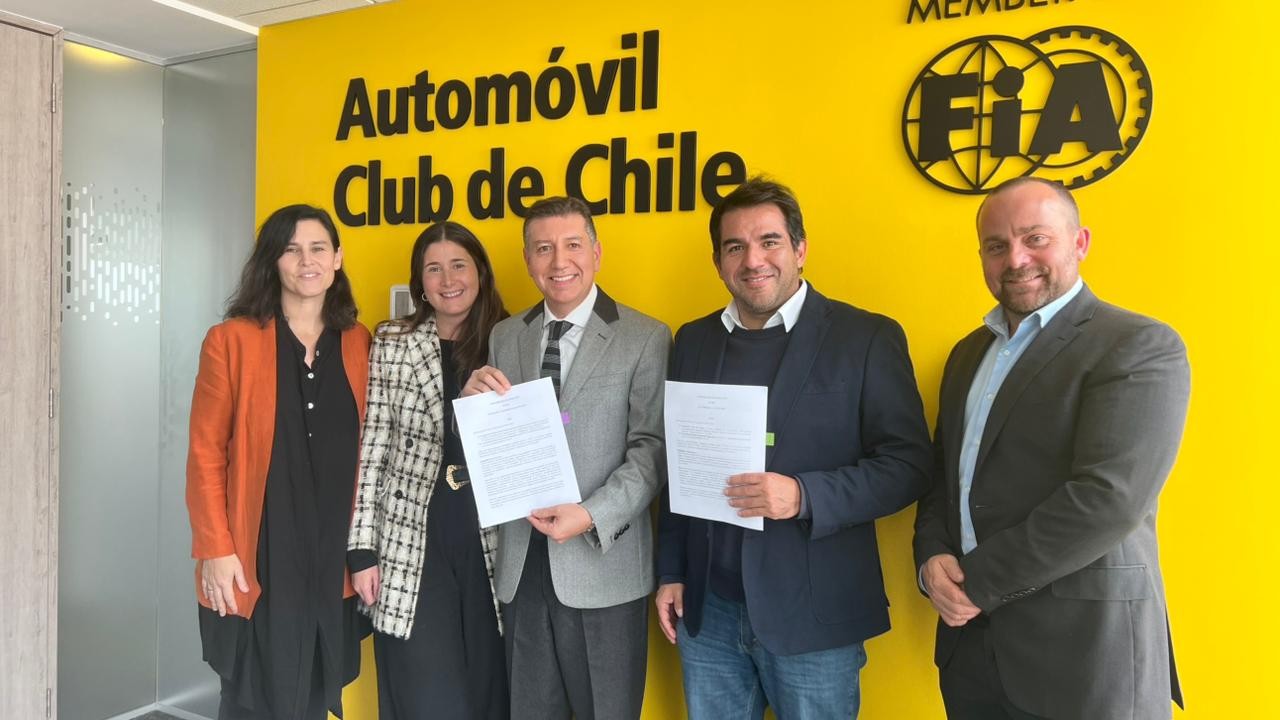
iRAP et le nouveau créé Fondation de l'Automobile Club du Chili récemment rencontré à Automobile Club du Chili (AACHI) à Santiago pour discuter d'une collaboration visant à améliorer la sécurité routière et les initiatives de mobilité durable dans tout le pays.
Julio Urzua, directeur des projets mondiaux de iRAP, et Morgan Fletcher, responsable des opérations en Amérique latine, ont rencontré l'équipe d'AACHI composée de : Maria Ignacia González (directrice exécutive), Concepción Quintana (directrice) et Gonzalo Plaza (président) de la Fondation ACCHI, ainsi que Carlos Larravide (PDG) et Alvaro Bravo (directeur commercial) d'ACCHI.
La Fondation AACHI se consacre à la promotion d'une mobilité sûre, équitable et durable pour toutes les communautés chiliennes et à la diffusion des meilleures pratiques en matière de transport et de mobilité.
Les discussions de la réunion ont porté sur la mise en place d'un cadre de collaboration entre les deux organisations à but non lucratif afin de développer, mettre en œuvre et promouvoir des programmes, des projets et des initiatives visant à améliorer la mobilité et la sécurité routière.
Des possibilités de coopération ont été explorées pour la conception et la réalisation de projets conjoints axés sur la recherche en matière de sécurité routière, les évaluations des infrastructures routières, le renforcement des capacités, la sensibilisation des communautés, la collecte de données et l'engagement auprès d'initiatives plus larges des secteurs public et privé.
Au Chili, la Fondation ACCHI dirige la mise en œuvre de iRAP Programme Star Rating for Schools (SR4S), en collaboration avec les municipalités, le ministère des Transports et les communautés scolaires afin de créer des environnements plus sûrs pour les élèves.
De plus, AACHI est impliquée dans premier pilote latino-américain de la Application d'engagement des jeunes (YEA). YEA est une plateforme interactive qui permet aux enfants et aux jeunes d'identifier et de signaler facilement les conditions de sécurité routière aux abords de leurs écoles, contribuant ainsi à lutter contre la principale cause de mortalité de leur génération : les accidents de la route.
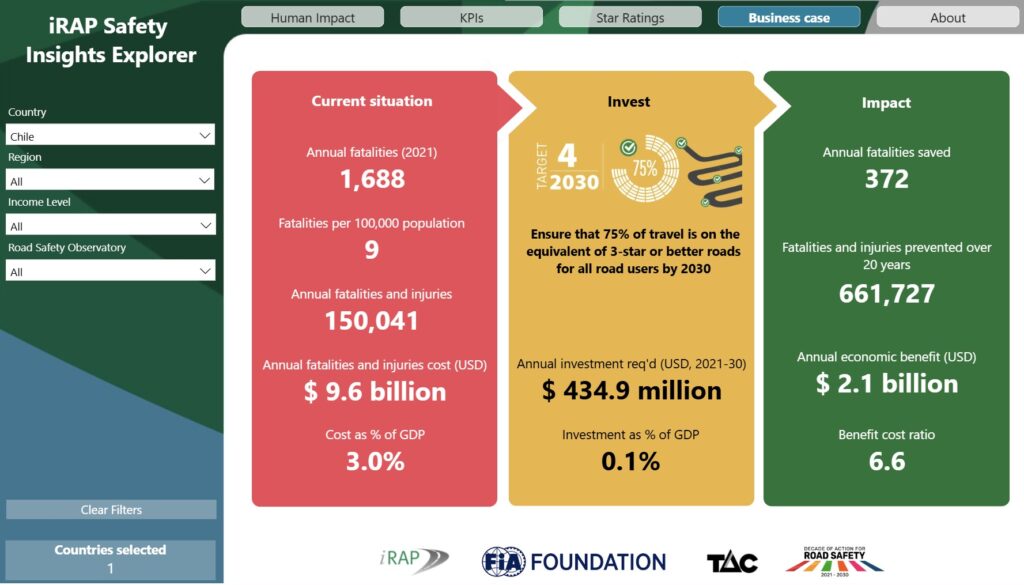
Selon Explorateur des informations de sécurité de iRAP, la réalisation de l'objectif 4 des Nations Unies, qui vise à ce que plus de 751 080 000 trajets sur des routes 3 étoiles ou mieux soient effectués par tous les usagers de la route au Chili d'ici 2030, pourrait sauver environ 372 vies chaque année et 661 727 décès et blessures sur les 20 ans de durée de vie des traitements routiers, avec un avantage économique de 1 090 02,1 milliards de dollars américains – soit 1 090 06,60 dollars américains pour chaque 1 090 010 dépensé.