
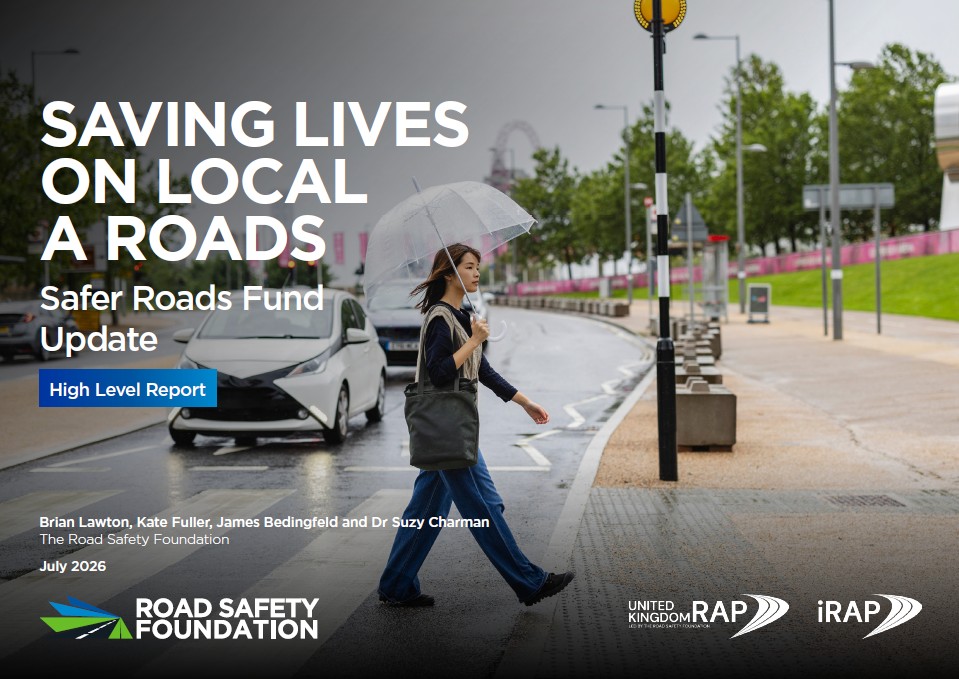
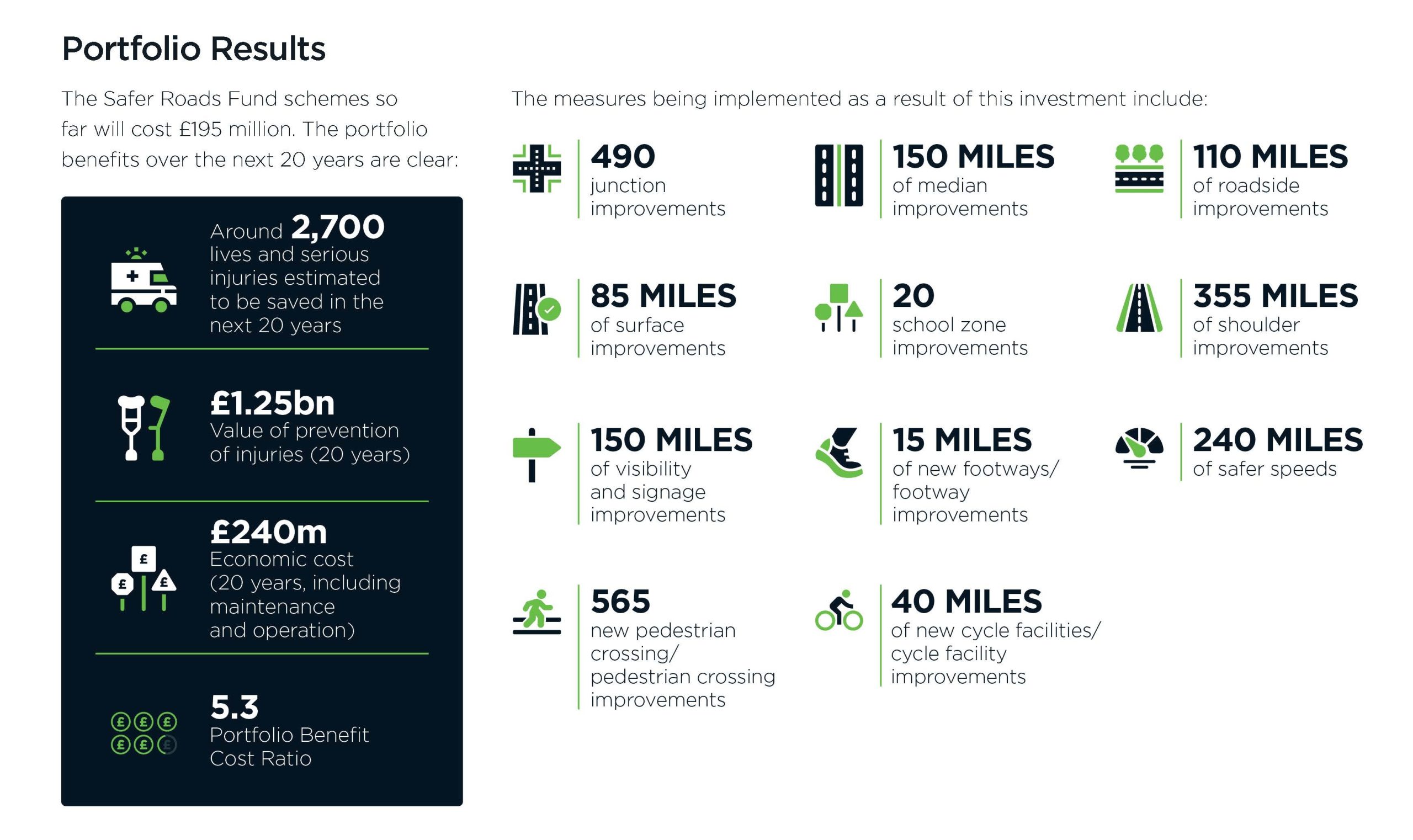
Un nouveau rapport publié hier a mis en lumière l'impact vital du Fonds pour des routes plus sûres en Angleterre, estimant que le programme permettra d'éviter environ 2 700 décès et blessures graves au cours des deux prochaines décennies, et générera 1,25 milliard de livres sterling de bénéfices sociaux et économiques grâce à un investissement gouvernemental de 195 millions de livres sterling dans les programmes mis en œuvre jusqu'à présent.
Le rapport intitulé “ Sauver des vies sur les routes locales A : Mise à jour du Fonds pour des routes plus sûres ” a été préparé par le Fondation pour la sécurité routière ce qui conduit au Programme d'évaluation des routes du Royaume-Uni. Elle a été lancée à la Chambre des Lords lors d'un événement de haut niveau auquel ont participé Lilian Greenwood, députée et ministre des Transports locaux, Peter Swallow, député, des dignitaires, des représentants des collectivités locales et des acteurs de la sécurité routière.
Le rapport souligne l'impact du Fonds pour des routes plus sûres du ministère des Transports, créé en 2016 afin d'améliorer la sécurité sur certaines des routes principales les plus dangereuses gérées par les collectivités locales en Angleterre. Il démontre comment une approche proactive et conforme au modèle « Safe System » en matière de sécurité routière permet d'obtenir des résultats concrets qui sauvent des vies.
S’appuyant sur les évaluations des risques du projet iRAP, les analyses d’itinéraires et des études de cas concrets, le rapport explique comment les autorités locales ont utilisé des investissements basés sur les données, des améliorations des infrastructures et des mesures de gestion de la vitesse pour développer des programmes de sécurité à forte valeur ajoutée.
Plutôt que de s'appuyer uniquement sur les données historiques de collisions, le programme utilise les cotes d'étoiles International Road Assessment Programme (iRAP) pour identifier les routes présentant les plus grands risques inhérents pour la sécurité, permettant ainsi de cibler les améliorations avant que des collisions graves ne se produisent.
Un retour sur investissement élevé
Le rapport estime que le programme offrira un ratio avantages-coûts de 5,3, ce qui signifie que chaque livre sterling investie devrait générer environ 5,30 livres sterling de bénéfices grâce à la réduction du nombre de décès et de blessures graves.
Cet investissement a permis d'améliorer la sécurité sur 100 routes à haut risque, en s'attaquant à des problèmes tels que la configuration dangereuse des carrefours, les dangers en bord de route et d'autres caractéristiques d'infrastructure liées au risque de collision.
En privilégiant la conception des routes plutôt que de simplement réagir aux incidents passés, le programme vise à prévenir les accidents avant qu'ils ne surviennent.
Greg Smith, PDG de iRAP, présent à l'événement, a déclaré : “ Il ne s'agit pas d'une liste de projets ponctuels. Les collectivités locales du Royaume-Uni intègrent ces méthodes directement dans leurs opérations courantes, souvent en lien avec des programmes actifs de mobilité et d'entretien. Chaque kilomètre modernisé, chaque passage piéton construit et chaque amélioration du classement par étoiles représentent des vies réellement protégées. ”
Vers une sécurité routière proactive
Au-delà des améliorations matérielles, le rapport conclut que le Fonds pour des routes plus sûres a contribué à remodeler la manière dont les autorités routières locales abordent la sécurité routière.
Le programme a favorisé une adoption plus large de l'approche « Système sûr », en dotant les conseils de nouvelles compétences, d'outils analytiques et de méthodologies pour identifier et réduire les risques de manière proactive au lieu de s'appuyer principalement sur des interventions après collision.
La docteure Suzy Charman OBE, directrice générale de la Fondation pour la sécurité routière, a déclaré que ce programme démontre la valeur d'un investissement fondé sur des données probantes.
“ Le Fonds pour des routes plus sûres démontre qu’un investissement ciblé et fondé sur des données probantes peut faire une réelle différence, en sauvant des vies tout en offrant un excellent rapport qualité-prix. En se concentrant sur les routes les plus à risque, le programme contribue à prévenir les accidents graves et à créer des trajets plus sûrs dans tout le pays. ”
Elle a déclaré que l'influence du programme s'étendait bien au-delà des dispositifs eux-mêmes.
“ Ce programme a véritablement transformé notre façon d’assurer la sécurité routière, non seulement grâce à l’amélioration des 100 routes à haut risque, mais aussi grâce à l’ensemble des mesures mises en œuvre. ».
“ Le Fonds pour des routes plus sûres a contribué à développer les compétences, les outils et la confiance des autorités routières en matière de systèmes sûrs, faisant évoluer les pratiques d'une réaction aux accidents vers une conception proactive visant à éliminer les risques du réseau. Ce changement de capacité est l'un des avantages à long terme les plus importants du programme. ”
Concentrez-vous sur les routes rurales à haut risque.
Une grande partie des investissements a été consacrée aux routes rurales de catégorie A, où la vitesse plus élevée des véhicules, le nombre limité d'itinéraires alternatifs et la configuration complexe des routes peuvent contribuer à une augmentation de la gravité des collisions.
Le rapport suggère que l'utilisation du système de notation iRAP par le programme influence désormais la réflexion nationale plus large sur la sécurité routière et les investissements dans les infrastructures.
Soutenir la prochaine stratégie de sécurité routière
Le rapport conclut que la poursuite des investissements dans des programmes de sécurité routière proactifs et fondés sur l'évaluation des risques sera essentielle si le gouvernement veut atteindre son ambition à long terme de réduire le nombre de décès et de blessures graves sur l'ensemble du réseau routier anglais.
Elle soutient que les interventions fondées sur des données probantes, associées à une meilleure compréhension des risques liés aux infrastructures, devraient rester au cœur de la future stratégie nationale de sécurité routière.
S'exprimant lors de l'événement, le ministre Lilian Greenwood Elle a confié que c'est pour des programmes comme celui-ci qu'elle s'est engagée en politique : pour apporter un changement positif dans la vie des gens. Et c'est précisément ce que réalise le Fonds pour des routes plus sûres.
“ Alors que les dirigeants du monde s'apprêtent à se rendre à Les Nations Unies ” Lors de la réunion de haut niveau sur la sécurité routière qui s’est tenue ce mois-ci à New York, le Fonds britannique pour des routes plus sûres a été un exemple remarquable de ce qui pourrait être réalisé dans le monde entier grâce à des programmes similaires », a ajouté M. Smith.
Des collectivités locales récompensées pour leurs programmes exceptionnels
Le rapport présente des études de cas réussies et deux projets menés par des collectivités locales ont été salués lors de son lancement pour avoir permis d'importantes améliorations en matière de sécurité.
Le prix du programme Urban Safer Roads Fund a été décerné au conseil municipal de Sandwell pour les améliorations apportées à la route A4030, un programme qui devrait permettre d'éviter 24 décès et blessures graves au cours des 20 prochaines années.
Le prix du programme Rural Safer Roads Fund a été décerné conjointement au conseil du comté de Derbyshire et au conseil municipal de Sheffield pour des améliorations de sécurité sur l'A57, qui devraient permettre d'éviter 93 décès et blessures graves au cours de la même période.
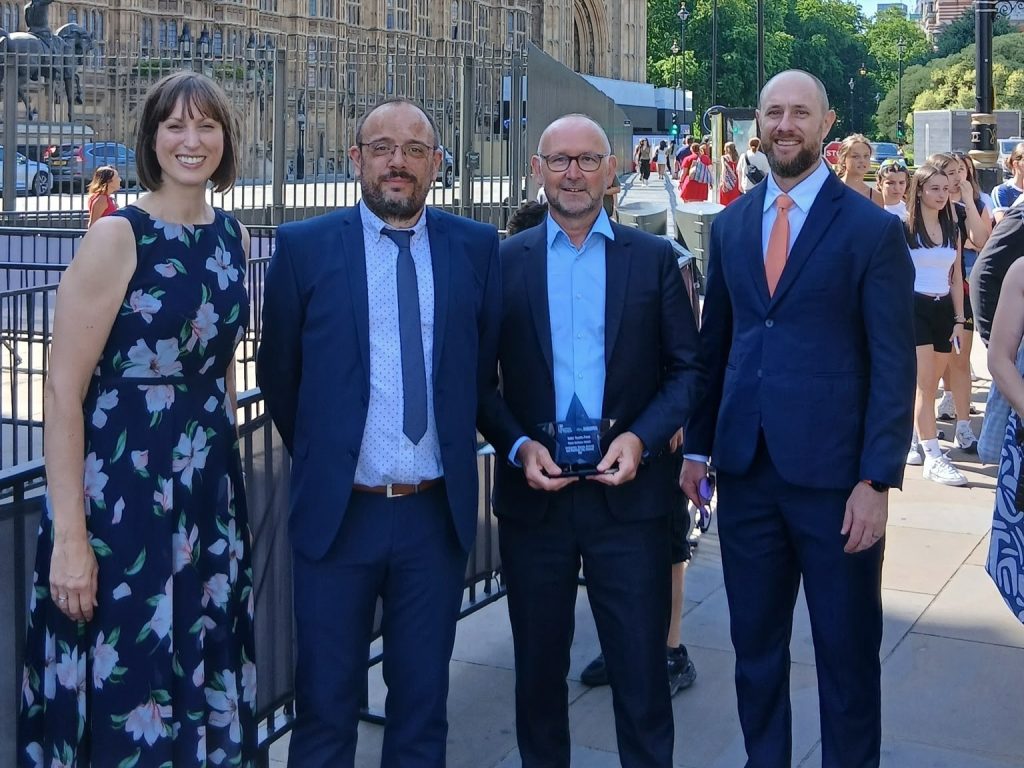
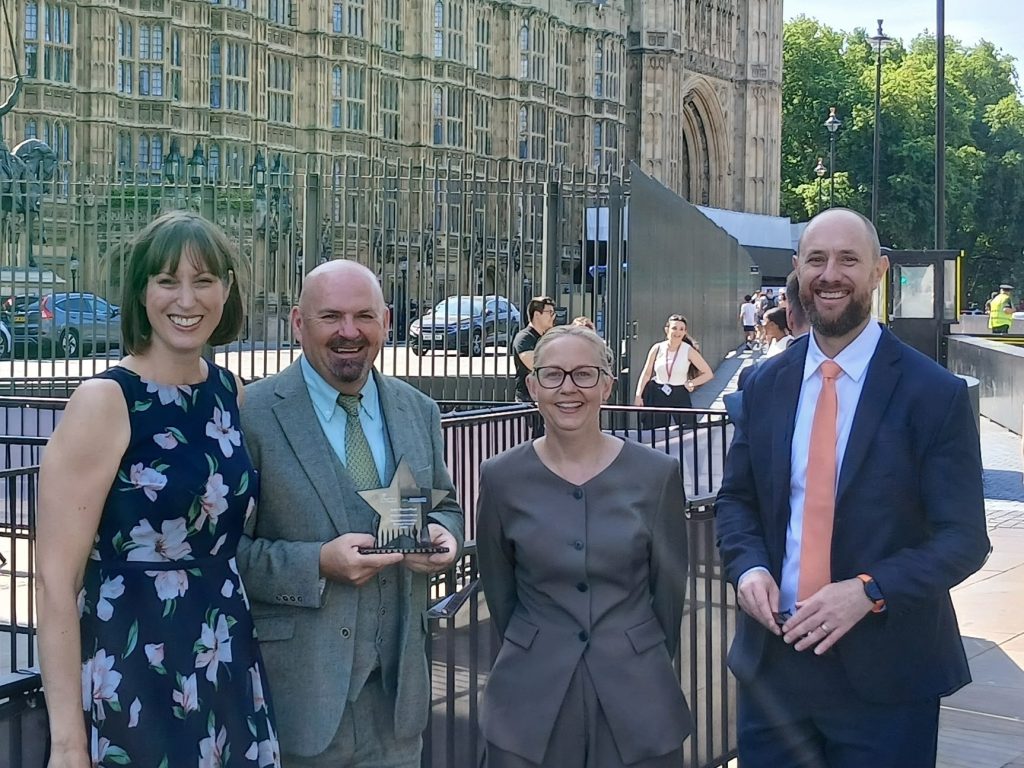
Greg Smith, PDG de iRAP, était ravi d'assister au lancement ; on le voit ici en photo avec Suzy Charman et les lauréats des collectivités locales.
Ces résultats confortent l'importance croissante accordée à la conception de réseaux routiers visant à éliminer les risques avant même que les collisions ne surviennent, démontrant ainsi comment des investissements ciblés dans les infrastructures peuvent améliorer la sécurité tout en générant des avantages économiques et sociaux substantiels à long terme.
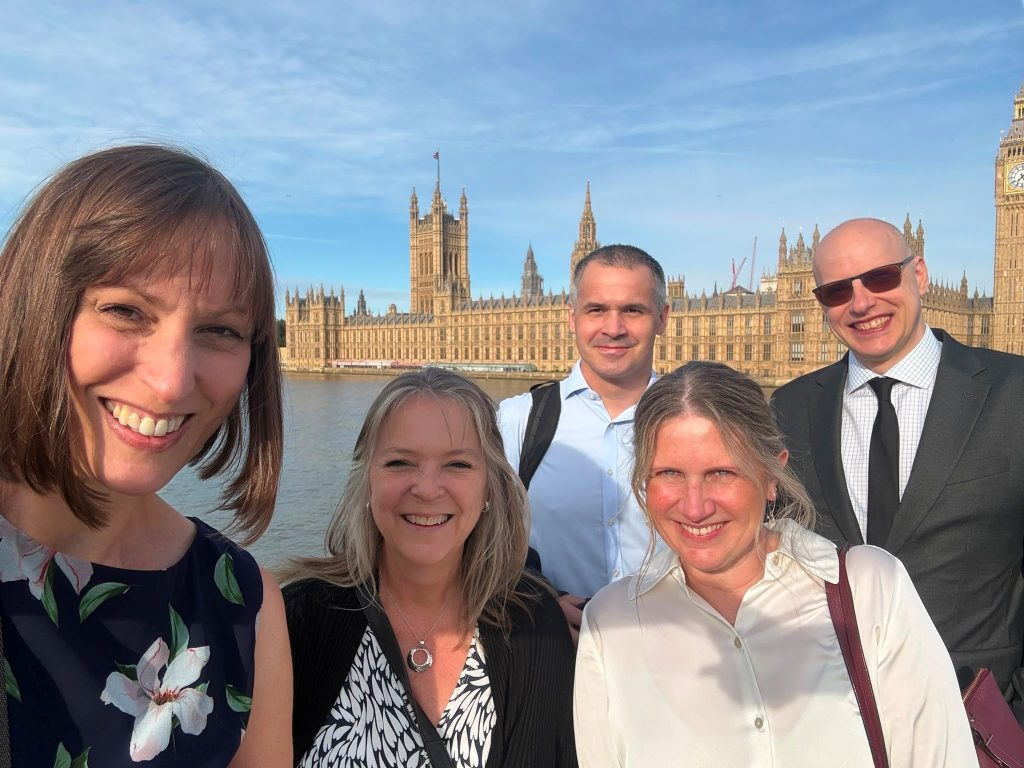
De gauche à droite : Suzy Charman et Kate Fuller, RSF ; James Bradford et Julie Sinclair, iRAP ; James Bedingfeld, RSF
Crédit de l'article : Merci à Safer Highways pour contenu ajouté.