
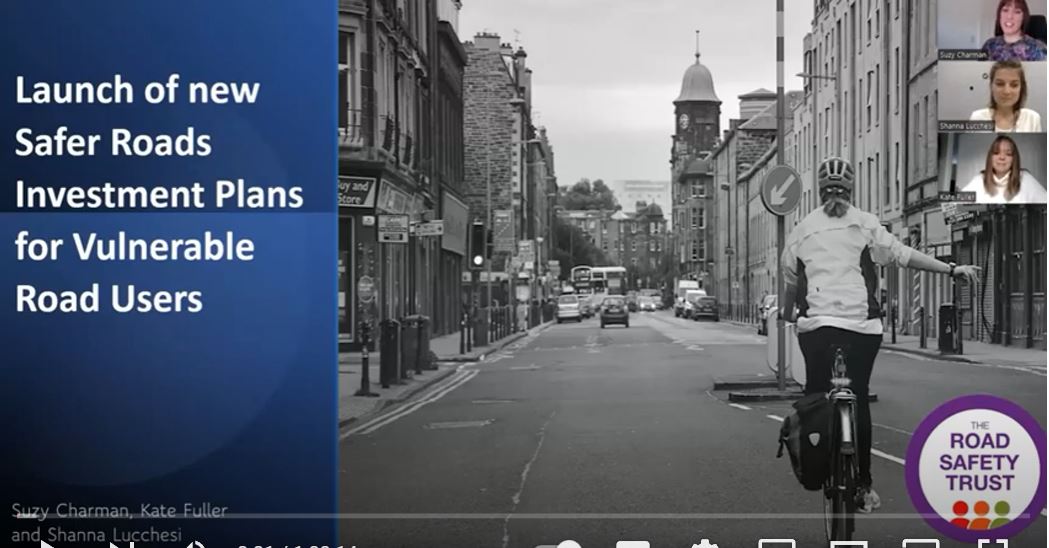
La semana pasada, más de 70 personas de todo el mundo asistieron al seminario web sobre la demostración de planes de inversión urbana. La mayoría de los asistentes procedían del Reino Unido, aunque también hubo representación de Japón, Tailandia, Zambia, Estados Unidos, Bolivia, Dinamarca, Georgia, Uganda e Irlanda.
Se han reunido conocimientos de todo el mundo en un proyecto de tres años gestionado por la Fundación para la Seguridad Vial y con el apoyo de una subvención de la Fondo para la Seguridad Vial. Los hallazgos se están incorporando a las herramientas iRAP como un conjunto adicional de contramedidas: los Planes de Inversión Urbana. Esto ayuda a las autoridades viales a comprender cómo varía el riesgo a lo largo de un tramo de carretera específico o en toda la red, en función del desempeño en materia de seguridad de la propia infraestructura.
Las nuevas contramedidas urbanas ya están disponibles en ViDA Tras ver el seminario web que aparece a continuación, podrá comprobar cómo activar las contramedidas para sus propios proyectos urbanos.
Los Planes de Inversión Urbana son un ejemplo fantástico de una innovación local que se ha puesto a prueba en el Reino Unido, basándose en la metodología de calificación por estrellas iRAP para satisfacer una necesidad local.
A través del Marco de Innovación de iRAP, esta es una de las diversas iniciativas prometedoras que se están llevando a cabo a nivel mundial y que se benefician de la seguridad que ofrece iRAP. Esta iniciativa ayudará a los países a acelerar su camino hacia el objetivo global de reducir a la mitad las muertes y lesiones en carretera para 2030. Tras su exitosa fase piloto local, se prevé que las pruebas globales de la herramienta comiencen el próximo año.
Acerca del proyecto:
En los últimos años se ha producido un cambio significativo que reconoce las deficiencias de los diseños viales tradicionales centrados en el automóvil en las zonas urbanas. Algunas de las principales ciudades del mundo han transformado radicalmente su enfoque para el diseño y la gestión de sus redes viales urbanas, priorizando la seguridad y la movilidad de peatones y ciclistas. Los cambios en los propios grupos de usuarios de la vía, como el aumento del uso de la bicicleta y la micromovilidad, también están impulsando a las ciudades a buscar maneras de proporcionar entornos viales urbanos más seguros para todos los usuarios.
Como resultado de este cambio, ahora existe un conjunto emergente de conocimientos que recoge los resultados de seguridad de los tratamientos innovadores de estos nuevos enfoques para el diseño de carreteras urbanas. Gran parte de este conocimiento ya ha sido documentado en manuales y guías de seguridad vial, como la Iniciativa Global de Diseño de Ciudades (NACTO-GDCI) de la Asociación Nacional de Funcionarios de Transporte Urbano. Guía global de diseño urbano, el Calles más seguras diseñadas por el Instituto de Recursos Mundiales y otros manuales de seguridad vial.
El Herramientas iRAP Proporciona diversos resultados útiles para evaluar la seguridad de una red vial. Las funciones de calificación por estrellas y estimación de lesiones graves y mortales permiten a las autoridades comprender cómo varía el riesgo en un tramo de carretera específico o en toda la red, en función del desempeño de seguridad de la infraestructura.
Existe la oportunidad de aprovechar este progreso y capturar los tratamientos innovadores más recientes para los usuarios vulnerables de la vía pública (UVV) que pueden implementarse de inmediato a través de las actividades bien establecidas de la Fundación para la Seguridad Vial (RSF) en el Reino Unido., EuroRAP En toda Europa, y iRAP con su programa global que abarca más de 100 países. Es importante destacar que este trabajo está estrechamente vinculado a los Objetivos Mundiales de Desempeño en Seguridad Vial de los Estados Miembros de la ONU, que servirán de base e influirán en las políticas y prácticas de seguridad vial tanto en el Reino Unido como a nivel internacional.
El objetivo de este proyecto era mejorar la Planes de Inversión para Carreteras Más Seguras (SRIP, por sus siglas en inglés) generado por el enfoque iRAP, para garantizar que las últimas ideas e innovaciones en materia de medidas de seguridad para los usuarios vulnerables de la vía (UVV) —peatones, ciclistas y motociclistas— en entornos urbanos estén plenamente integradas, lo que permite a las autoridades viales justificar mejor la inversión para prevenir lesiones graves y mortales de los UVV.