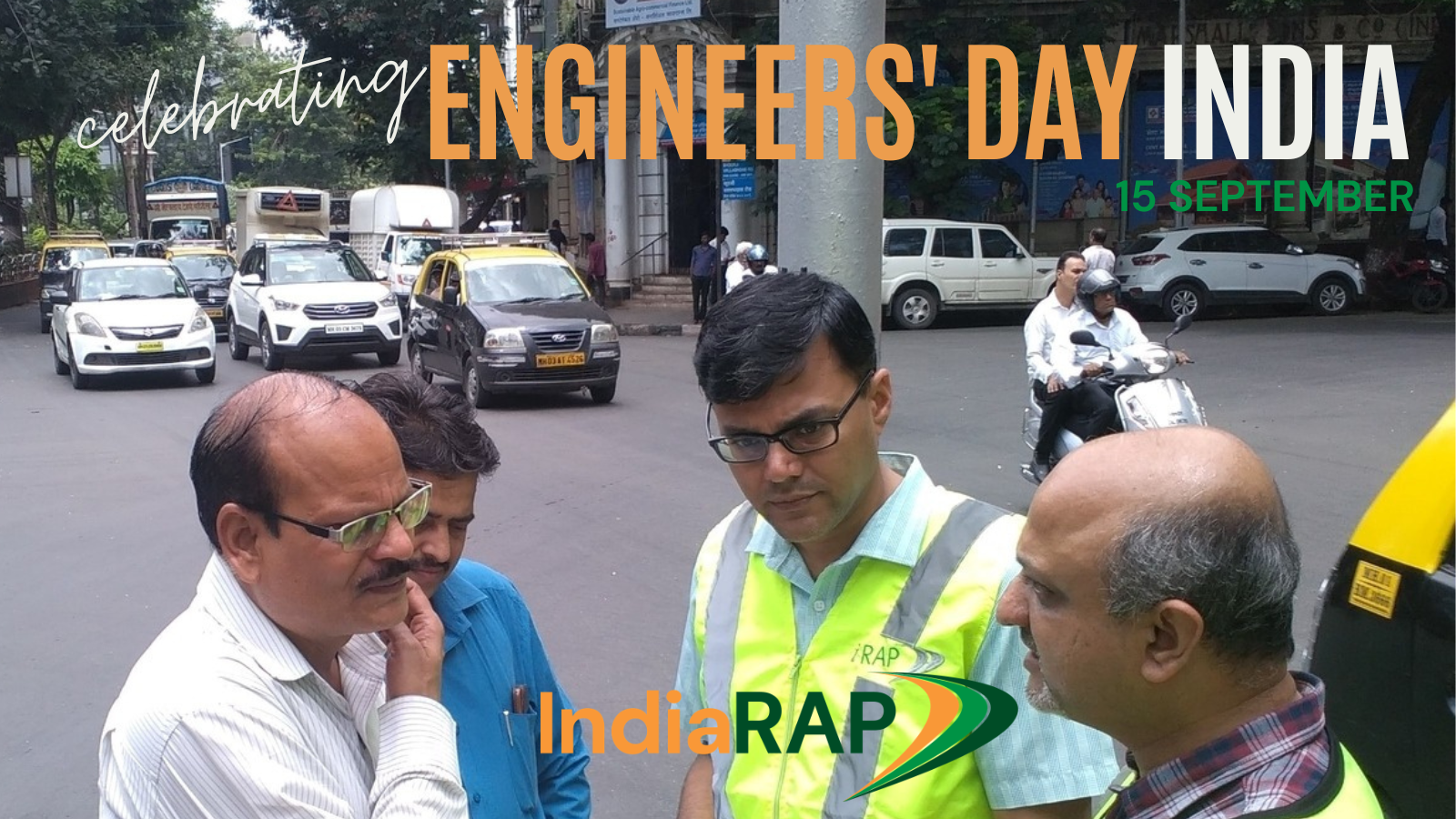
Today is India Engineers Day, and the International Road Assessment Programme (iRAP) and IndiaRAP are celebrating the crucial impact engineers are making to eliminate high-risk roads across the country.
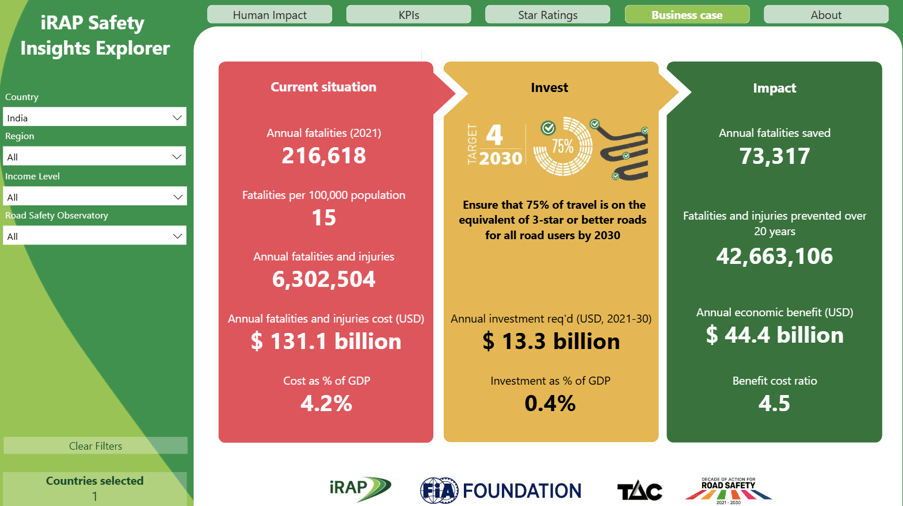
Engineers are central to India’s efforts to achieve UN Target 3 for safer road design and Target 4 for the majority of travel to be on 3-star or better standard roads by 2030. Achieving Target 4 stands to save over 73,000 lives and US$44.4 billion annually.
Engineers across government, consulting, academia and the private sector play a critical role in IndiaRAP’s impact — identifying risk, designing safer roads, applying evidence to investment decisions, and building the technical capability needed to embed road safety at every stage of the road infrastructure lifecycle.
Their role is particularly important as India rapidly expands and upgrades its road infrastructure. The National Highway network now extends to more than 146,000km, with growing high-speed corridors and improved connectivity to ports, industrial centres and cities across the country, supporting economic growth increasingly extending to Tier-II and Tier-III cities. Engineers are at the heart of ensuring that this unprecedented expansion delivers not only high-quality and efficient connectivity, but also roads that are safe for everyone.
Hosted by the Asian Institute of Transport Development (AITD), the IndiaRAP programme has now assessed over 61,000km of roads and designs and 166 schools, influencing the safety of US$6.3 billion in infrastructure investment.
The scale of capacity-building is equally significant. Over 9,000 engineers and road safety stakeholders have attended iRAP workshops in the country, and 4,000 people have joined iRAP global and online trainings.
IndiaRAP’s Learning Centre is supporting engineers and researchers to achieve tertiary and research outcomes, and more than 40 people are accredited to deliver iRAP specification services.
Recent work demonstrates how this engineering expertise is being applied across the country. Around 17,000km of roads in Karnataka have been assessed, while post-construction surveys in Uttar Pradesh, Tamil Nadu and Himachal Pradesh are helping inform future safety investments.
An innovative project in Bhubaneswar and Surat has assessed 650km of major roads and combined road safety and climate risk insights to support more resilient infrastructure investment.
IndiaRAP is applying advanced methodologies including Network Screening and Star Rating for Designs to support 3-star or better safety targets under the Asian Development Bank’s Results-based Lending programme in Maharashtra, Karnataka, Bihar and Manipur. Star Rating targets are also being embedded in World Bank-funded projects.
India is also developing a growing network of professionally trained road safety auditors. Building capability within this community to go beyond conventional road safety auditing — including more detailed crash data analysis and proactive risk assessment using approaches such as IndiaRAP Star Ratings — can further strengthen evidence-based identification and treatment of high-risk roads.
Engineers are also helping to extend safer-road practice beyond public networks. Private sector-operated roads, including the Safeway Concessions network, have been assessed, with investment mobilised to improve safety.
For IndiaRAP Technical Lead Jigesh Bhavsar, engineers have a critical role in turning road safety ambition into strategic action.
“As India continues to invest in an enormous and rapidly evolving road network, the expertise of its engineers will be fundamental to ensuring that investment delivers safer mobility for every road user – pedestrians, bicyclists, motorcyclists and vehicle occupants. Through IndiaRAP, we are proud to be equipping engineers with the methodology, tools and skills to create safe, inclusive and sustainable journeys nationwide,” he said.
Read more on IndiaRAP here.