RAP in Europe
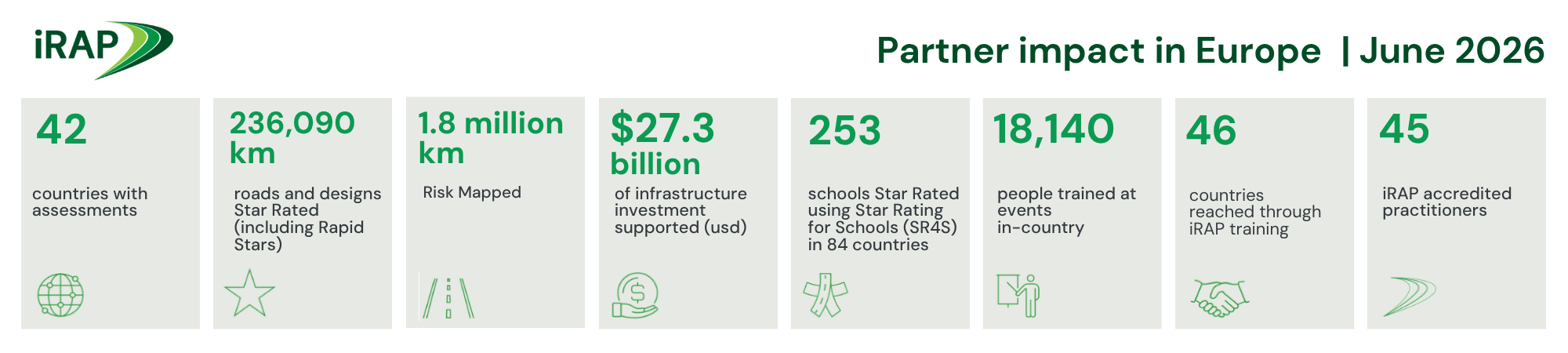
iRAP Partner Impact in Europe
The Road Assessment Programme (RAP) was founded by the leading European automobile clubs and safety charities working in partnership with their governments in the UK, Netherlands and Sweden. Since 2002, application of the iRAP methodology and tools has helped to eliminate high-risk roads across the region.*
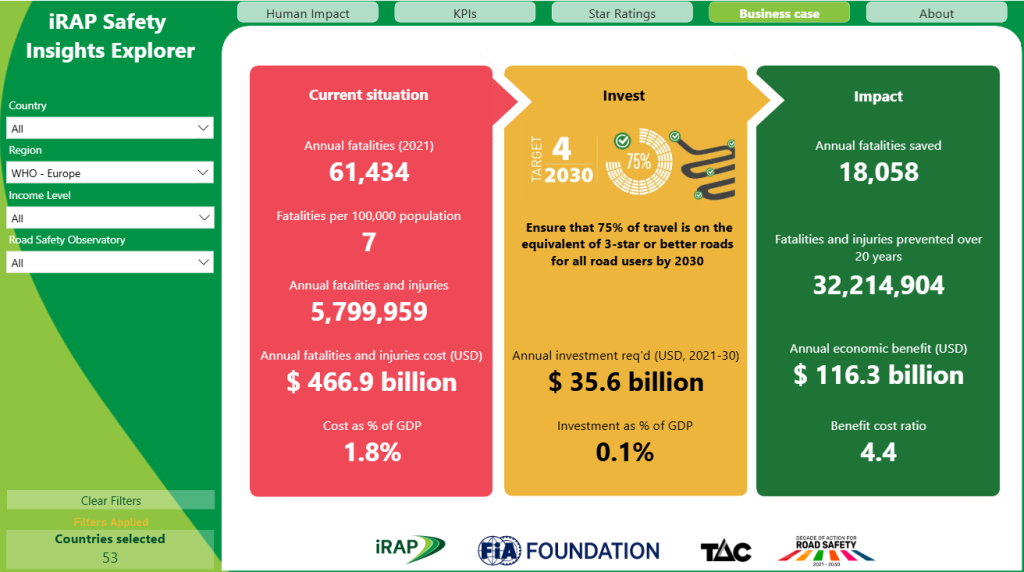
Achieving Target 4 by 2030 in Europe stands to save over 13,072 lives a year and 26 million deaths and serious injuries over 20 years, with an economic benefit of US$104.4 billion.
Strategic Projects Driving Road Safety Sata and Innovation
Large-scale transnational projects have helped to inform the safety of Europe’s road network, fostered collaborative partnerships and helped to drive innovation in the iRAP model and tools for regional and global benefit.
 | CycleRAP is an easy, affordable and fast method of evaluating road and bicycling infrastructure for safety. It aims to reduce crashes and improve safety for bicyclists and other light mobility users by identifying high risk locations without the need for crash data. | Click here for more information |
 | The EU-funded ‘Predictive Approaches for Safer Urban Environment’ (PHOEBE) project aims to increase the road safety of vulnerable road users, especially those who use active mobility and e-scooters through the inter-disciplinary power of traffic simulation and road safety assessment. | Click here for more information |
 | The “European Living Lab on Designing Sustainable Urban Mobility Towards Climate Neutral Cities’ (ELABORATOR) uses a holistic approach for planning, designing, implementing and deploying specific innovations and interventions towards safe, inclusive and sustainable urban mobility. The interventions will be demonstrated in 12 European cities. | Click here for more information |
 | IVORY is an industrial doctorates network aiming to develop a new framework for optimal integration of Artificial Intelligence (AI) in road safety research. With academic and industry partners from engineering, data science and ethics of technology disciplines, the project will train 13 researchers on new responsible AI applications for road user assistance and infrastructure safety management. | Click here for more information |
 | Connected and Adaptive Maintenance for Safer Urban and Secondary Roads (CAMBER) aims to develop and demonstrate improved safety monitoring across urban and secondary rural road networks by using real-time data to inform road maintenance systems and implementing cost-effective, proven interventions. | Click here for more information |
 | The European Commission’s Project SLAIN (Saving Lives Assessing and Improving TEN-T Road Network Safety) extended the skills and knowledge of partners performing network-wide road assessment in Croatia, Greece, Italy and Spain. | Click here for more information |
 | The SABRINA Danube Project tackled cycling infrastructure safety issues on existing, planned and missing cycling corridors crossing Austria, Bulgaria, Croatia, Czechia, Hungary, Moldova, Romania, Slovakia and Slovenia. | Click here for more information |
 | RADAR (Risk Assessment on Danube Area Roads) project identified risk on road networks and produced plans to systematically improve road infrastructure safety, supporting environmentally-friendly and safe transport systems which balance accessibility of urban and rural areas. | Click here for more information |
 | The SENSoR Project was the world’s largest transnational road infrastructure safety project. Co-financed by the South East Europe (SEE) Transnational Cooperation Programme, and building on the outstanding cooperation between automobile clubs, universities and road authorities, the project assessed the safety 19,315 km of roads across 14 European countries | Click here for more information |
 | The free RAP methodology tools and resources are evidence-based and designed to be integrated within agency road operations and investment planning, and support the implementation of the European Road Infrastructure Safety Management Directive (RISM). | Click here for more information |
Where We Work
Policies into Practice
Many countries are prioritising the safety of their road infrastructure by embedding 3-star or better safety targets in policy, aligned to UN Global Road Safety Performance Targets 3 and 4. A number of European countries have National Road Safety Strategies and Action Plans that include 3-star or better targets for safe road infrastructure.
- Croatia: 2021-2030 Croatia National Road Safety – Plan All new roads and existing roads carrying 75% of traffic to meet 3-star rating for all road users.
- Greece: 2021-2030 Greek National Road Safety Plan – 65% of TEN-T network to be greater than or equal to 3 stars by 2025 and 80% by 2030.
- United Kingdom: 2022 National Highways Strategic Road Network Star Rating Report – 96% of travel on National Highway’s network was on roads rated 3-stars or better in 2020, exceeding targets.
- United Kingdom: Institute of Environmental Management and Assessment (IEMA Guidelines) – Use iRAP Star Ratings to model road safety levels for all road users for Safe System application.
- Georgia: 2022-2025 Georgia National Road Safety Strategy – The systematic compilation of the Risk Mapping and Safety Rating of roads, and proactive assessment and more traditional reactive analysis of high concentration areas (black spots), are effective mechanisms for assessing the quality of road safety and related investments.
- Slovenia: 2013-2022 Slovenia National Road Safety Strategy – In accordance with European Directive 2008/96/ EC, a systematic verification process of road infrastructure security should be applied. As one of the suitable tools, RAP should be implemented.
How Safe are Europe’s Roads and the Business Case for Safer Roads
The iRAP Safety Insights Explorer shines a light on the true scale of road crashes, the safety of the world’s roads, and the positive impact that can be made with investment.
Meet the Europe Team
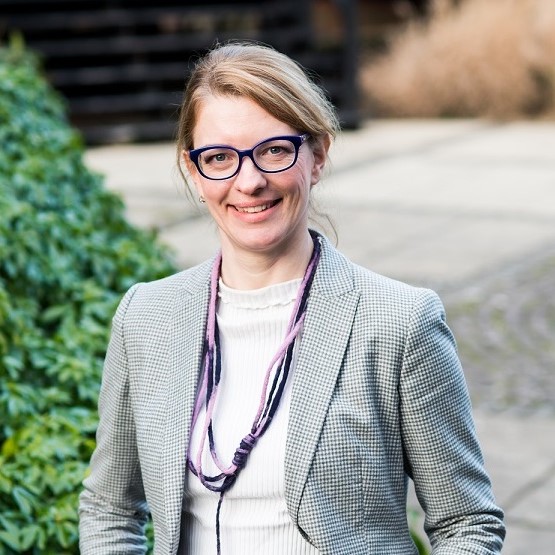
Safer Journeys Lead for Europe
Olivera Rozi
Safer Journeys Lead for Europe
Olivera Rozi has more than twenty years of experience leading European initiatives in urban mobility, transport, and road safety, collaborating closely with the European Commission and its agencies.
For over a decade, she has contributed actively within the iRAP community, directing and supporting international projects aimed at improving road safety and advancing sustainable transport. Her expertise spans evidence-based strategies for safer mobility, and she works with partners across Europe to reduce road fatalities and serious injuries.
Olivera’s commitment to safer infrastructure and the practical use of RAP methodologies is central to her impact, driving progress towards better outcomes in mobility and transport. A serious car injury early in life shaped her perspective and continues to fuel her dedication to safer roads

Global Safer Journeys Specialist
Samar Abouraad
Global Safer Journeys Specialist
Samar Abouraad is a road safety specialist with 30 years of experience in multi-sectoral projects, road safety and urban transport policy, audits, project management, and public participation. She holds a master’s in civil engineering from École Nationale des Ponts et Chaussées (Paris) and a civil engineering degree from Saint Joseph University (Lebanon).
She is currently Global Safer Journeys Specialist at iRAP. Previously, she served for 20 years as a senior expert with the Global Road Safety Partnership (GRSP). Her work includes road safety policies, master plans and analyses in France, Chad, Boston, and the Middle East and North Africa region. She was the team leader for the 1M Euro Euromed Road Safety Programme funded by the EU. She has extensive experience in capacity building, teaching, delivering training and workshops in road safety programme management for decision-makers, engineers, and university students.

Project Manager Coordinator in Europe
Racheal Nganwa
Project Manager Coordinator in Europe
Racheal Nganwa is a Civil Engineer with over 25 years of experience, specialising in highway design, transportation engineering, and Road Safety Engineering. Her career spans procurement, contract management, engineering design, feasibility studies, construction supervision, and preparation of key project documentation. She has worked extensively with Regional Organisations, Road Authorities, Development Agencies, and Private Sector to advance safer resilient transportation.
Racheal has led road safety initiatives, policy reviews, and programme management across multiple countries. Her achievements include coordinating CEEQUAL efforts for the London 2012 Olympics, establishing the Road Safety Unit at the Uganda Road Authority, and supporting regional integration through cross‑border transport initiatives across six East and Central African countries.
Her passion for road safety is rooted in her engineering ethos: the belief that well‑designed, forgiving roads can influence crash outcomes long before they occur. This principle drives her commitment to safer mobility for all.

Training and Accreditation Lead
Franco Azzato
Training and Accreditation Lead
Franco Azzato is an Industrial-Mechanical Engineer with more than seven years of experience in road safety. He has worked extensively across Latin America, supporting initiatives focused on motorcycle safety and child road safety before joining the Safe Infrastructure field with iRAP in 2022.
His work combines technical knowledge with practical implementation, helping governments and partners translate evidence into safer roads and policies. Franco is committed to strengthening local capacity, believing that road safety should be approached as a shared responsibility and a fundamental right.
Through his professional role, he aims to contribute to fewer people and families experiencing the irreversible impact of road crashes.

Sustainable Mobility Coordinator
Minh Vo
Sustainable Mobility Coordinator
Minh Vo holds an MSc in Urban Planning and brings expertise in road safety, sustainable mobility, and monitoring and evaluation. At iRAP, she supports the Star Rating for Schools (SR4S) and CycleRAP programmes, advancing evidence-based infrastructure assessments and improvements while strengthening partnerships with governments, development agencies, and communities worldwide.
Her background uniquely bridges technical analysis and community engagement, with a strong focus on developing climate-resilient and inclusive transportation systems that align with the UN Decade of Sustainable Transport (2026–2035). Minh is passionate about translating data and research into real-world solutions that protect vulnerable road users, particularly children and cyclists.
A recipient of the Australia Awards Scholarships and the 2025 Peter Kissinger Memorial Award, she embodies both professional excellence and a genuine commitment to saving lives through safer, more sustainable streets for all.

Project Financial Support Manager, European Institute of Road Assessment

Director and Senior Road Safety Expert – EIRA

Project Support Officer – EIRA
Latest News from Europe
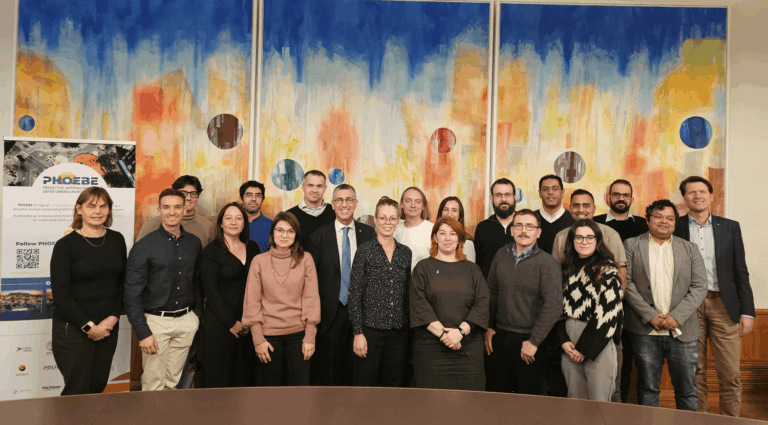
Project PHOEBE celebrates its first anniversary at the Technical University of Munich
A bright future for #RAPinEurope
Road Safety Performance and Investment Opportunities – Britain’s Motorways and ‘A’ Roads Crash Risk Mapping Results 2023

Europe News: iRAP featured in M Sweden – 100 years of road safety work report
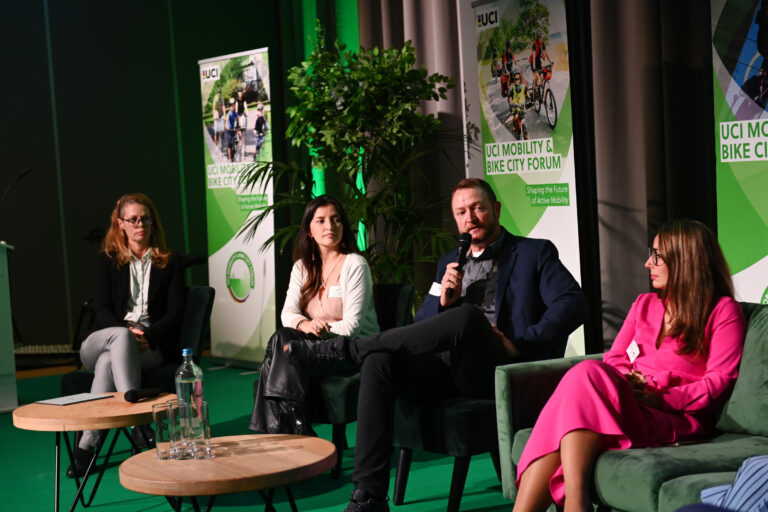
CycleRAP News: UCI Mobility & Bike City Forum 2023 Summary
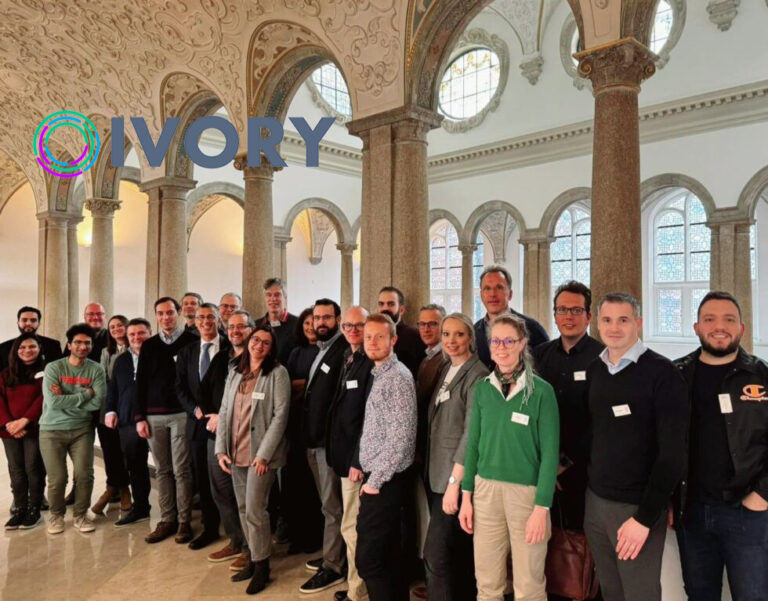
IVORY kicks off for AI for Vision Zero in Road Safety
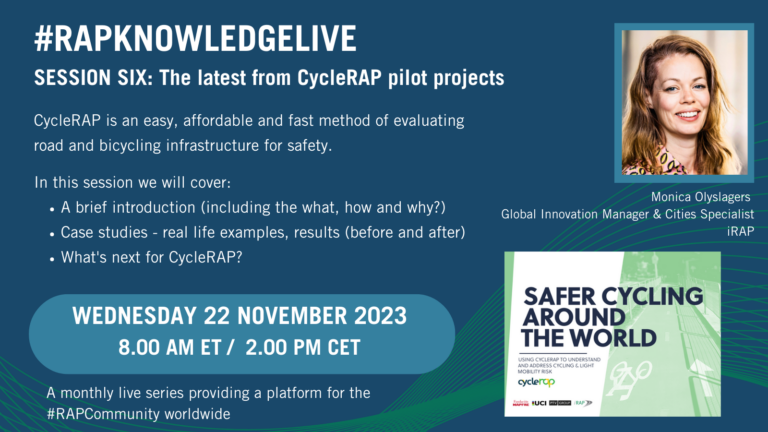
Missed the #RAPKnowledgeLive session on the latest from CycleRAP? Recording is now available!