
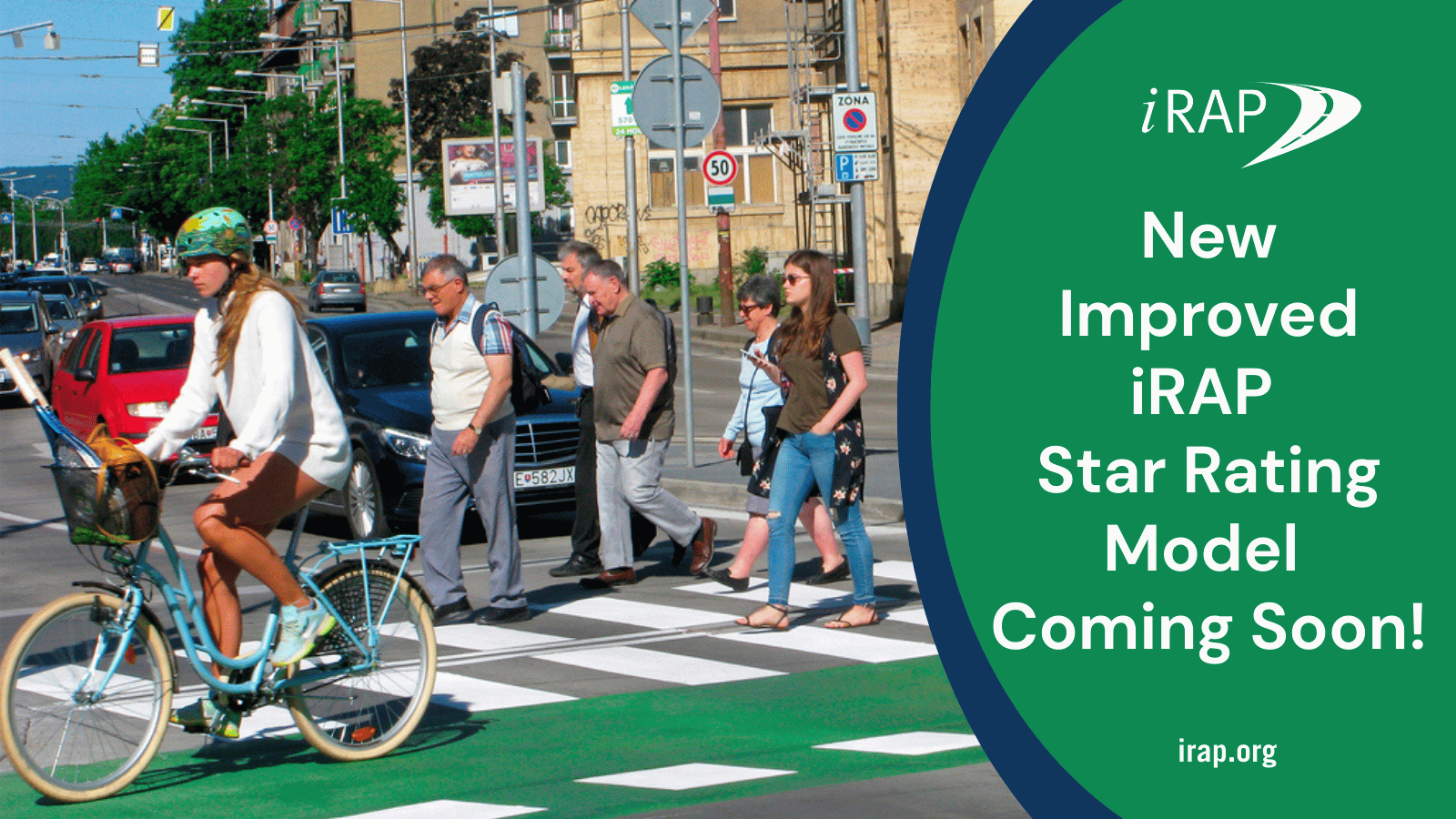
Dankzij de inspanningen van onze partners wereldwijd heeft de sterrenbeoordelingsmethodologie van iRAP de basis gevormd voor verkeersveiligheidsbeoordelingen in meer dan 140 landen. Deze beoordeling heeft geleid tot wegverbeteringen met 3 sterren of meer, die de reiservaring van voetgangers, fietsers, motorrijders en inzittenden van voertuigen over de hele wereld verbeteren.
Op basis van de meest recente wereldwijde inzichten in het risico op verkeersongevallen wordt het huidige sterrenbeoordelingsmodel (versie 3.02) van iRAP bijgewerkt. Het nieuwe model (versie 3.10), ontwikkeld door experts en gebaseerd op toonaangevend onderzoek naar verkeersveiligheid, zal in mei 2026 online beschikbaar komen via het online platform ViDA van iRAP.
Waarom het model verandert
iRAP streeft ernaar ervoor te zorgen dat onze methodologieën de meest recente onder onderzoeksresultaten, bewijzen en ervaringen van onze partners wereldwijd met het gebruik van iRAP-tools weerspiegelen.
De introductie van versie 3.10 draagt direct bij aan de Decennium van actie van de Verenigde Naties (VN) voor verkeersveiligheid en de VN-decennium voor duurzaam transport door een strenger, op bewijs gebaseerd kader te bieden ter bescherming van kwetsbare weggebruikers en ter bevordering van veiligere en rechtvaardigere transportnetwerken.
Versie 3.10 is het resultaat van een uitgebreide vijfjarige evaluatie van het onderzoek dat ten grondslag ligt aan de iRAP-methodologieën, uitgevoerd onder begeleiding van de iRAP Wereldwijd Technisch Comité. De belangrijkste drijfveren achter de verandering zijn onder meer:
- Recent wereldwijd bewijsmateriaal: Bevat de meest recente onder onderzoeksresultaten en wereldwijde gegevens over het risico op verkeersongevallen.
- Veilige systeemafstemming: Stemt risicofactoren en de relatie tussen letsel af op de principes van het Safe System.
- Focus op kwetsbare verkeersdeelnemers (VRU's): Verbetert de nauwkeurigheid van risicobeoordelingen, met name voor voetgangers en fietsers, en in mindere mate voor motorrijders.
- Robuuste resultaten: Zorgt ervoor dat beoordelingen betrouwbaar, herhaalbaar en afgestemd blijven op de daadwerkelijke letseluitkomsten in de praktijk.
Belangrijkste wijzigingen
De update zal verschillende verbeteringen met zich meebrengen, waaronder:
- Belangrijke VRU-updates: Aanzienlijke wijzigingen in de modellen voor voetgangers en fietsers, waaronder een nieuw type ongeval: "Fietseroversteek".
- Gedetailleerde risicofactoren: Implementatie van snelheidsverhogingen van 1 km/u en verhogingen van 1.000 voertuigen per rijstrook voor het uitgaande verkeer.
- Uniforme bandindeling: Een consistent sterrenclassificatiesysteem voor zowel voetgangers- als fietsmodellen om een uniforme interpretatie te garanderen.
- Nul sterren beoordelingEen nieuwe 'nulsterren'-categorie helpt bij het onderscheiden van weggedeelten met een extreem hoog risico, zodat deze prioriteit krijgen bij de behandeling ervan.
- Decimale sterrenbeoordelingen: Een meer verfijnd en genuanceerd begrip van verkeersveiligheid dat verder gaat dan de traditionele drempelwaarden van de Star-score.
- Functionaliteit voor bedrijfssnelheid: Nieuwe ViDA-functies stellen gebruikers in staat om sterrenbeoordelingen te genereren op basis van alleen de bedrijfssnelheden.
Invloed op de beoordeling van sterrenwaarderingen
De overgang naar versie 3.10 zal enkele gevolgen hebben voor de gegevensverwerking en rapportage, waaronder:
- Gegevensformaat: Versie 3.10 vereist een ander uploadformaat. Een nieuwe Specificaties voor het uploaden van bestanden Er zal een nieuwe versie worden uitgebracht en een conversietool worden aangeboden om de overgang te ondersteunen.
- Gegevensbeheer: Bestaande assessments die zijn uitgevoerd met versie 3.02 worden niet automatisch bijgewerkt in ViDA. Gebruikers kunnen ervoor kiezen om de huidige resultaten te behouden of de assessment opnieuw uit te voeren met versie 3.10.
- Technische nauwkeurigheid: Het model geeft een nauwkeuriger beeld van de risico's, waardoor veiligheidsmaatregelen beter gericht kunnen worden.
- Wijzigingen in sterrenwaardering: De sterrenclassificatie kan per weggedeelte verschillen. Over het algemeen geldt dat een score van 3 sterren of hoger voor voetgangers en fietsers meer beschermende infrastructuur of lagere snelheden vereist.
- Codering en meting: De updates omvatten herziene categorieën (bijv. kwaliteit van het trottoir) en aangepaste meetregels, zoals het meten van de afstand van het trottoir tot de stoeprand.
- Vergelijkingsbeperkingen: Vanwege de ingrijpende wijzigingen in de modellen voor fietsers en voetgangers, mogen de resultaten van versie 3.02 en 3.10 niet rechtstreeks met elkaar worden vergeleken voor deze groepen weggebruikers. De wijzigingen in het motorfietsmodel zijn relatief beperkt, maar het is niet aan te raden de resultaten van de twee versies te vergelijken, aangezien de updates van invloed zijn op de sterrenbeoordelingen voor sommige weg- en kruispuntconfiguraties.
Volgende stappen
Versie 3.10 wordt in mei 2026 op ViDA uitgebracht. Er is op dit moment geen actie vereist.
Om u te helpen de wijzigingen te begrijpen, hebben we het volgende gepubliceerd:
- Toelichting op de update van het iRAP-sterrenclassificatiemodel: Dit document beschrijft de wijzigingen die zijn aangebracht in de modellen voor het risico op verkeersongevallen, de risicofactoren en de codeerrichtlijnen.
- Referentiehandleiding voor de iRAP-methodologie: Deze samenvattende handleiding beschrijft de iRAP-modellen en risicofactoren volledig, evenals het bewijsmateriaal dat hieraan ten grondslag ligt.
- Veelgestelde vragen (FAQ): Antwoorden op veelgestelde vragen over techniek en gegevensbeheer.
In de komende maanden zal iRAP specificatiedocumenten voor versie 3.10 publiceren, inclusief bijgewerkte versies van de Specificaties voor het uploaden van bestanden, iRAP Codeerhandleiding en de iRAP Sterrenbeoordeling en investeringsplanningshandleiding.
Voorafgaand aan de lancering in mei raden we u aan de verstrekte documentatie door te nemen.
We zullen in de aanloop naar de lancering van de modelupdate regelmatig met u communiceren en een reeks informatieve webinars organiseren om ervoor te zorgen dat u volledig bent voorbereid op de overgang.
Houd de aankondigingen voor aankomende webinars in de gaten!
ViDA-gebruikers worden per e-mail op de hoogte gesteld van de lancering van versie 3.10 van ViDA.
Voor ondersteuning bij lopende projecten of gegevensbeheer kunt u contact opnemen met support@irap.org.
Dankbetuigingen
De ontwikkeling en release van versie 3.10 zijn mogelijk gemaakt dankzij de steun en samenwerking van de vele partners en supporters van iRAP. We zijn FIA Foundation zeer dankbaar voor hun voortdurende inzet om de wereldwijde implementatie van iRAP-tools, waaronder ViDA, te financieren en mogelijk te maken. We bedanken ook onze innovatiepartners en Centres of Excellence voor hun technische expertise en bijdragen aan toegepast onderzoek; de leden van het Global Technical Committee voor hun begeleiding, beoordeling en waarborging van de methodologische integriteit; en de Europese Commissie en UKRI voor hun steun via gezamenlijke onderzoeksinitiatieven, waaronder het PHOEBE-project. Hun gezamenlijke leiderschap en expertise zorgen ervoor dat iRAP-modellen gebaseerd blijven op bewijs, wereldwijd relevant zijn en aansluiten bij de gedeelde ambitie om wereldwijd wegen met een hoog risico te elimineren.
De verbeteringen aan het model zijn ontwikkeld in samenwerking met het gezamenlijke PHOEBE-project, gefinancierd door de Europese Commissie en UKRI, en zijn uitgebreid getest met praktijkgegevens. Het bijgewerkte voetgangersmodel werd in 2023 ingezet in het Star Ratings for Schools (SR4S)-programma en is sindsdien veelvuldig gebruikt door partners wereldwijd, met name door de FIA Mobility-clubs.