iRAP CEO Greg Smith recently joined an expert panel at the ITS World Congress in Gangneung, sharing how intelligent transport systems, traffic simulation and road safety data can work together to predict and improve safety across entire road networks.
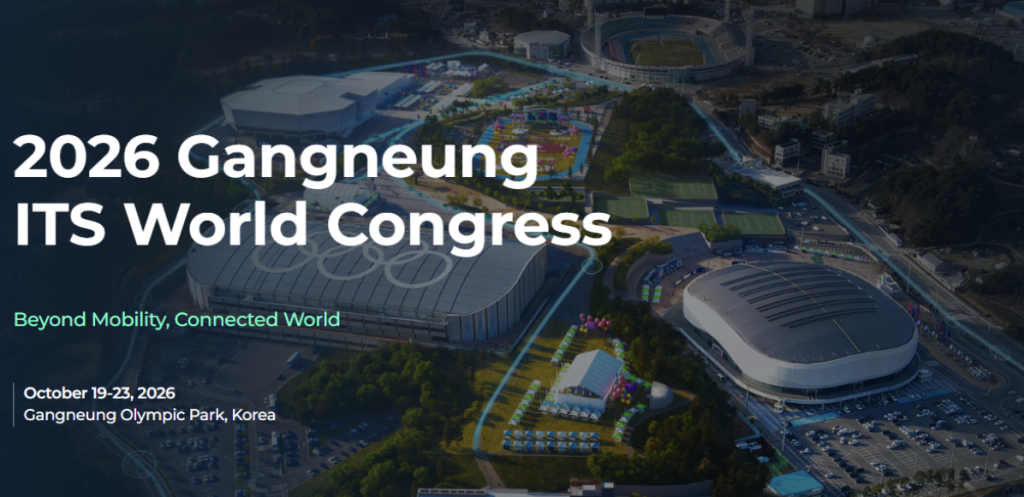
Held from 19–23 October under the theme Beyond Mobility, Connected World, the Congress brought together 60,000 attendees from 91 countries including global transport leaders, researchers, policymakers and technology innovators to explore how intelligent transport systems can create safer, smarter and more connected mobility.
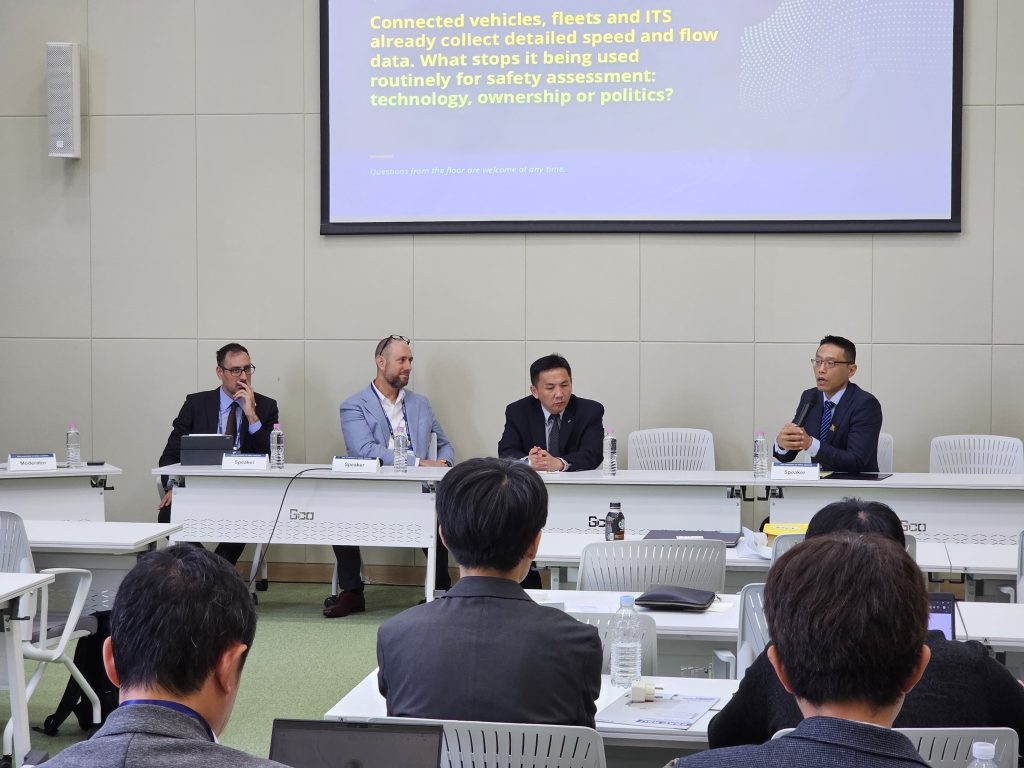
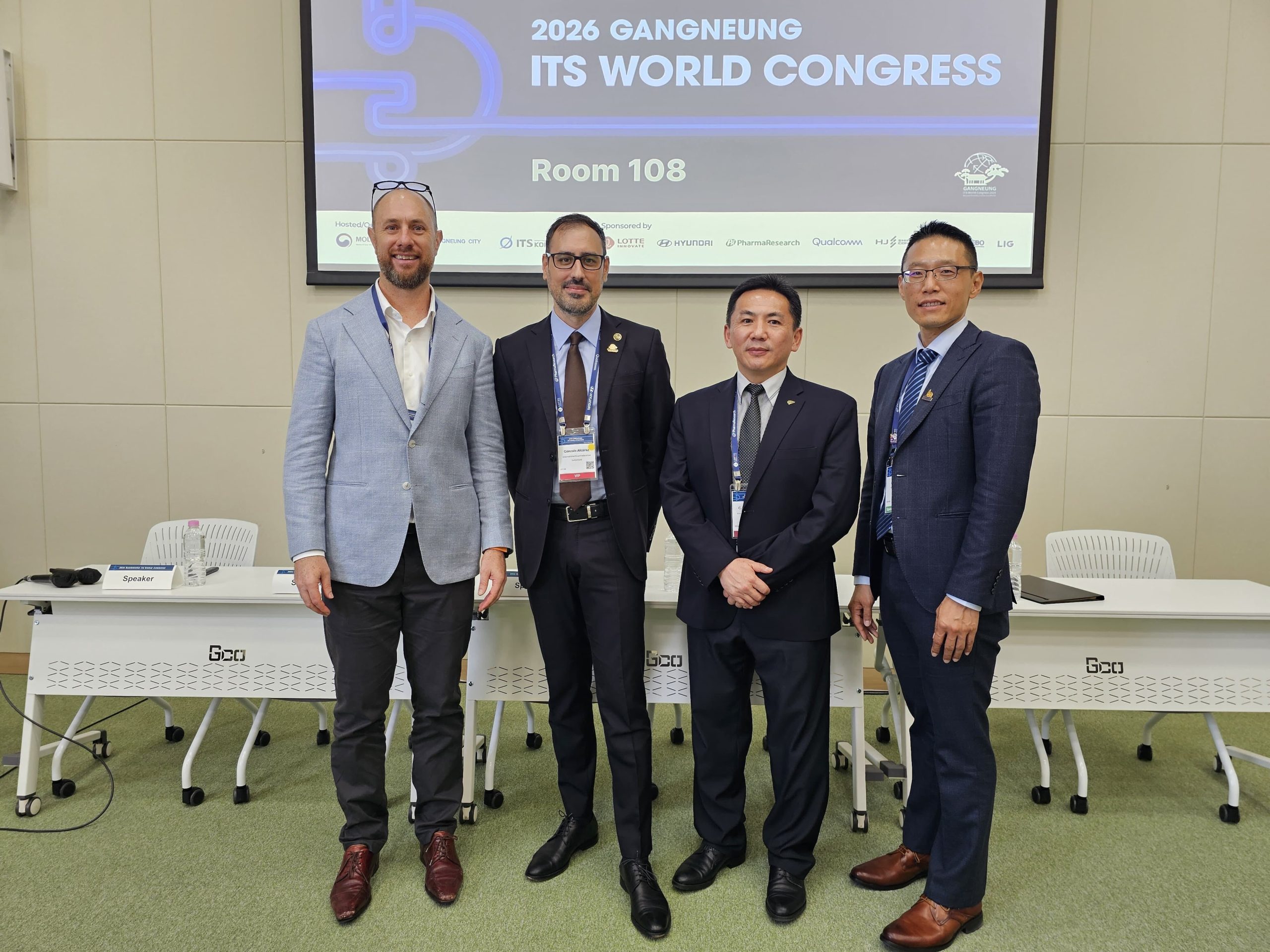
Greg joined global experts in a Special Interest Session entitled Road Safety Across Regions: Worldwide Data-Driven Approaches, exploring how data, technology and regional collaboration are accelerating progress towards safer roads.
The session brought together perspectives from Europe, Asia and North America, with Greg joining Gonzalo Alcaraz, Director General of the International Road Federation (IRF) (Moderator) and speakers: Dr David Yang, President and Executive Director of the AAA Foundation for Traffic Safety; and Professor Kun-Feng Ken Wu from the National Yang Ming Chiao Tung University.
The discussion examined how different regions are applying intelligent transport systems to address road safety challenges, including AI-driven safety prediction, connected vehicle technologies, data-centric infrastructure management and human-centred road design. Particular attention was given to protecting pedestrians, cyclists and other vulnerable road users.
Greg showcased how iRAP and the European Union’s PHOEBE Project are connecting traffic simulation with iRAP Star Ratings to predict how road safety performance can change across an entire network following an intervention.
Using examples from Athens, Valencia and the West Midlands in the United Kingdom, he demonstrated how combining traffic modelling with road infrastructure risk assessment can help decision-makers understand the wider safety impacts of transport interventions and make more informed investment choices.
The work highlights the potential to move beyond assessing individual roads or locations towards understanding how changes in traffic patterns and infrastructure affect safety across whole networks.
Greg also explored how Star Rating Estimates can scale this approach to larger networks, and the potential of dynamic, hourly risk ratings to support intelligent transport systems on high-speed roads.
This represents an important opportunity for ITS: bringing together information about how roads are designed, how traffic moves and how risk changes over time to support more proactive safety management.
The session highlighted the importance of shared standards, real-time data, Cooperative Intelligent Transport Systems (C-ITS), vehicle-to-everything (V2X) communication and governance frameworks that encourage proactive safety investment.
For iRAP, these developments reinforce the value of making road infrastructure risk visible, measurable and actionable – and connecting that intelligence with the rapidly evolving capabilities of intelligent transport systems.
Learn more about the recently completed PHOEBE Project here.