
Madagascar’s Agence Routière, with support from the European Investment Bank (EIB) and the European Commission, is advancing safer journeys to school with strategic road improvements along National Road RN6. From 67 schools assessed, improvements are benefiting 27 schools and almost 20,000 children, with further upgrades proposed.
iRAP welcomes the initiative, which has seen school locations achieve safety ratings of 3 stars or better, and congratulates the agency and its project partners on their commitment to children’s safety, shared at two major events this month.
Transforming school journeys on National Road RN6
The road network modernisation project along National Road RN6, from Ambanja to Ambilobe and Antsiranana in Madagascar, has been taking shape since 2020. Funded by the EIB and European Commission, the project illustrates the opportunity to combine better connectivity with safer journeys.
Beyond improved road surfaces and transport efficiency, the project has incorporated important safety and road management features including: traffic calming measures in urban areas; safer pedestrian crossings; and weigh station facilities to protect road assets and improve freight management.
Safer school journeys: From 1 to 3-stars
Assessments of typical school locations in both urban and rural settings, and use of Star Rating for Schools in the 2024 evaluation report, has helped illustrate how targeted engineering measures can improve safety and support investment decisions.
The results have been significant:
- 27 urban schools, serving 19,828 children, have been upgraded, with improvements designed to make the surrounding road environment safer
- 40 rural schools, serving a further 9,188 children, have pedestrian crossings and rumble strips in place. Further upgrades, including speed bumps and raised pedestrian crossings are proposed.
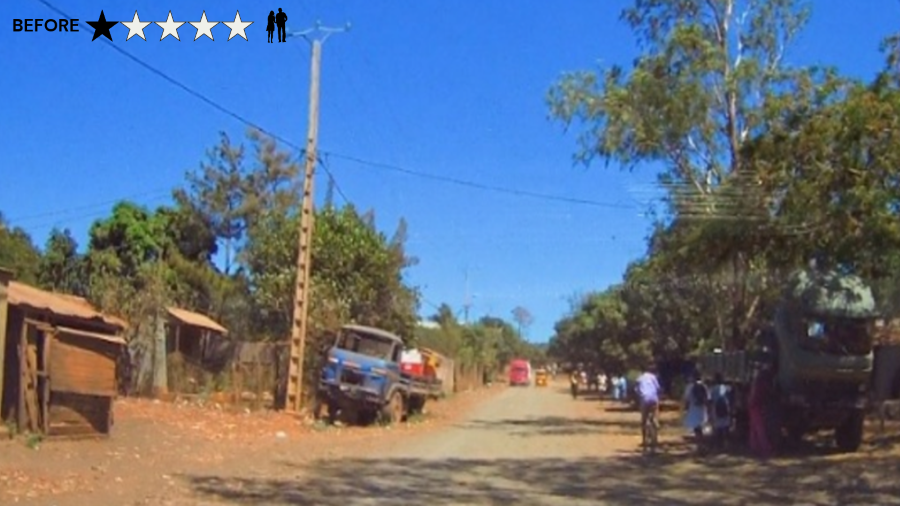
School crossing in Anivorano, Madagascar: Before improvement (2022).
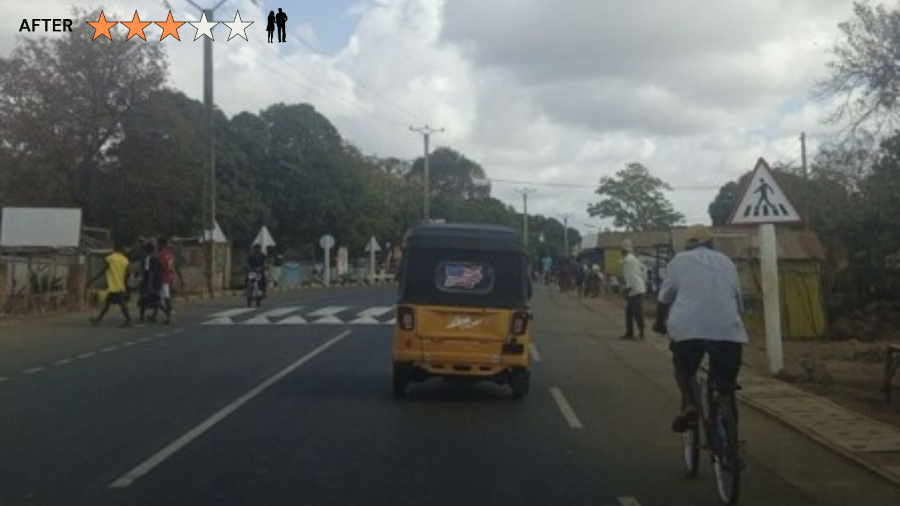
After improvement (2026) (Images credit: iRAP)
iRAP’s Safer Journeys Lead for Africa Nathalie Chiavassa said, “Every child deserves a safe journey to and from school. This programme demonstrates the potential and importance of putting children’s safety at the heart of road infrastructure planning and major transport investment to achieve this ambition.”
While challenges remain, particularly in managing vehicle overloading and speeds, the improvements demonstrate how better connectivity and economic development can go hand in hand with safer journeys and communities.
Events harness momentum for safer school journeys nationwide
A Round Table on Road Safety Around Schools, hosted by Amend, the FIA Foundation and the Agence Routière in Antananarivo on 3 November brought together 40 participants to discuss an ambitious roadmap for expanding and replicating effective road safety measures across Madagascar.
Participants included representatives from the European Union Delegation, the Agence Française de Développement (AFD), iRAP, the TYPSA Foundation, CODATU, and NGO Lalana. Malagasy authorities were represented by the Commune Urbaine d’Antananarivo, the Ministries of Public Works and National Education, the Directorates General of Land Transport and Road Safety, and the National Police.
Amend shared their complementary Safe Schools Africa work on the RN6 as part of their technical assistance with Agence Routière and Lalana, supported by the FIA Foundation and the TYPSA Foundation.
Nathalie joined a panel discussion exploring how lessons from current projects, including the RN6 improvements, could be applied to other road projects across the country. The panel was moderated by Amend Executive Director Jeffrey Witte with Christophe Rakotomavo, Director General of the Agence Routière, and Lydia Razafindrahona of AFD Madagascar.
The General Director of the Agence Routière de Madagascar, Mr Christophe Rakotomavo said, “We want to be accountable for our work and our work should matter for our people.”
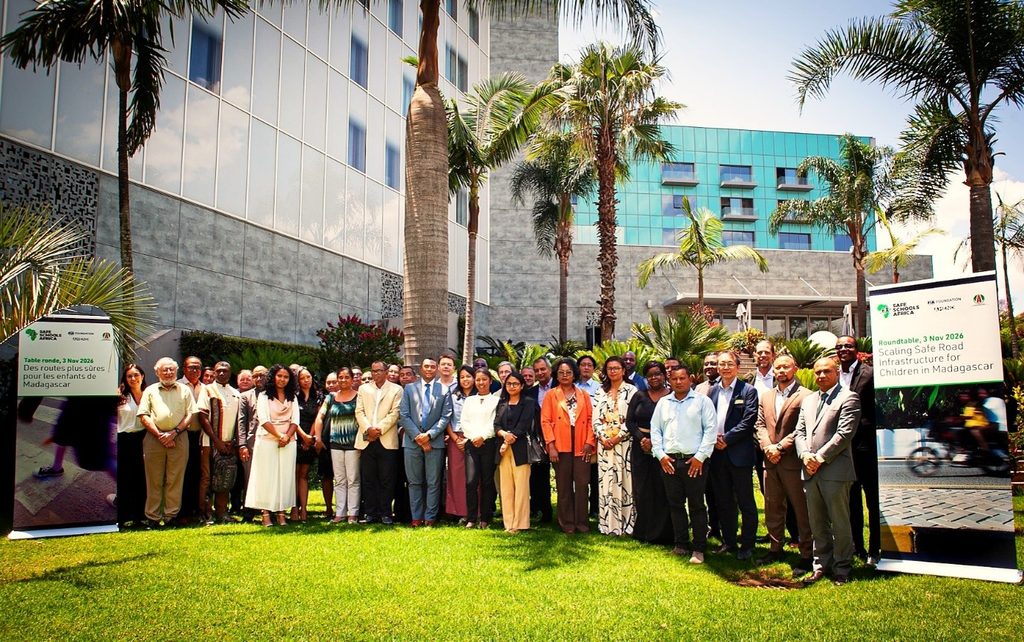
Participants at the Safe Schools Africa Roundtable in Antananarivo on November 3, 2026 (Image credit: Amend)
The RN6 work also reached an international audience at the 2026 PIARC International Seminar held in Madagascar from 4 to 6 November. The seminar, focused on resilient and safe road freight systems, brought together practitioners, decision-makers, researchers and development partners, and placed international knowledge sharing and solutions for the transport sector in focus.
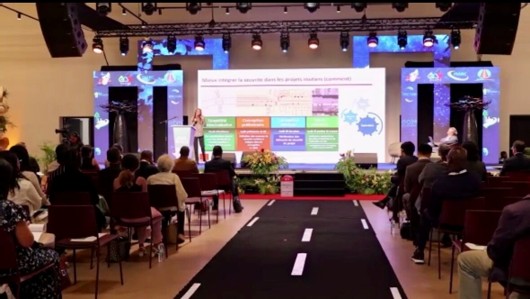
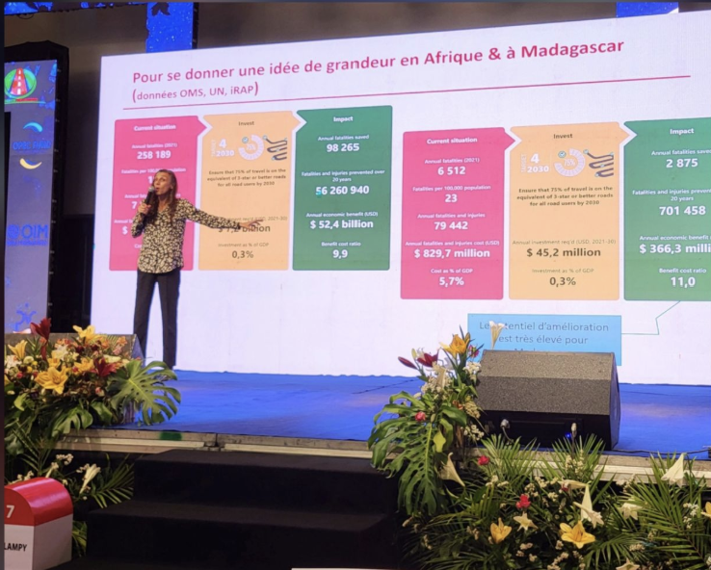
Nathalie Chiavassa, iRAP presented at the 2026 PIARC International Seminar in Madagascar (Images credit: iRAP)
Nathalie participated in both events, contributing iRAP’s expertise and supporting collaboration on practical approaches to safer road infrastructure and school journeys.
“The future of mobility depends on more than safer infrastructure alone,” Nathalie said. “It requires four complementary pillars – safe and inclusive infrastructure rated 3-star or better for all road users, putting road users at the centre of the system, strong partnerships, and international knowledge sharing to help translate global evidence, innovation and experience into practical local solutions.”
iRAP welcomes this shared ambition to advance these priorities in Madagascar. By keeping children and other vulnerable road users at the heart of infrastructure decisions, partners can help shape safer, more sustainable and more inclusive journeys for all.
Lead image credit: Pexels Solomon Onyeagoro