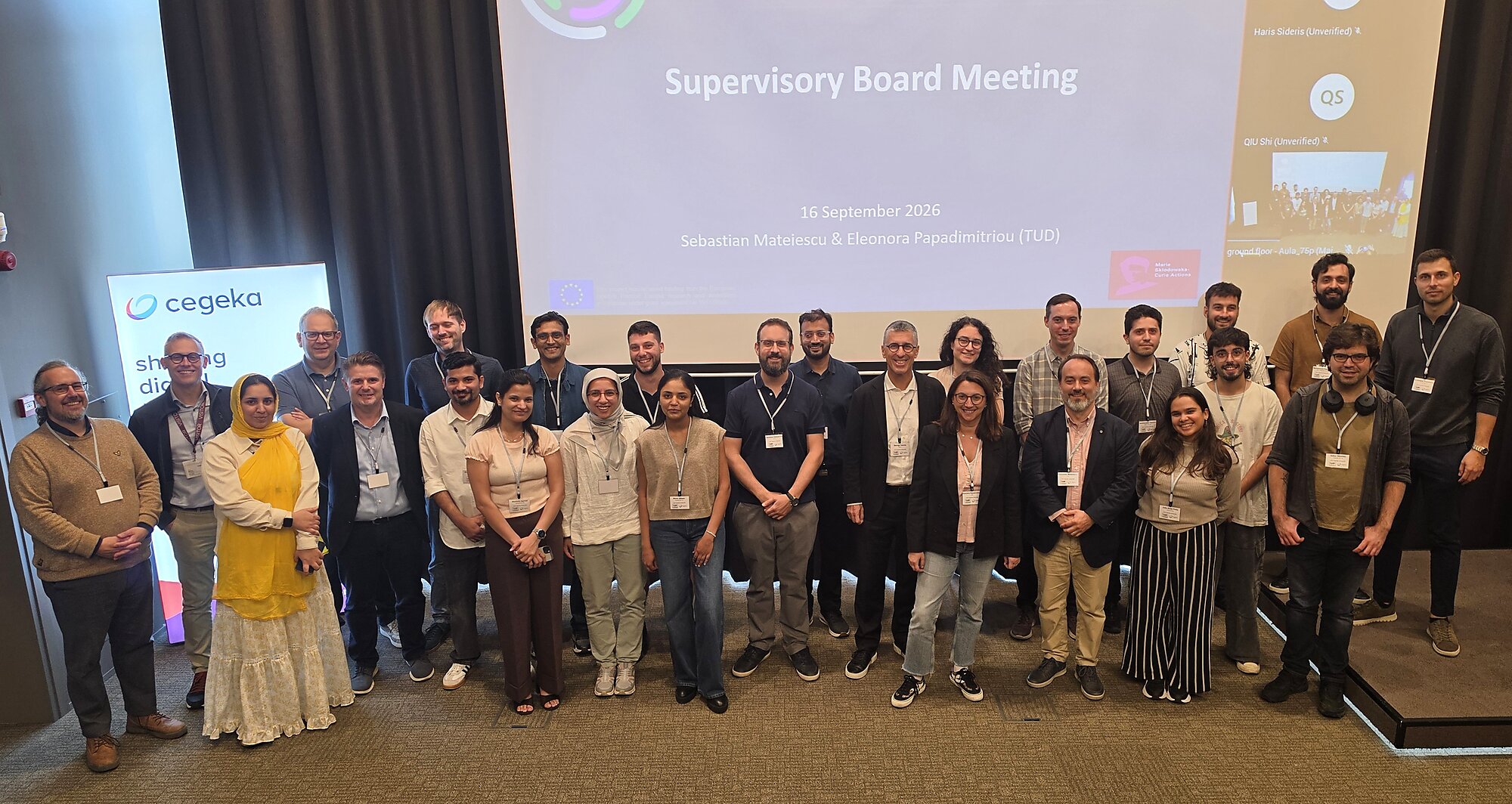
The IVORY Network held its Consortium Meeting and Network-Wide Training from 16–19 September 2026, hosted by Hasselt University (UHasselt) in Belgium.
IVORY – ‘AI for Vision Zero in Road Safety’ – is an industrial doctorates network, aiming to develop a new framework for the integration of AI in road safety and create a new generation of leading researchers in the field, in order to address the UN Sustainable Development Goals target 3.6 (halving the number of traffic fatalities by 2030) and EC ‘Vision Zero’ strategy (eliminating traffic fatalities by 2050).
IVORY consists of four academic and eight non-academic beneficiaries, as well as eight associated partners, joining from engineering, data science and ethics of technology disciplines from 10 countries. It is training 15 researchers on new responsible AI applications for road user assistance and infrastructure safety management, and will create a sustainable learning and networking platform.
IVORY brings the world’s best minds and institutional partners together as a collaboration of Delft University of Technology (Netherlands), National Technical University of Athens (Greece), Universiteit Hasselt (Belgium), University of Zagreb Faculty of Transport and Traffic Sciences (FPZ) (Croatia), Agilysis (UK), iRAP, Royal HaskoningDHV (Netherlands), CardioID Technologies (Portugal), PSA-LAB (France), OSeven (Greece), ABEONA Consult (Belgium) and Cegeka (Belgium). Additional secondment partners include Nederlandse Organisatie Voor Toegepast Natuurwetenscha Ppelijk Onderzoek (TNO), the European Institute of Road Assessment (EIRA), FRED Engineering, Traffic Injury Research Foundation of Canada (TIRF), Instituto Superior de Engenharia de Lisboa (ISEL), Transport for West Midlands, Infranea, Stellantis/Renault Group LAB, Royal HaskoningDHV, and Citymesh NV.
Over three days, doctoral candidates, supervisors, and partners came together to review research progress, coordinate the network’s activities, and build new skills through dedicated training sessions.
Network-wide training
The training programme brought doctoral candidates together for two dedicated sessions:
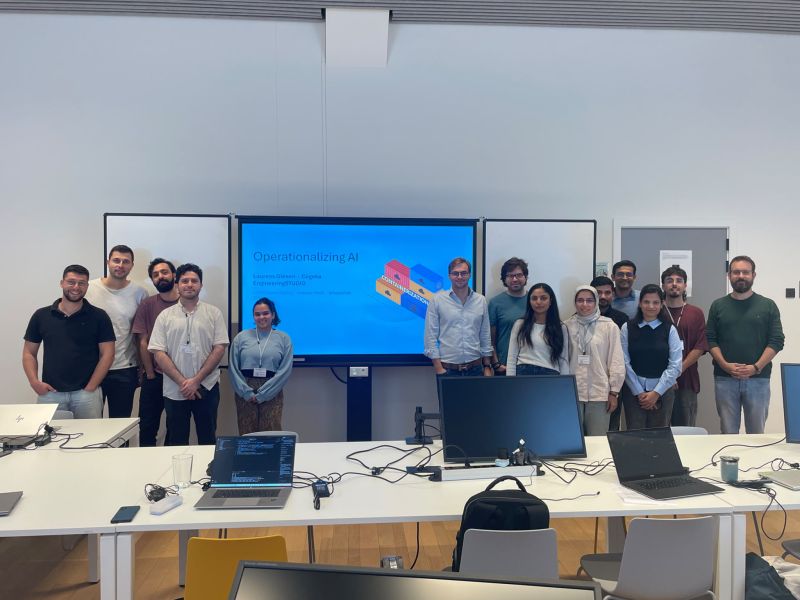
- Operationalizing AI, delivered by Cegeka, introduced the practical challenges of moving models and methods from research settings into real-world deployment;
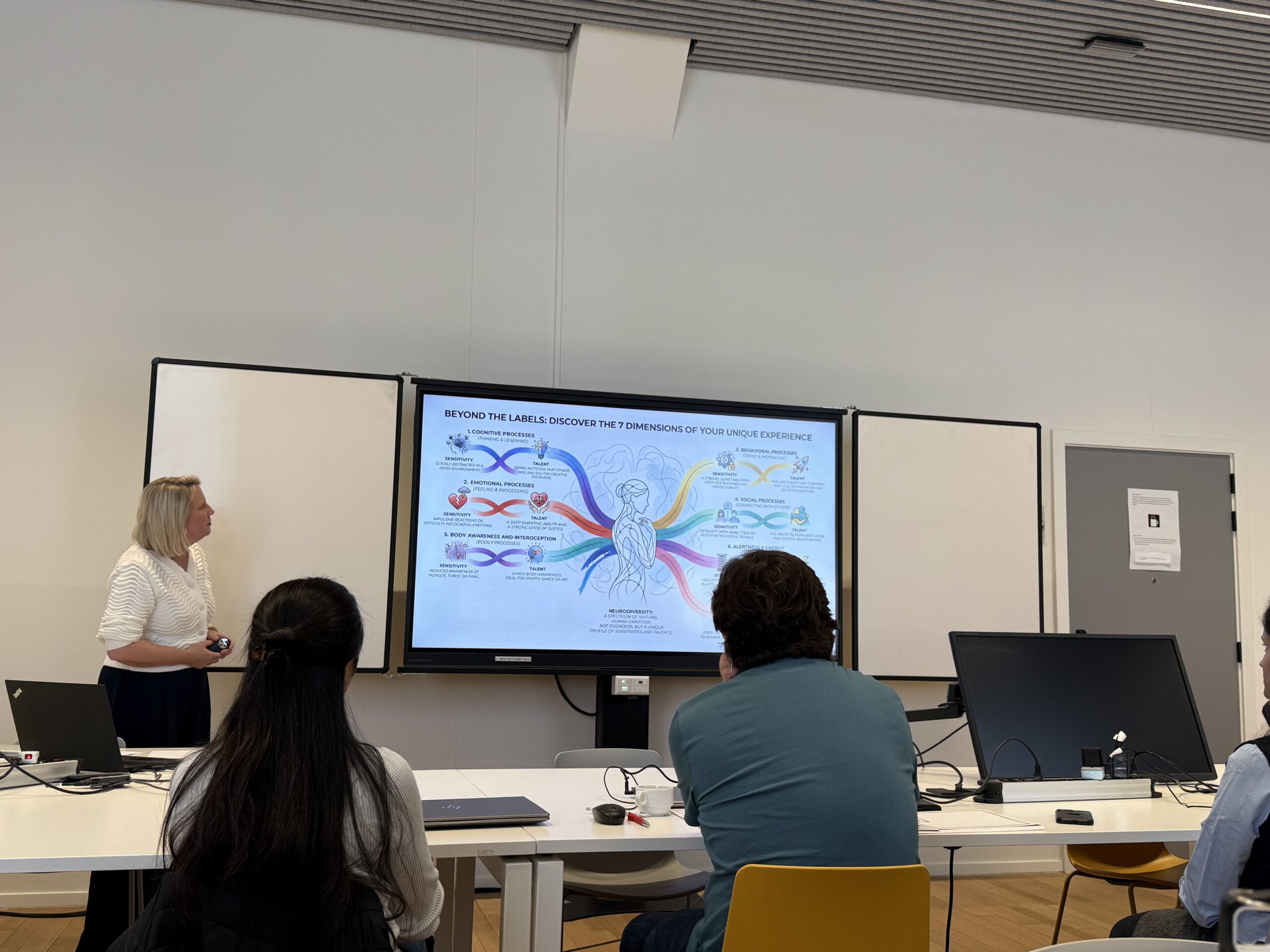
- Equality, Diversity & Inclusion (EDI), delivered by Haskoning, explored inclusive research design and the broader culture of the network.
Research progress and discussions
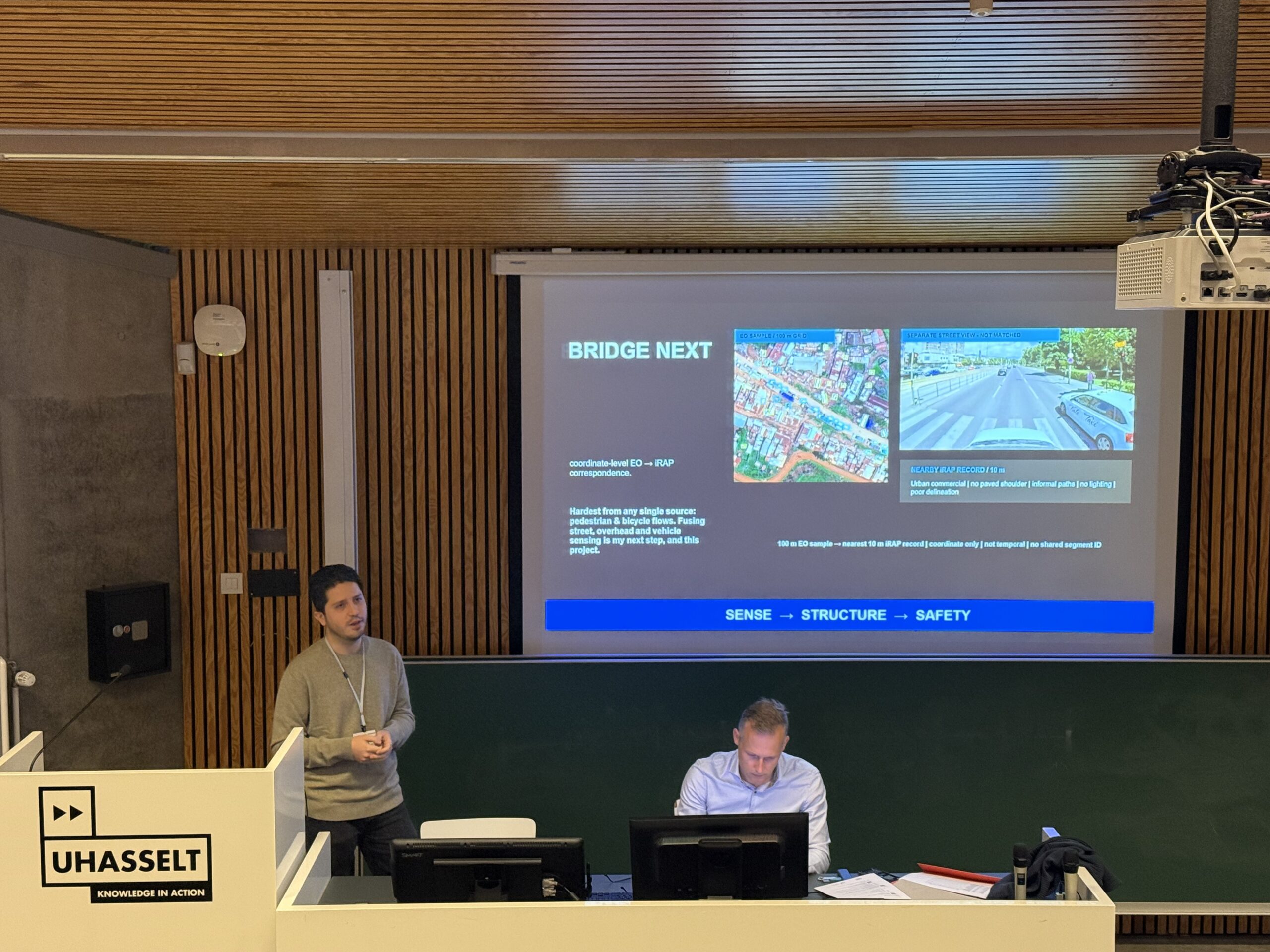
Breakout sessions gave doctoral candidates the opportunity to connect their research directly to road safety policy and practice, strengthening the link between the network’s scientific output and real-world impact.
Consortium meeting
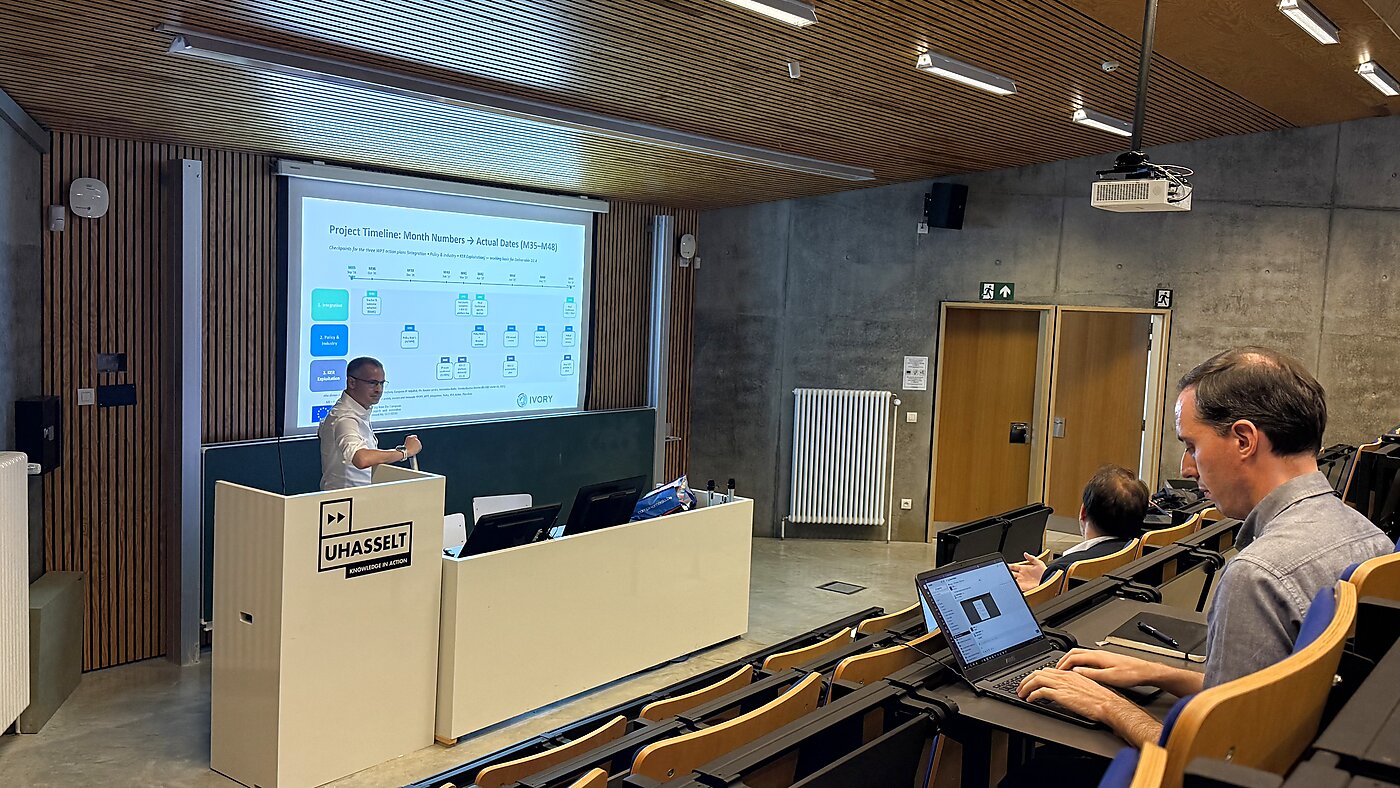
The consortium meeting focused on project coordination, incorporating the European Commission’s recommendations, and planning the network’s activities for the year ahead. Doctoral candidates presented updates on their individual research progress, and the consortium reviewed the network’s dissemination and communication activities.